Updates

  1. Person pages list letters, writing, profiles and links as sortable tables with filters, and show each person's companies as links; Fund letters show each letter's description in its own column.
  2. Experts show a checked job title and a short description of each person; 30 more people have photographs.
  3. Every company, fund, university and publication the experts work for has a page listing the people there.
  4. Fund letters show each letter's thesis and filter by it; 225 person pages list the essays, columns and newsletter issues the person wrote.
  5. Person pages list every essay and newsletter issue a person wrote, and their own books as a table in List view.
  6. Recommends shows the five largest kinds of book and the rest under More; browse pictures load sooner.
  7. Podcasts and talks link the original episode, filter by Audio and video or Press, and list each publisher once.
  8. Pages are wider, Recommends has List and Grid, and a filter clicked again turns off.
  9. Book cards sit in a ruled grid with Open Library and Goodreads links and each book's one-line note.
  10. Funds is now Investors; each investor's styles are buttons that filter the table.
  11. Podcasts and talks on a person's page filter by year and publisher and show as a list or a grid of pictures.
  12. Quotes show only people's own words: 472 summaries written by list sites are gone.
  13. Country pages open from Browse again, and every link on the shelf lands on a page.
  14. Subject and person pages show their sections as tabs, and each book appears once on a person's page.
  15. Book cards show the quote, who said it and the source; grids show five cards to a row.
  16. On a phone, a menu holds the sections, search, Updates, Feedback and dark mode.
  17. Feedback takes a screenshot of the page with no browser prompt, opens a screenshot full size when you click it, and clears itself once sent.
  18. Book cards are centred, search names the topic each book sits in, and any text cut short shows whole on hover.
  19. Search groups its results by kind: people, companies, geographies, subjects, topics, books, funds, fund letters and papers.
  20. The Books table lists who recommended each book by name, and the browser tab names the section you are in.
  21. Feedback can take a screenshot of the page, or one you paste or choose, and opens in the corner beside Updates.
  22. Each rail button reopens its section where you left it, and Browse, Table and People show on every book and subject page.
  23. Filters grey out choices that hold nothing instead of hiding them, and Books › People filters by authors or recommenders.
  24. Feedback takes a subject line and up to three screenshots.
  25. Biographies are grouped by the person they are about: 41 new pages, from Abraham Lincoln to Lee Kuan Yew.
  26. Sport splits into 23 sports, and Religion into one topic per faith.
  27. Book lists show as cards: the cover, one recommendation quote and every recommender by name.
  28. Seventeen subjects that had two or three pages under different names now have one page each.
  29. Every page lists its Experts as authors and recommenders, with a link to them on the Experts tab.
  30. Economics, Financial history, Financial panics and Accounting are subjects of their own, with one page per financial crisis.
  31. Book, person and subject pages open inside the app, so the tabs stay in view.
  32. 996 more book covers, and photographs or logos for 227 more people and companies.
  33. Books › Browse shows every subject as cards, and the rail holds Fund letters, Papers, Experts, Books and Funds.
  34. Every topic over 150 books splits into narrower topics, each with a page of its own.

Send feedback

What is it?
Screenshots, up to 3 (optional)
or paste one with Ctrl+V

We use your email only to reply to you.

FT

Film, Television and Comedy

Holds books on screenwriting, directing and editing, Hollywood history, and memoirs by actors and comedians.

Start here

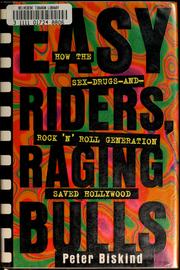
  1. Easy Riders, Raging BullsPeter Biskind, 1998
  2. Walt Disney: The Triumph of the American ImaginationNeal Gabler, 2006
  3. Adventures in the Screen TradeWilliam Goldman, 1983
  4. Save the CatBlake Snyder, 2005
  5. PowerhouseJames Andrew Miller, 2016
Peter Biskind · 1998

How young directors and drugs remade Hollywood in the 1970s, from Easy Rider on.
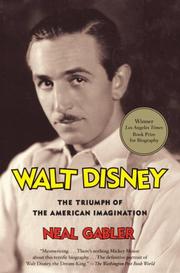
Neal Gabler · 2006

Walt Disney's life from Missouri to Mickey Mouse, the 1941 strike and Disneyland.

“the author, Neal Gabler, who has written the best biography on Walt Disney. And it's a phenomenal book.” — Marc Andreessen

Source: The Tim Ferriss Show Transcripts: Marc Andreessen (#163)

Recommended by: Marc Andreessen, Brian Chesky

William Goldman · 1983

Goldman wrote Butch Cassidy, All the President's Men, and The Princess Bride, and this book is his frank account of what it is actually like to write for Hollywood. His central claim — that nobody knows anything — is an important corrective to every book on this list that treats filmmaking as a solved problem.

Recommended by: Tim Ferriss
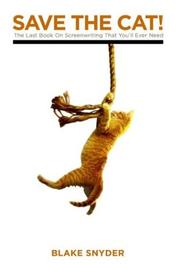
Blake Snyder · 2005

The most commercial book on this list, and the most widely used. Snyder's beat sheet is a blunt instrument, but understanding it is necessary — both to apply it and to understand what mainstream studio films are doing structurally, whether you intend to follow the template or subvert it.

Recommended by: Eric Weinstein

James Andrew Miller · 2016

Oral history of CAA and the agency model.

Recommended by: Joel Connolly
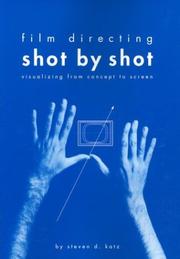
Steven Katz

How storyboards become shots, and how shots are built into film sequences.
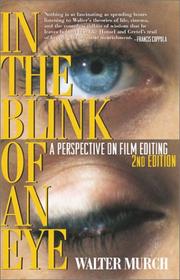
Walter Murch

Film editing explained: why cuts work when they follow the rhythm of thought.

Sidney Lumet

How a film comes together, from the first script reading to the final mix.
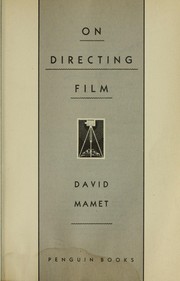
David Mamet

Directing as finding the simplest images that carry the story.
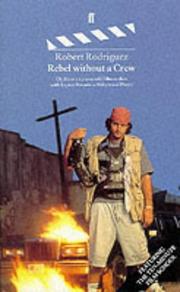
Robert Rodriguez

The production diary of El Mariachi, a feature film made for $7,000.
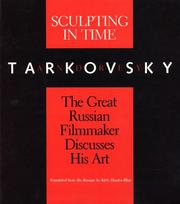
Andrei Tarkovsky

A filmmaker's theory of the image as a vessel of time rather than information.
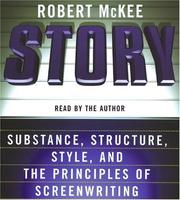
Robert McKee

How screen stories are built, from scene construction to subtext.

Joseph Mascelli

Camera angles, continuity, cutting, close-ups and composition: the basics of a shot.
Robert Evans · 1995

A Hollywood producer's life behind The Godfather, Chinatown and Rosemary's Baby.

“Robert Evans went from 50's movie star to running Paramount Pictures during its Godfather heyday, only to fall flat on his face and go broke in the eighties. Pure Hollywood popcorn and full of fun (probably half-true) anecdotes about seemingly every…” — Andrew Wilkinson

Source: Newsletter

Recommended by: Andrew Wilkinson, David Cancel

Steve Martin · 2007

A comedian's eighteen years building a stand-up act, and why he quit it.

Lena Dunham · 2014

Personal essays on sex, menial jobs and missteps, offered so others learn from them.

Recommended by: Audrey Gelman

Eddie Izzard · 2017

Recommended by: Bill Gates

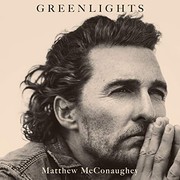
Matthew McConaughey · 2020

Recommended by: Keith Wasserman, Ryan Holiday

T4 Will
Will Smith, Mark Manson · 2020

More art and design