Updates

  1. Person pages list letters, writing, profiles and links as sortable tables with filters, and show each person's companies as links; Fund letters show each letter's description in its own column.
  2. Experts show a checked job title and a short description of each person; 30 more people have photographs.
  3. Every company, fund, university and publication the experts work for has a page listing the people there.
  4. Fund letters show each letter's thesis and filter by it; 225 person pages list the essays, columns and newsletter issues the person wrote.
  5. Person pages list every essay and newsletter issue a person wrote, and their own books as a table in List view.
  6. Recommends shows the five largest kinds of book and the rest under More; browse pictures load sooner.
  7. Podcasts and talks link the original episode, filter by Audio and video or Press, and list each publisher once.
  8. Pages are wider, Recommends has List and Grid, and a filter clicked again turns off.
  9. Book cards sit in a ruled grid with Open Library and Goodreads links and each book's one-line note.
  10. Funds is now Investors; each investor's styles are buttons that filter the table.
  11. Podcasts and talks on a person's page filter by year and publisher and show as a list or a grid of pictures.
  12. Quotes show only people's own words: 472 summaries written by list sites are gone.
  13. Country pages open from Browse again, and every link on the shelf lands on a page.
  14. Subject and person pages show their sections as tabs, and each book appears once on a person's page.
  15. Book cards show the quote, who said it and the source; grids show five cards to a row.
  16. On a phone, a menu holds the sections, search, Updates, Feedback and dark mode.
  17. Feedback takes a screenshot of the page with no browser prompt, opens a screenshot full size when you click it, and clears itself once sent.
  18. Book cards are centred, search names the topic each book sits in, and any text cut short shows whole on hover.
  19. Search groups its results by kind: people, companies, geographies, subjects, topics, books, funds, fund letters and papers.
  20. The Books table lists who recommended each book by name, and the browser tab names the section you are in.
  21. Feedback can take a screenshot of the page, or one you paste or choose, and opens in the corner beside Updates.
  22. Each rail button reopens its section where you left it, and Browse, Table and People show on every book and subject page.
  23. Filters grey out choices that hold nothing instead of hiding them, and Books › People filters by authors or recommenders.
  24. Feedback takes a subject line and up to three screenshots.
  25. Biographies are grouped by the person they are about: 41 new pages, from Abraham Lincoln to Lee Kuan Yew.
  26. Sport splits into 23 sports, and Religion into one topic per faith.
  27. Book lists show as cards: the cover, one recommendation quote and every recommender by name.
  28. Seventeen subjects that had two or three pages under different names now have one page each.
  29. Every page lists its Experts as authors and recommenders, with a link to them on the Experts tab.
  30. Economics, Financial history, Financial panics and Accounting are subjects of their own, with one page per financial crisis.
  31. Book, person and subject pages open inside the app, so the tabs stay in view.
  32. 996 more book covers, and photographs or logos for 227 more people and companies.
  33. Books › Browse shows every subject as cards, and the rail holds Fund letters, Papers, Experts, Books and Funds.
  34. Every topic over 150 books splits into narrower topics, each with a page of its own.

Send feedback

What is it?
Screenshots, up to 3 (optional)
or paste one with Ctrl+V

We use your email only to reply to you.

Walt Disney: The Triumph of the American Ima

Walt Disney: The Triumph of the American Imagination

Neal Gabler
2006
T2 866 pages · about 14h 26m to read Open Librarygoodreads

Authorized-access biography of the founder and the studio.

Summary

Gabler was the first biographer given unrestricted access to the Disney archives, and this is the definitive life. It covers the Missouri and Kansas City years, the loss of Oswald the Lucky Rabbit to Universal, the creation of Mickey Mouse, the technical gambles on synchronised sound and Technicolor, Snow White, the 1941 animators' strike, the wartime and postwar decline, television, and Disneyland.

The business material is substantial and specific. The Oswald episode taught Disney to own his characters, and every subsequent decision about rights followed from it. He repeatedly bet the company on technical advances competitors could not match, taking exclusive Technicolor rights for animation and spending on Snow White until the bank nearly foreclosed. Gabler documents the studio's chronic undercapitalisation, the dependence on Roy Disney's financing, and the fact that the company was frequently close to failure while producing its most celebrated work. The 1941 strike is treated at length and Gabler does not spare Disney's conduct, including his testimony to the House Un-American Activities Committee.

Disneyland is presented as the culmination of a controlling impulse: a physical environment where every sightline, sound and transition could be designed, financed through the television deal with ABC that Disney made specifically to fund it.

Gabler is even-handed about the personal material, including the antisemitism allegations, which he examines and finds not proven in the strong form. The book is very long, and readers wanting the business history alone will find the childhood and personal sections extended. It remains the best-sourced account available.

Key takeaways 7

  1. Losing Oswald the Lucky Rabbit to his distributor taught Disney to own his characters outright, and every later rights decision followed from that loss.
  2. Disney repeatedly committed the entire company to technical advances, including synchronised sound and exclusive Technicolor rights, that competitors could not immediately copy.
  3. The studio was chronically undercapitalised and close to failure through the period of its greatest creative output.
  4. The 1941 animators' strike permanently changed the studio's culture and Disney's relationship with his staff, and he never accepted his own responsibility for it.
  5. The television deal with ABC was made specifically to finance Disneyland, which converted a broadcast relationship into real estate capital.
  6. Disneyland extended the same impulse as the films, being an environment in which every element of the audience's experience could be controlled.
  7. Disney's contribution was as an editor and standard-setter rather than as an artist, since he stopped drawing early and directed others' work by relentless criticism.

Who should read it

Founders and operators interested in owning intellectual property, betting a company on technical advantage, and building a brand around controlled experience.

Who recommended it 2 · 1 direct

“the author, Neal Gabler, who has written the best biography on Walt Disney. And it's a phenomenal book.”

Brian Cheskyreported

Similar books 6

Chosen by shared topics, the entries that hold them, and the people who recommended both.
Steven Watts · 1997

Academic cultural history; Disney as the century's most effective ideologist.

Timothy S. Susanin · 2011

Walt Disney's Kansas City years, 1919-1928, and how his first company went bust.
Robert Iger · 2019

Running Disney and buying Pixar, Marvel, Lucasfilm and Fox to add creative talent.

Michael Barrier · 2007

Animation historian's corrective, strongest on the studio craft.
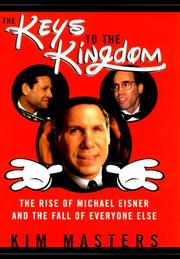
Kim Masters · 2000

Michael Eisner's revival of Disney, Katzenberg's exit and the failed succession.

Where it sits in the reference 2

Companies
Biographies

Topics

Biography and MemoirCompany HistoriesArt and DesignFilm, Television and ComedyFounders and Entrepreneurs