Updates

  1. Person pages list letters, writing, profiles and links as sortable tables with filters, and show each person's companies as links; Fund letters show each letter's description in its own column.
  2. Experts show a checked job title and a short description of each person; 30 more people have photographs.
  3. Every company, fund, university and publication the experts work for has a page listing the people there.
  4. Fund letters show each letter's thesis and filter by it; 225 person pages list the essays, columns and newsletter issues the person wrote.
  5. Person pages list every essay and newsletter issue a person wrote, and their own books as a table in List view.
  6. Recommends shows the five largest kinds of book and the rest under More; browse pictures load sooner.
  7. Podcasts and talks link the original episode, filter by Audio and video or Press, and list each publisher once.
  8. Pages are wider, Recommends has List and Grid, and a filter clicked again turns off.
  9. Book cards sit in a ruled grid with Open Library and Goodreads links and each book's one-line note.
  10. Funds is now Investors; each investor's styles are buttons that filter the table.
  11. Podcasts and talks on a person's page filter by year and publisher and show as a list or a grid of pictures.
  12. Quotes show only people's own words: 472 summaries written by list sites are gone.
  13. Country pages open from Browse again, and every link on the shelf lands on a page.
  14. Subject and person pages show their sections as tabs, and each book appears once on a person's page.
  15. Book cards show the quote, who said it and the source; grids show five cards to a row.
  16. On a phone, a menu holds the sections, search, Updates, Feedback and dark mode.
  17. Feedback takes a screenshot of the page with no browser prompt, opens a screenshot full size when you click it, and clears itself once sent.
  18. Book cards are centred, search names the topic each book sits in, and any text cut short shows whole on hover.
  19. Search groups its results by kind: people, companies, geographies, subjects, topics, books, funds, fund letters and papers.
  20. The Books table lists who recommended each book by name, and the browser tab names the section you are in.
  21. Feedback can take a screenshot of the page, or one you paste or choose, and opens in the corner beside Updates.
  22. Each rail button reopens its section where you left it, and Browse, Table and People show on every book and subject page.
  23. Filters grey out choices that hold nothing instead of hiding them, and Books › People filters by authors or recommenders.
  24. Feedback takes a subject line and up to three screenshots.
  25. Biographies are grouped by the person they are about: 41 new pages, from Abraham Lincoln to Lee Kuan Yew.
  26. Sport splits into 23 sports, and Religion into one topic per faith.
  27. Book lists show as cards: the cover, one recommendation quote and every recommender by name.
  28. Seventeen subjects that had two or three pages under different names now have one page each.
  29. Every page lists its Experts as authors and recommenders, with a link to them on the Experts tab.
  30. Economics, Financial history, Financial panics and Accounting are subjects of their own, with one page per financial crisis.
  31. Book, person and subject pages open inside the app, so the tabs stay in view.
  32. 996 more book covers, and photographs or logos for 227 more people and companies.
  33. Books › Browse shows every subject as cards, and the rail holds Fund letters, Papers, Experts, Books and Funds.
  34. Every topic over 150 books splits into narrower topics, each with a page of its own.

Send feedback

What is it?
Screenshots, up to 3 (optional)
or paste one with Ctrl+V

We use your email only to reply to you.

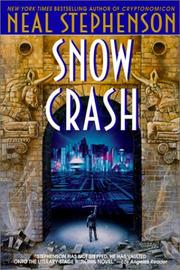
Snow Crash

Snow Crash

Neal Stephenson
1992
460 pages · about 7h 40m to read Open Librarygoodreads

Summary

Stephenson's 1992 novel is set in a United States where the federal government has collapsed into a service provider among many, territory is divided among corporate franchise enclaves called burbclaves, and the Mafia runs pizza delivery under contractual time guarantees. The protagonist, Hiro Protagonist, delivers pizza and hacks, and moves between the physical world and the Metaverse, a shared virtual environment accessed through goggles where users appear as avatars whose quality reflects their money and skill.

The plot concerns a drug and computer virus called Snow Crash that operates on both software and human neurology, which Stephenson connects to Sumerian mythology and to a theory of language as a deep programming layer of the brain. Large sections consist of exposition delivered by a librarian program about Sumerian me, the Tower of Babel and the neurolinguistic hypothesis.

The book matters to technology readers because it named the Metaverse and the avatar in their modern senses, and because its picture of privatised governance, franchise sovereignty and virtual real estate has been used as a reference by many people building those things. Its influence on Second Life, on Google Earth, on cryptocurrency communities and on Facebook's 2021 renaming is direct and documented.

As a novel it is uneven. The Sumerian exposition is long and many readers find it unconvincing. The satire is broad and the characters are thin. Stephenson has said repeatedly that he wrote a satire and that people building products from it have missed the point. Read it for the vocabulary and the picture of privatised sovereignty, not as a prediction anyone should implement.

Key takeaways 7

  1. A persistent shared virtual environment with user-owned avatars and virtual real estate is described here in the form later technology companies attempted to build.
  2. Governments can fragment into competing franchise-based service providers, with sovereignty sold and enforced contractually rather than territorially.
  3. Language may function as a programming layer for the brain, which the novel uses to make an information virus operate on both machines and people.
  4. Status in a virtual environment tracks the money and technical skill invested in the avatar, reproducing physical-world hierarchy rather than removing it.
  5. Private security, private roads and private currency follow the withdrawal of the state, and the resulting society is more coercive rather than freer.
  6. Information itself can act as a weapon that disables people directly, without requiring any physical mechanism.
  7. The novel is written as satire, and Stephenson has objected to readers treating its arrangements as designs to be copied.

Who should read it

Technology founders and investors who want the source of the Metaverse vocabulary and a picture of privatised governance, read as satire rather than as a blueprint.

Who recommended it 15 · 2 direct

Bret Victorreported
Ev Williamsreported
Fred Wilsonreported
Josh Wolfereported
Larry Pagereported
Reid Hoffmanreported
Ryan Sheareported
Sergey Brinreported
Tim Ferrissreported
Tobi Lütkereported

Similar books 6

Chosen by shared topics, the entries that hold them, and the people who recommended both.
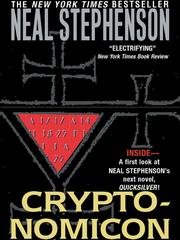
Neal Stephenson · 1999

A novel of wartime codebreakers and their descendants building a data haven.

Neal Stephenson · 1995

A novel of a nanotech future and a stolen copy of an interactive teaching book.

Where it sits in the reference 0

No entry holds this book yet. It reached the reference because someone recommended it.

Topics

FictionScience fictionCyberpunk, near future and dystopias