Updates

  1. Person pages list letters, writing, profiles and links as sortable tables with filters, and show each person's companies as links; Fund letters show each letter's description in its own column.
  2. Experts show a checked job title and a short description of each person; 30 more people have photographs.
  3. Every company, fund, university and publication the experts work for has a page listing the people there.
  4. Fund letters show each letter's thesis and filter by it; 225 person pages list the essays, columns and newsletter issues the person wrote.
  5. Person pages list every essay and newsletter issue a person wrote, and their own books as a table in List view.
  6. Recommends shows the five largest kinds of book and the rest under More; browse pictures load sooner.
  7. Podcasts and talks link the original episode, filter by Audio and video or Press, and list each publisher once.
  8. Pages are wider, Recommends has List and Grid, and a filter clicked again turns off.
  9. Book cards sit in a ruled grid with Open Library and Goodreads links and each book's one-line note.
  10. Funds is now Investors; each investor's styles are buttons that filter the table.
  11. Podcasts and talks on a person's page filter by year and publisher and show as a list or a grid of pictures.
  12. Quotes show only people's own words: 472 summaries written by list sites are gone.
  13. Country pages open from Browse again, and every link on the shelf lands on a page.
  14. Subject and person pages show their sections as tabs, and each book appears once on a person's page.
  15. Book cards show the quote, who said it and the source; grids show five cards to a row.
  16. On a phone, a menu holds the sections, search, Updates, Feedback and dark mode.
  17. Feedback takes a screenshot of the page with no browser prompt, opens a screenshot full size when you click it, and clears itself once sent.
  18. Book cards are centred, search names the topic each book sits in, and any text cut short shows whole on hover.
  19. Search groups its results by kind: people, companies, geographies, subjects, topics, books, funds, fund letters and papers.
  20. The Books table lists who recommended each book by name, and the browser tab names the section you are in.
  21. Feedback can take a screenshot of the page, or one you paste or choose, and opens in the corner beside Updates.
  22. Each rail button reopens its section where you left it, and Browse, Table and People show on every book and subject page.
  23. Filters grey out choices that hold nothing instead of hiding them, and Books › People filters by authors or recommenders.
  24. Feedback takes a subject line and up to three screenshots.
  25. Biographies are grouped by the person they are about: 41 new pages, from Abraham Lincoln to Lee Kuan Yew.
  26. Sport splits into 23 sports, and Religion into one topic per faith.
  27. Book lists show as cards: the cover, one recommendation quote and every recommender by name.
  28. Seventeen subjects that had two or three pages under different names now have one page each.
  29. Every page lists its Experts as authors and recommenders, with a link to them on the Experts tab.
  30. Economics, Financial history, Financial panics and Accounting are subjects of their own, with one page per financial crisis.
  31. Book, person and subject pages open inside the app, so the tabs stay in view.
  32. 996 more book covers, and photographs or logos for 227 more people and companies.
  33. Books › Browse shows every subject as cards, and the rail holds Fund letters, Papers, Experts, Books and Funds.
  34. Every topic over 150 books splits into narrower topics, each with a page of its own.

Send feedback

What is it?
Screenshots, up to 3 (optional)
or paste one with Ctrl+V

We use your email only to reply to you.

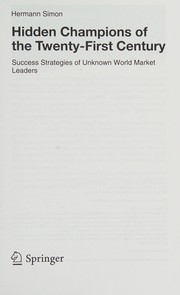
Hidden Champions of the Twenty-First Century

Hidden Champions of the Twenty-First Century

Hermann Simon
2009
T2 402 pages · about 6h 42m to read Open Librarygoodreads

Niche market leadership as a category; the nearest thing to a theory.

Summary

Simon identifies and studies companies that are world market leaders in narrow product categories and are almost unknown to the public. His criteria are being first, second or third in the world market or first on the home continent, revenue below a threshold he sets at around four billion dollars, and low public recognition. He counts more than a thousand such firms, with a heavy concentration in Germany, Austria and Switzerland.

The findings come from his own survey database and company visits over two decades. The pattern he reports is consistent: extreme market definition, meaning the firm defines its market narrowly enough to dominate it; depth in-house rather than outsourcing, because the manufacturing process is itself the competitive advantage; close and direct customer relationships with the firm's own sales people rather than distributors; early and committed internationalisation, since a narrow product needs the whole world as its market; high research intensity directed at incremental product improvement rather than at breakthroughs; long chief executive tenure, often family ownership and multi-decade time horizons; and low employee turnover with deep specialist skill.

For founders and investors this is the most useful available description of a business model that receives almost no attention: profitable global niche dominance without scale, brand or venture capital. The evidence is Simon's own dataset, which is not independently verifiable, and the sample is selected on success, so there is no way to know how many similar firms failed. The concentration in German-speaking countries is explained partly through cultural and institutional arguments that are more assertion than analysis. The 2009 edition has been updated since.

Key takeaways 7

  1. A firm can be a world market leader while remaining unknown, because narrow market definition and industrial customers remove any need for public recognition.
  2. Hidden champions define their market narrowly enough that they can dominate it, and they grow by expanding geographically rather than by broadening the product line.
  3. These firms keep manufacturing depth in-house because the process knowledge, not the product design, is what competitors cannot copy.
  4. Direct sales by the company's own people rather than through distributors is the norm, since the customer relationship carries the technical knowledge the firm depends on.
  5. Internationalisation must begin early for a narrow product, because the domestic market cannot support the research spending the position requires.
  6. Long chief executive tenure and family ownership give these firms decision horizons that listed competitors cannot match.
  7. Research spending in hidden champions is directed at continuous incremental improvement of an existing product rather than at new categories.

Who should read it

Founders and investors interested in profitable global niche dominance as an alternative to scale-driven or venture-funded models.

Who recommended it 2 · 1 direct

Tom Petersreported

Similar books 6

Chosen by shared topics, the entries that hold them, and the people who recommended both.
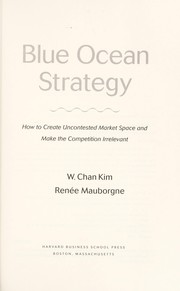
W. Chan Kim, Renee Mauborgne · 2005

How to create new market space instead of fighting rivals over existing demand.

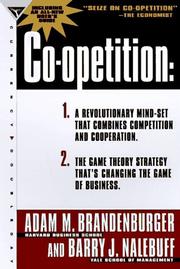
Adam M. Brandenburger, Barry J. Nalebuff · 1996

Game theory applied to business, which is cooperative and competitive at once.

Recommended by: Mohnish Pabrai
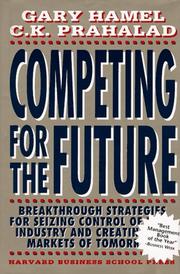
Gary Hamel, C. K. Prahalad · 1994

How firms lead future industries by seeing tomorrow's chances and building skills.

Recommended by: Mohnish Pabrai
Shona L. Brown, Kathleen M. Eisenhardt · 1998

Strategy as constant reshaping of advantage in fast, unpredictable markets.

Recommended by: Mohnish Pabrai
Bruce Greenwald, Judd Kahn · 2005

Barriers to entry as the only durable source of a toll.

Recommended by: Mohnish Pabrai, Li Lu
Michael E. Porter · 1980

Techniques for Analyzing Industries and Competitors

Where it sits in the reference 3

Business models
Business themes
Business themes

Topics

Business and Management