Updates

  1. Person pages list letters, writing, profiles and links as sortable tables with filters, and show each person's companies as links; Fund letters show each letter's description in its own column.
  2. Experts show a checked job title and a short description of each person; 30 more people have photographs.
  3. Every company, fund, university and publication the experts work for has a page listing the people there.
  4. Fund letters show each letter's thesis and filter by it; 225 person pages list the essays, columns and newsletter issues the person wrote.
  5. Person pages list every essay and newsletter issue a person wrote, and their own books as a table in List view.
  6. Recommends shows the five largest kinds of book and the rest under More; browse pictures load sooner.
  7. Podcasts and talks link the original episode, filter by Audio and video or Press, and list each publisher once.
  8. Pages are wider, Recommends has List and Grid, and a filter clicked again turns off.
  9. Book cards sit in a ruled grid with Open Library and Goodreads links and each book's one-line note.
  10. Funds is now Investors; each investor's styles are buttons that filter the table.
  11. Podcasts and talks on a person's page filter by year and publisher and show as a list or a grid of pictures.
  12. Quotes show only people's own words: 472 summaries written by list sites are gone.
  13. Country pages open from Browse again, and every link on the shelf lands on a page.
  14. Subject and person pages show their sections as tabs, and each book appears once on a person's page.
  15. Book cards show the quote, who said it and the source; grids show five cards to a row.
  16. On a phone, a menu holds the sections, search, Updates, Feedback and dark mode.
  17. Feedback takes a screenshot of the page with no browser prompt, opens a screenshot full size when you click it, and clears itself once sent.
  18. Book cards are centred, search names the topic each book sits in, and any text cut short shows whole on hover.
  19. Search groups its results by kind: people, companies, geographies, subjects, topics, books, funds, fund letters and papers.
  20. The Books table lists who recommended each book by name, and the browser tab names the section you are in.
  21. Feedback can take a screenshot of the page, or one you paste or choose, and opens in the corner beside Updates.
  22. Each rail button reopens its section where you left it, and Browse, Table and People show on every book and subject page.
  23. Filters grey out choices that hold nothing instead of hiding them, and Books › People filters by authors or recommenders.
  24. Feedback takes a subject line and up to three screenshots.
  25. Biographies are grouped by the person they are about: 41 new pages, from Abraham Lincoln to Lee Kuan Yew.
  26. Sport splits into 23 sports, and Religion into one topic per faith.
  27. Book lists show as cards: the cover, one recommendation quote and every recommender by name.
  28. Seventeen subjects that had two or three pages under different names now have one page each.
  29. Every page lists its Experts as authors and recommenders, with a link to them on the Experts tab.
  30. Economics, Financial history, Financial panics and Accounting are subjects of their own, with one page per financial crisis.
  31. Book, person and subject pages open inside the app, so the tabs stay in view.
  32. 996 more book covers, and photographs or logos for 227 more people and companies.
  33. Books › Browse shows every subject as cards, and the rail holds Fund letters, Papers, Experts, Books and Funds.
  34. Every topic over 150 books splits into narrower topics, each with a page of its own.

Send feedback

What is it?
Screenshots, up to 3 (optional)
or paste one with Ctrl+V

We use your email only to reply to you.

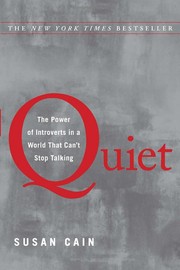
Quiet: The Power of Introverts in a World Th

Quiet: The Power of Introverts in a World That Can't Stop Talking

Susan Cain
2012
368 pages · about 6h 8m to read Open Librarygoodreads

Summary

Cain argues that Western institutions, particularly American schools and workplaces, are designed around what she calls the extrovert ideal, and that this wastes the contributions of the roughly one third to one half of people who are introverted. She traces the cultural shift historically, arguing that a nineteenth-century culture of character valuing inner virtue gave way in the early twentieth century to a culture of personality valuing charisma and self-presentation, driven by urbanisation, the rise of large corporations and the sales profession.

The research she draws on includes Jerome Kagan's longitudinal work on high-reactive infants, which found that temperament measured in infancy predicts adult introversion; Elaine Aron on sensory processing sensitivity; and Anders Ericsson's finding that deliberate practice is best done alone, which she uses against open offices and group work.

Her strongest practical arguments concern group work. She reviews the evidence that brainstorming in groups produces fewer and worse ideas than the same people working separately, that open-plan offices reduce productivity and increase stress, and that groups converge on the views of whoever speaks most rather than of whoever knows most. She also covers free trait theory, the argument that people can act out of character in service of goals they care about, and the cost of doing so continuously.

The personality science is contested, since introversion and extroversion are a continuum rather than types and the trait is only one of five in the standard model. Cain selects supportive research and the cultural history is broad. The material on group decision-making and on brainstorming is well supported and directly applicable.

Key takeaways 8

  1. Western institutions are designed around an extrovert ideal that treats assertiveness and social confidence as evidence of competence.
  2. Group brainstorming produces fewer and lower quality ideas than the same individuals working separately and pooling results.
  3. Groups converge on the views of whoever speaks most confidently rather than whoever has the best information.
  4. Temperament measured in infancy predicts adult introversion, which means the trait is substantially constitutional rather than learned.
  5. Open-plan offices reduce productivity and increase stress, and the evidence for their collaborative benefits is weak.
  6. Deliberate practice is most effective performed alone, which puts solitary work at the centre of skill development rather than at its margin.
  7. Introverted leaders outperform extroverted ones with proactive teams, because they listen and let initiative come from the team.
  8. People can act out of character in service of goals they care about, but sustained performance of a temperament they do not have carries a real cost.

Who should read it

Managers designing offices, meetings and hiring processes who want the evidence against group ideation and open plan working.

Who recommended it 8 · 1 direct

Brad Feldreported
Jason Friedreported
Matej Latinreported
Simon Sinekreported
Susan Cainreported
Tom Petersreported

Similar books 6

Chosen by shared topics, the entries that hold them, and the people who recommended both.
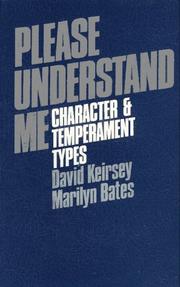
David 86 Keirsey, Marilyn Bates · 1978

A 70-question test that sorts readers into 16 temperament types, like Myers-Briggs.

Recommended by: Mohnish Pabrai

Steven Pinker · 2011

Evidence that violence of nearly every kind has declined over history, and why.

Where it sits in the reference 0

No entry holds this book yet. It reached the reference because someone recommended it.

Topics

Psychology and BehaviourHuman nature, evolution and personality