Product Management and Design
Two jobs sit behind every shipped feature: finding a problem people already have, and making the thing you build understandable without instruction. Norman gives the vocabulary for the second, with affordances, signifiers and mapping, and Krug reduces it to usability rules a team can apply to a page in an afternoon. Cagan describes how empowered product teams work, why discovery has to run continuously alongside delivery, and what separates a product manager from a project manager; Torres turns discovery into a weekly interviewing habit. Fitzpatrick teaches the customer conversation that produces useful answers instead of encouragement, Knapp compresses a test of an idea into five days, and Eyal explains the habit loop that keeps people returning, which is worth reading with its ethics in mind.
Start here
- The Design of Everyday ThingsDon Norman
- InspiredMarty Cagan, 2008
- The Mom Test Rob Fitzpatrick, 2014

Krug's web usability primer has stayed relevant for over two decades because its core argument — that good interfaces require no instruction — is timeless. The chapters on navigation conventions and usability testing with five users are still the most practical introduction to the discipline.
Recommended by: Brian Armstrong, Andy Budd, Austen Allred and 6 others
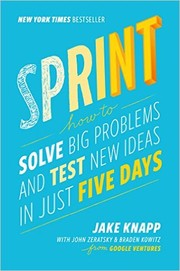
The Google Ventures five-day workshop format distilled into a repeatable method for answering critical design questions through rapid prototyping and targeted user testing. Less a design book than a process book — most valuable for teams that struggle to move from ideas to validated decisions quickly.
Recommended by: Andy Budd, Jessica Hische, Marty Cagan and 1 other

The foundational text of the modern PM role. Cagan's central argument — that most companies build the wrong things because they treat product as a delivery function rather than a discovery function — reframes everything that follows. The chapter on product discovery versus product delivery is worth the price of the book.
Recommended by: Anna Cheng, Marty Cagan

A four-step model for habit-forming products: trigger, action, reward, investment.
Recommended by: Nat Eliason, Alexis Ohanian, Andrew Chen and 6 others

Short, sharp, and corrective. Fitzpatrick diagnoses why customer interviews so often produce false positives: people are polite and will validate almost any idea you present with sufficient enthusiasm. The fix is asking about past behavior, not hypothetical futures. A genuinely useful retraining of interview instincts.
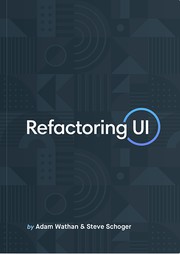
Where most design books stay in the abstract, this one opens with specific visual decisions: spacing scales, type hierarchies, color palette construction, shadow systems. Written by developers who taught themselves visual design, it's unusually practical and works equally well for product designers who want stronger visual intuition.
Recommended by: Charlie Marie Prangley, Jordan Hughes

Torres operationalizes what Cagan describes. Weekly customer touchpoints, opportunity-solution trees, assumption testing — this is the most practical account of how discovery actually becomes a habit rather than a quarterly exercise. Pairs directly with Inspired as the how to its what.
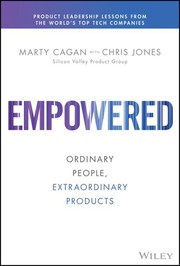
Cagan's follow-on to Inspired shifts from product craft to organizational conditions. The argument: you cannot have great products without empowered product teams, and empowered teams require managers who coach toward outcomes rather than manage toward outputs. Addresses the question Inspired leaves open — what do you change first?
The book that introduced affordances, signifiers, and feedback loops to a generation of designers. Norman's analysis of why doors, phones, and stoves confuse people is the clearest argument that bad design is a systems failure, not user error. Everything else on this list builds on this vocabulary.
Recommended by: Ran Segall, Andrew Chen, Garry Tan and 9 others
 Nir Eyalrecommends 4 books here
 Garry Tanrecommends 2 books here
 Jeff Atwoodrecommends 2 books here
 Alexis Ohanianrecommends 1 book here
 Brian Armstrongrecommends 1 book here
Show all 28
 Jessica Hischerecommends 1 book here
 Julie Zhuorecommends 1 book here
 Marissa Mayerrecommends 1 book here