Updates

  1. Person pages list letters, writing, profiles and links as sortable tables with filters, and show each person's companies as links; Fund letters show each letter's description in its own column.
  2. Experts show a checked job title and a short description of each person; 30 more people have photographs.
  3. Every company, fund, university and publication the experts work for has a page listing the people there.
  4. Fund letters show each letter's thesis and filter by it; 225 person pages list the essays, columns and newsletter issues the person wrote.
  5. Person pages list every essay and newsletter issue a person wrote, and their own books as a table in List view.
  6. Recommends shows the five largest kinds of book and the rest under More; browse pictures load sooner.
  7. Podcasts and talks link the original episode, filter by Audio and video or Press, and list each publisher once.
  8. Pages are wider, Recommends has List and Grid, and a filter clicked again turns off.
  9. Book cards sit in a ruled grid with Open Library and Goodreads links and each book's one-line note.
  10. Funds is now Investors; each investor's styles are buttons that filter the table.
  11. Podcasts and talks on a person's page filter by year and publisher and show as a list or a grid of pictures.
  12. Quotes show only people's own words: 472 summaries written by list sites are gone.
  13. Country pages open from Browse again, and every link on the shelf lands on a page.
  14. Subject and person pages show their sections as tabs, and each book appears once on a person's page.
  15. Book cards show the quote, who said it and the source; grids show five cards to a row.
  16. On a phone, a menu holds the sections, search, Updates, Feedback and dark mode.
  17. Feedback takes a screenshot of the page with no browser prompt, opens a screenshot full size when you click it, and clears itself once sent.
  18. Book cards are centred, search names the topic each book sits in, and any text cut short shows whole on hover.
  19. Search groups its results by kind: people, companies, geographies, subjects, topics, books, funds, fund letters and papers.
  20. The Books table lists who recommended each book by name, and the browser tab names the section you are in.
  21. Feedback can take a screenshot of the page, or one you paste or choose, and opens in the corner beside Updates.
  22. Each rail button reopens its section where you left it, and Browse, Table and People show on every book and subject page.
  23. Filters grey out choices that hold nothing instead of hiding them, and Books › People filters by authors or recommenders.
  24. Feedback takes a subject line and up to three screenshots.
  25. Biographies are grouped by the person they are about: 41 new pages, from Abraham Lincoln to Lee Kuan Yew.
  26. Sport splits into 23 sports, and Religion into one topic per faith.
  27. Book lists show as cards: the cover, one recommendation quote and every recommender by name.
  28. Seventeen subjects that had two or three pages under different names now have one page each.
  29. Every page lists its Experts as authors and recommenders, with a link to them on the Experts tab.
  30. Economics, Financial history, Financial panics and Accounting are subjects of their own, with one page per financial crisis.
  31. Book, person and subject pages open inside the app, so the tabs stay in view.
  32. 996 more book covers, and photographs or logos for 227 more people and companies.
  33. Books › Browse shows every subject as cards, and the rail holds Fund letters, Papers, Experts, Books and Funds.
  34. Every topic over 150 books splits into narrower topics, each with a page of its own.

Send feedback

What is it?
Screenshots, up to 3 (optional)
or paste one with Ctrl+V

We use your email only to reply to you.

RL

Regulation, Lobbying and the State

Regulators set prices, entry and standards in industries where competition fails or where incumbents want protection, and firms invest in shaping those rules because the return on lobbying beats the return on most capital projects. Reading this literature teaches capture as a recurring outcome rather than a scandal: McCraw follows four American regulators from Charles Francis Adams to Alfred Kahn and shows how each generation's remedy became the next generation's problem, and Viscusi supplies the economics of rate-setting, entry control and deregulation. The case histories show what disclosure alone achieves in tobacco, pharmaceutical trials, meatpacking and mortgage securitisation. Wu traces how communications monopolies formed and were broken up, Sorkin documents the bailout decisions of 2008 hour by hour, and Brad Smith argues an incumbent's case for being regulated.

Start here

  1. Prophets of RegulationThomas K. McCraw, 1984
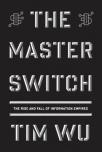
  2. The Master SwitchTim Wu, 2010
  3. Too Big to FailAndrew Ross Sorkin, 2009

Upton Sinclair · 1906

A novel of a Lithuanian immigrant family ruined in Chicago's meatpacking yards.

Recommended by: Nat Eliason, Benedict Evans

Alfred E. Kahn · 1970

The economics of regulated industries, from pricing at marginal cost to competition.

Thomas K. McCraw · 1984

A century of US regulation through four figures, from Charles Francis Adams to Kahn.
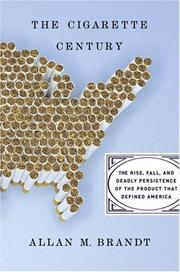
Allan M. Brandt · 2007

How the cigarette rose in 20th-century America, and how its harm was proved.
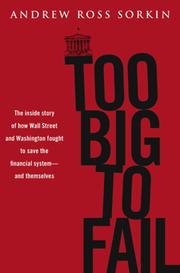
Andrew Ross Sorkin · 2009

Inside the meetings of bankers and regulators during the 2008 financial crisis.

Tim Wu · 2010

Every US information industry moved from an open era to control by one firm.

Recommended by: Patrick Collison, Andrew Chen

Ben Goldacre · 2012

How drug companies distort medical evidence, starting with unpublished trials.

Recommended by: Tim Ferriss

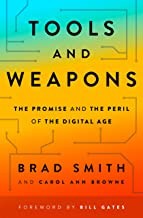
Brad Smith, Carol Ann Browne · 2019

Insider account by Microsoft's president on tech policy and regulation.

More business themes