Updates

  1. Person pages list letters, writing, profiles and links as sortable tables with filters, and show each person's companies as links; Fund letters show each letter's description in its own column.
  2. Experts show a checked job title and a short description of each person; 30 more people have photographs.
  3. Every company, fund, university and publication the experts work for has a page listing the people there.
  4. Fund letters show each letter's thesis and filter by it; 225 person pages list the essays, columns and newsletter issues the person wrote.
  5. Person pages list every essay and newsletter issue a person wrote, and their own books as a table in List view.
  6. Recommends shows the five largest kinds of book and the rest under More; browse pictures load sooner.
  7. Podcasts and talks link the original episode, filter by Audio and video or Press, and list each publisher once.
  8. Pages are wider, Recommends has List and Grid, and a filter clicked again turns off.
  9. Book cards sit in a ruled grid with Open Library and Goodreads links and each book's one-line note.
  10. Funds is now Investors; each investor's styles are buttons that filter the table.
  11. Podcasts and talks on a person's page filter by year and publisher and show as a list or a grid of pictures.
  12. Quotes show only people's own words: 472 summaries written by list sites are gone.
  13. Country pages open from Browse again, and every link on the shelf lands on a page.
  14. Subject and person pages show their sections as tabs, and each book appears once on a person's page.
  15. Book cards show the quote, who said it and the source; grids show five cards to a row.
  16. On a phone, a menu holds the sections, search, Updates, Feedback and dark mode.
  17. Feedback takes a screenshot of the page with no browser prompt, opens a screenshot full size when you click it, and clears itself once sent.
  18. Book cards are centred, search names the topic each book sits in, and any text cut short shows whole on hover.
  19. Search groups its results by kind: people, companies, geographies, subjects, topics, books, funds, fund letters and papers.
  20. The Books table lists who recommended each book by name, and the browser tab names the section you are in.
  21. Feedback can take a screenshot of the page, or one you paste or choose, and opens in the corner beside Updates.
  22. Each rail button reopens its section where you left it, and Browse, Table and People show on every book and subject page.
  23. Filters grey out choices that hold nothing instead of hiding them, and Books › People filters by authors or recommenders.
  24. Feedback takes a subject line and up to three screenshots.
  25. Biographies are grouped by the person they are about: 41 new pages, from Abraham Lincoln to Lee Kuan Yew.
  26. Sport splits into 23 sports, and Religion into one topic per faith.
  27. Book lists show as cards: the cover, one recommendation quote and every recommender by name.
  28. Seventeen subjects that had two or three pages under different names now have one page each.
  29. Every page lists its Experts as authors and recommenders, with a link to them on the Experts tab.
  30. Economics, Financial history, Financial panics and Accounting are subjects of their own, with one page per financial crisis.
  31. Book, person and subject pages open inside the app, so the tabs stay in view.
  32. 996 more book covers, and photographs or logos for 227 more people and companies.
  33. Books › Browse shows every subject as cards, and the rail holds Fund letters, Papers, Experts, Books and Funds.
  34. Every topic over 150 books splits into narrower topics, each with a page of its own.

Send feedback

What is it?
Screenshots, up to 3 (optional)
or paste one with Ctrl+V

We use your email only to reply to you.

Tools and Weapons

Tools and Weapons

Brad Smith, Carol Ann Browne
2019
T3 368 pages · about 6h 8m to read Open Librarygoodreads

Insider account by Microsoft's president on tech policy and regulation.

Summary

Smith is Microsoft's president and chief legal officer, and this book covers the policy questions technology companies face, drawing on Microsoft's own experience as a defendant and as a participant.

The substantive chapters cover the 2013 Snowden disclosures and Microsoft's response, including its litigation against the United States government over secrecy orders and over data stored in Ireland; the argument for a digital Geneva convention constraining state cyberattacks, prompted by WannaCry and NotPetya; facial recognition, where Smith called for regulation before the technology was widely deployed and while Microsoft was selling it; privacy regulation including his support for the European General Data Protection Regulation; the concentration of technology employment and the resulting housing and inequality problems, with Microsoft's Seattle-area housing commitment as the response; rural broadband; and the relationship between American and Chinese technology sectors.

Smith's recurring position is that technology companies should accept regulation rather than resist it, that self-regulation is insufficient, and that a company selling a technology has an obligation to state where it should not be used.

The book is corporate advocacy written by a serving executive, and Microsoft's own history as an antitrust defendant and its current market position shape every argument. Smith uses the antitrust experience to argue for engagement rather than confrontation with regulators, which is also commercially convenient for a company whose competitors face antitrust pressure. The policy positions are stated clearly and are worth engaging with. Readers should note that a company advocating regulation it can afford to comply with is not necessarily acting against its interests.

Key takeaways 8

  1. Technology companies should accept and shape regulation rather than resist it, which Smith argues from Microsoft's own antitrust experience.
  2. Self-regulation is insufficient for technologies with substantial social consequences, and companies claiming otherwise are avoiding the question.
  3. Microsoft litigated against the United States government over secrecy orders and over the jurisdiction of data stored abroad, which established limits on both.
  4. A company selling a technology has an obligation to state publicly where it should not be used, which Smith did regarding facial recognition.
  5. State-developed cyberweapons escape and are used against civilians, which WannaCry and NotPetya demonstrated using leaked exploits.
  6. Data sovereignty questions arise because data is stored in jurisdictions unrelated to where its subjects live, which existing law did not anticipate.
  7. Technology employment concentration produces housing and inequality problems in the regions that host it, which companies contribute to and can partly address.
  8. The book is corporate advocacy by a serving executive, and regulation a large incumbent can afford may disadvantage its smaller competitors.

Who should read it

Founders and investors in regulated technology sectors who want a large incumbent's stated policy positions, read with its commercial interests in view.

Who recommended it 4

Bill Gatesreported
Reid Hoffmanreported

Similar books 6

Chosen by shared topics, the entries that hold them, and the people who recommended both.
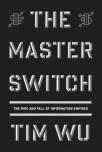
Tim Wu · 2010

Every US information industry moved from an open era to control by one firm.

Recommended by: Patrick Collison, Andrew Chen

Thomas K. McCraw · 1984

A century of US regulation through four figures, from Charles Francis Adams to Kahn.

Alfred E. Kahn · 1970

The economics of regulated industries, from pricing at marginal cost to competition.

Jennifer Edstrom, Marlin Eller · 1998

Insider account by a former Windows developer; hostile in tone.

Where it sits in the reference 3

Companies
Business models
Business themes

Topics

Technology and ComputingPolitics and GovernmentRegulation, central banks and public policyTechnology and society