Updates

  1. Person pages list letters, writing, profiles and links as sortable tables with filters, and show each person's companies as links; Fund letters show each letter's description in its own column.
  2. Experts show a checked job title and a short description of each person; 30 more people have photographs.
  3. Every company, fund, university and publication the experts work for has a page listing the people there.
  4. Fund letters show each letter's thesis and filter by it; 225 person pages list the essays, columns and newsletter issues the person wrote.
  5. Person pages list every essay and newsletter issue a person wrote, and their own books as a table in List view.
  6. Recommends shows the five largest kinds of book and the rest under More; browse pictures load sooner.
  7. Podcasts and talks link the original episode, filter by Audio and video or Press, and list each publisher once.
  8. Pages are wider, Recommends has List and Grid, and a filter clicked again turns off.
  9. Book cards sit in a ruled grid with Open Library and Goodreads links and each book's one-line note.
  10. Funds is now Investors; each investor's styles are buttons that filter the table.
  11. Podcasts and talks on a person's page filter by year and publisher and show as a list or a grid of pictures.
  12. Quotes show only people's own words: 472 summaries written by list sites are gone.
  13. Country pages open from Browse again, and every link on the shelf lands on a page.
  14. Subject and person pages show their sections as tabs, and each book appears once on a person's page.
  15. Book cards show the quote, who said it and the source; grids show five cards to a row.
  16. On a phone, a menu holds the sections, search, Updates, Feedback and dark mode.
  17. Feedback takes a screenshot of the page with no browser prompt, opens a screenshot full size when you click it, and clears itself once sent.
  18. Book cards are centred, search names the topic each book sits in, and any text cut short shows whole on hover.
  19. Search groups its results by kind: people, companies, geographies, subjects, topics, books, funds, fund letters and papers.
  20. The Books table lists who recommended each book by name, and the browser tab names the section you are in.
  21. Feedback can take a screenshot of the page, or one you paste or choose, and opens in the corner beside Updates.
  22. Each rail button reopens its section where you left it, and Browse, Table and People show on every book and subject page.
  23. Filters grey out choices that hold nothing instead of hiding them, and Books › People filters by authors or recommenders.
  24. Feedback takes a subject line and up to three screenshots.
  25. Biographies are grouped by the person they are about: 41 new pages, from Abraham Lincoln to Lee Kuan Yew.
  26. Sport splits into 23 sports, and Religion into one topic per faith.
  27. Book lists show as cards: the cover, one recommendation quote and every recommender by name.
  28. Seventeen subjects that had two or three pages under different names now have one page each.
  29. Every page lists its Experts as authors and recommenders, with a link to them on the Experts tab.
  30. Economics, Financial history, Financial panics and Accounting are subjects of their own, with one page per financial crisis.
  31. Book, person and subject pages open inside the app, so the tabs stay in view.
  32. 996 more book covers, and photographs or logos for 227 more people and companies.
  33. Books › Browse shows every subject as cards, and the rail holds Fund letters, Papers, Experts, Books and Funds.
  34. Every topic over 150 books splits into narrower topics, each with a page of its own.

Send feedback

What is it?
Screenshots, up to 3 (optional)
or paste one with Ctrl+V

We use your email only to reply to you.

Prophets of Regulation

Prophets of Regulation

Thomas K. McCraw
1984
T1 402 pages · about 6h 42m to read Open Librarygoodreads

Pulitzer history of the people who built American utility regulation.

Summary

McCraw examines American regulation through four figures who shaped it, covering roughly a century. The book won the Pulitzer Prize for history.

Charles Francis Adams Jr, working on the Massachusetts railroad commission in the 1870s, developed the sunshine commission model, which had no coercive power and relied on publicity and expert investigation to change behaviour. McCraw argues this worked in a limited setting and failed once the railroads' national scale outgrew it.

Louis Brandeis argued against bigness as such, holding that large firms were inefficient beyond a certain scale and dangerous to democratic society, and shaped both antitrust doctrine and the disclosure principle in securities law. McCraw is critical here: he shows that Brandeis's economic claims about scale were often wrong, that his opposition to size did not rest on evidence, and that his commitment to small enterprise sometimes protected inefficiency.

James Landis built the administrative agency as an institution, arguing that expert commissions insulated from politics could regulate complex industries better than courts or legislatures. McCraw traces both the design of the Securities and Exchange Commission and Landis's later disillusionment, when he concluded that agencies were captured by the industries they regulated.

Alfred Kahn, as an economist chairing the Civil Aeronautics Board, used economic analysis to conclude that airline regulation protected incumbents and raised fares without any natural monopoly justification, and then dismantled the agency he ran.

McCraw's general argument is that regulation succeeds when it is grounded in the actual economic structure of the industry, and fails when it rests on political preference or on assumptions about scale that the industry does not exhibit.

The book was written in 1984 during the deregulation period and reflects that moment's confidence. Subsequent experience with airline concentration, financial deregulation and the 2008 crisis complicates its conclusions, and readers should hold that in mind.

Key takeaways 7

  1. Regulation succeeds when it is grounded in the actual economic structure of an industry and fails when it rests on political preference.
  2. The sunshine commission model relied on publicity and expert investigation rather than coercive power, and worked only at local scale.
  3. Brandeis opposed large firms on grounds that were political rather than economic, and his claims about scale efficiency were frequently wrong.
  4. Disclosure rather than merit review became the organising principle of American securities regulation, and it came from Brandeis.
  5. Landis designed the independent expert agency and later concluded that such agencies are captured by the industries they regulate.
  6. Airline regulation raised fares and protected incumbents in an industry with no natural monopoly characteristics.
  7. An economist running a regulatory agency dismantled it because the analysis showed the regulation had no economic justification.

Who should read it

Founders, investors and operators in regulated industries who want to understand what determines whether a regulatory regime serves its stated purpose.

Similar books 6

Chosen by shared topics, the entries that hold them, and the people who recommended both.
Alfred E. Kahn · 1970

The economics of regulated industries, from pricing at marginal cost to competition.
Tim Wu · 2010

Every US information industry moved from an open era to control by one firm.

Recommended by: Patrick Collison, Andrew Chen
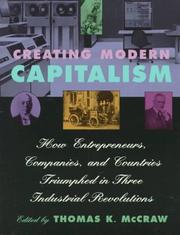
Thomas K. McCraw · 1997

How Britain, Germany, Japan and the US each built their own form of capitalism.

Recommended by: Mohnish Pabrai
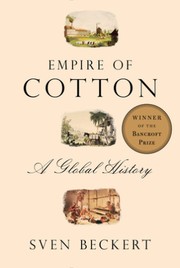
Sven Beckert · 2014

A global history of cotton used to trace how capitalism developed.

Alfred D. Chandler Jr. · 1990

Why big industrial firms in the US, Britain and Germany rose or lagged, 1880 to 1940.

Where it sits in the reference 3

Business models
Business themes
Business themes

Topics

General HistoryPolitics and GovernmentEconomic and Business HistoryRegulation, central banks and public policy