
Updates

  1. Person pages list letters, writing, profiles and links as sortable tables with filters, and show each person's companies as links; Fund letters show each letter's description in its own column.
  2. Experts show a checked job title and a short description of each person; 30 more people have photographs.
  3. Every company, fund, university and publication the experts work for has a page listing the people there.
  4. Fund letters show each letter's thesis and filter by it; 225 person pages list the essays, columns and newsletter issues the person wrote.
  5. Person pages list every essay and newsletter issue a person wrote, and their own books as a table in List view.
  6. Recommends shows the five largest kinds of book and the rest under More; browse pictures load sooner.
  7. Podcasts and talks link the original episode, filter by Audio and video or Press, and list each publisher once.
  8. Pages are wider, Recommends has List and Grid, and a filter clicked again turns off.
  9. Book cards sit in a ruled grid with Open Library and Goodreads links and each book's one-line note.
  10. Funds is now Investors; each investor's styles are buttons that filter the table.
  11. Podcasts and talks on a person's page filter by year and publisher and show as a list or a grid of pictures.
  12. Quotes show only people's own words: 472 summaries written by list sites are gone.
  13. Country pages open from Browse again, and every link on the shelf lands on a page.
  14. Subject and person pages show their sections as tabs, and each book appears once on a person's page.
  15. Book cards show the quote, who said it and the source; grids show five cards to a row.
  16. On a phone, a menu holds the sections, search, Updates, Feedback and dark mode.
  17. Feedback takes a screenshot of the page with no browser prompt, opens a screenshot full size when you click it, and clears itself once sent.
  18. Book cards are centred, search names the topic each book sits in, and any text cut short shows whole on hover.
  19. Search groups its results by kind: people, companies, geographies, subjects, topics, books, funds, fund letters and papers.
  20. The Books table lists who recommended each book by name, and the browser tab names the section you are in.
  21. Feedback can take a screenshot of the page, or one you paste or choose, and opens in the corner beside Updates.
  22. Each rail button reopens its section where you left it, and Browse, Table and People show on every book and subject page.
  23. Filters grey out choices that hold nothing instead of hiding them, and Books › People filters by authors or recommenders.
  24. Feedback takes a subject line and up to three screenshots.
  25. Biographies are grouped by the person they are about: 41 new pages, from Abraham Lincoln to Lee Kuan Yew.
  26. Sport splits into 23 sports, and Religion into one topic per faith.
  27. Book lists show as cards: the cover, one recommendation quote and every recommender by name.
  28. Seventeen subjects that had two or three pages under different names now have one page each.
  29. Every page lists its Experts as authors and recommenders, with a link to them on the Experts tab.
  30. Economics, Financial history, Financial panics and Accounting are subjects of their own, with one page per financial crisis.
  31. Book, person and subject pages open inside the app, so the tabs stay in view.
  32. 996 more book covers, and photographs or logos for 227 more people and companies.
  33. Books › Browse shows every subject as cards, and the rail holds Fund letters, Papers, Experts, Books and Funds.
  34. Every topic over 150 books splits into narrower topics, each with a page of its own.

Send feedback

What is it?
Screenshots, up to 3 (optional)
or paste one with Ctrl+V

We use your email only to reply to you.

Barbarians Led by Bill Gates

Barbarians Led by Bill Gates

Jennifer Edstrom, Marlin Eller
1998
T4 256 pages · about 4h 16m to read Open Librarygoodreads

Insider account by a former Windows developer; hostile in tone.

Summary

Edstrom, the daughter of a Microsoft public relations executive, and Eller, a former Microsoft developer who worked on Windows, wrote an insider account of the company's culture and product development during its dominant period.

The substantive content concerns how decisions were actually made. Eller's account of Windows development describes a process driven by competitive response and by internal advocacy rather than by product planning, with technical decisions frequently determined by which group won an internal argument. The authors document the internal politics, the conflict between groups, and the practice of announcing products long before they existed, which they connect to the competitive effect of deterring customers from buying alternatives.

The strategic material covers the relationship with IBM over OS/2, which Microsoft used to gain time while developing Windows; the response to Novell, Lotus and WordPerfect in applications; the internet response after the 1995 memo, including the bundling of Internet Explorer with Windows; and the general pattern of entering a category, matching the incumbent's features, and using the platform position to win distribution.

Edstrom and Eller are critical of Gates personally and of the culture, which they describe as combative to the point of dysfunction.

The book was published in 1998, during the antitrust litigation, and reads as a contribution to that argument. Both authors have connections that shape the account, and Microsoft disputed it. It is one perspective from participants with grievances, and readers should treat specific claims accordingly. What it conveys, which more measured histories do not, is how the internal argument actually worked and how much of the company's product direction came from competitive reaction rather than from planning.

Key takeaways 7

  1. Product direction was frequently determined by which internal group won an argument rather than by product planning.
  2. Announcing products long before they existed deterred customers from buying competitors' available alternatives.
  3. The OS/2 partnership with IBM gave Microsoft time and information while it developed the product that replaced it.
  4. The company entered categories by matching incumbents' features and winning on platform distribution rather than on product superiority.
  5. The internet response after 1995 was a reaction to an external threat rather than a strategic anticipation.
  6. Bundling a browser with the operating system used the platform position to win a market the company had entered late.
  7. The account comes from participants with grievances and was published during antitrust litigation, which shapes what it emphasises.

Who should read it

Readers wanting an insider critical account of Microsoft's competitive practices during its dominant period, treated as one interested perspective.

Similar books 6

Chosen by shared topics, the entries that hold them, and the people who recommended both.

James Wallace · 1997

Sequel to Hard Drive, on the browser wars and the road to antitrust.
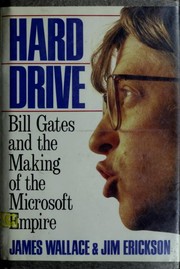
James Wallace, Jim Erickson · 1992

A critical history of Bill Gates and the early Microsoft, from Lakeside School on.

David Bank · 2001

Microsoft's internal fights over the internet and over the antitrust case.
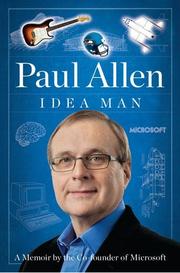
Paul Allen · 2011

A Microsoft co-founder's memoir of his ventures, successes and failures.

Recommended by: Mohnish Pabrai

G. Pascal Zachary · 1994

Inside Microsoft's Windows NT team from 1988 to its 1993 release.

Anupreeta Das · 2024

A biography of Bill Gates covering his reinvention after Microsoft.

Recommended by: Andrew Wilkinson

Where it sits in the reference 2

Companies
Biographies

Topics

Company HistoriesTechnology and ComputingTech company stories