Updates

  1. Person pages list letters, writing, profiles and links as sortable tables with filters, and show each person's companies as links; Fund letters show each letter's description in its own column.
  2. Experts show a checked job title and a short description of each person; 30 more people have photographs.
  3. Every company, fund, university and publication the experts work for has a page listing the people there.
  4. Fund letters show each letter's thesis and filter by it; 225 person pages list the essays, columns and newsletter issues the person wrote.
  5. Person pages list every essay and newsletter issue a person wrote, and their own books as a table in List view.
  6. Recommends shows the five largest kinds of book and the rest under More; browse pictures load sooner.
  7. Podcasts and talks link the original episode, filter by Audio and video or Press, and list each publisher once.
  8. Pages are wider, Recommends has List and Grid, and a filter clicked again turns off.
  9. Book cards sit in a ruled grid with Open Library and Goodreads links and each book's one-line note.
  10. Funds is now Investors; each investor's styles are buttons that filter the table.
  11. Podcasts and talks on a person's page filter by year and publisher and show as a list or a grid of pictures.
  12. Quotes show only people's own words: 472 summaries written by list sites are gone.
  13. Country pages open from Browse again, and every link on the shelf lands on a page.
  14. Subject and person pages show their sections as tabs, and each book appears once on a person's page.
  15. Book cards show the quote, who said it and the source; grids show five cards to a row.
  16. On a phone, a menu holds the sections, search, Updates, Feedback and dark mode.
  17. Feedback takes a screenshot of the page with no browser prompt, opens a screenshot full size when you click it, and clears itself once sent.
  18. Book cards are centred, search names the topic each book sits in, and any text cut short shows whole on hover.
  19. Search groups its results by kind: people, companies, geographies, subjects, topics, books, funds, fund letters and papers.
  20. The Books table lists who recommended each book by name, and the browser tab names the section you are in.
  21. Feedback can take a screenshot of the page, or one you paste or choose, and opens in the corner beside Updates.
  22. Each rail button reopens its section where you left it, and Browse, Table and People show on every book and subject page.
  23. Filters grey out choices that hold nothing instead of hiding them, and Books › People filters by authors or recommenders.
  24. Feedback takes a subject line and up to three screenshots.
  25. Biographies are grouped by the person they are about: 41 new pages, from Abraham Lincoln to Lee Kuan Yew.
  26. Sport splits into 23 sports, and Religion into one topic per faith.
  27. Book lists show as cards: the cover, one recommendation quote and every recommender by name.
  28. Seventeen subjects that had two or three pages under different names now have one page each.
  29. Every page lists its Experts as authors and recommenders, with a link to them on the Experts tab.
  30. Economics, Financial history, Financial panics and Accounting are subjects of their own, with one page per financial crisis.
  31. Book, person and subject pages open inside the app, so the tabs stay in view.
  32. 996 more book covers, and photographs or logos for 227 more people and companies.
  33. Books › Browse shows every subject as cards, and the rail holds Fund letters, Papers, Experts, Books and Funds.
  34. Every topic over 150 books splits into narrower topics, each with a page of its own.

Send feedback

What is it?
Screenshots, up to 3 (optional)
or paste one with Ctrl+V

We use your email only to reply to you.

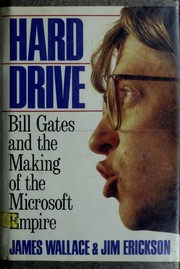
Hard Drive

Hard Drive

James Wallace, Jim Erickson
1992
T2 426 pages · about 7h 6m to read Open Librarygoodreads

Subtitled Bill Gates and the Making of the Microsoft Empire.

Summary

Wallace and Erickson wrote the first substantial critical biography of Bill Gates and the early history of Microsoft, published in 1992 without cooperation from Gates or the company. It covers the Lakeside School computer access, the Traf-O-Data venture, the Altair BASIC deal with MITS, the founding with Paul Allen, the 1980 IBM operating system agreement, and the rise through Windows.

The most consequential business material concerns the IBM deal. Microsoft did not have an operating system when IBM approached, bought QDOS from Seattle Computer Products for a small sum, and licensed it to IBM on a non-exclusive basis that permitted Microsoft to license the same product to the manufacturers of IBM-compatible machines. Wallace and Erickson document how this term, more than any technical achievement, produced the company's position.

They also document the per-processor licensing arrangements with manufacturers, which required payment for every machine shipped regardless of whether it carried the operating system, and which later became the basis for antitrust action. The book covers the conflicts with Paul Allen, including the ownership split and Allen's departure after his cancer diagnosis, and the competitive practices with Apple, Digital Research and others.

The portrait of Gates is unflattering and Microsoft objected to the book. It predates the internet era, the antitrust trial, and Gates' philanthropy entirely, ending in 1992. Later histories cover the company more completely. This remains the clearest account of how the licensing terms in a single 1980 agreement created the outcome.

Key takeaways 8

  1. Microsoft did not have an operating system when IBM approached and acquired one from another company for a small sum.
  2. The non-exclusive licensing term in the IBM agreement, which allowed Microsoft to sell the same product to compatible manufacturers, produced the company's position.
  3. IBM's willingness to accept a licence rather than demand ownership reflects its assessment that hardware rather than software was the valuable component.
  4. Per-processor licensing required manufacturers to pay for every machine shipped regardless of whether it carried the software, which foreclosed competitors.
  5. Gates understood the software business as a licensing business from the beginning, including his 1976 letter arguing that copying software was theft.
  6. Control of the standard rather than technical superiority determined which operating system prevailed.
  7. The founding equity split between Gates and Allen was negotiated early and set the ownership outcome permanently.
  8. The book ends in 1992 and predates the internet, the antitrust trial and everything that shaped the company's later reputation.

Who should read it

Founders and investors who want the account of how contract terms rather than technology produced a dominant position.

Who recommended it 5 · 2 direct

Aaron Leviereported
Drew Houstonreported

Similar books 6

Chosen by shared topics, the entries that hold them, and the people who recommended both.
James Wallace · 1997

Sequel to Hard Drive, on the browser wars and the road to antitrust.

Jennifer Edstrom, Marlin Eller · 1998

Insider account by a former Windows developer; hostile in tone.
Paul Allen · 2011

A Microsoft co-founder's memoir of his ventures, successes and failures.

Recommended by: Mohnish Pabrai

Stephen Manes, Paul Andrews · 1993

Bill Gates from Harvard and Microsoft BASIC to the IBM deal that made Microsoft.

Recommended by: Ev Williams

Anupreeta Das · 2024

A biography of Bill Gates covering his reinvention after Microsoft.

Recommended by: Andrew Wilkinson
Satya Nadella · 2017

Microsoft's chief executive on moving the company toward cloud and AI.

Recommended by: Bill Gates, Satya Nadella

Where it sits in the reference 2

Companies
Biographies

Topics

Company HistoriesBiography and MemoirFounders and Entrepreneurs