Updates

  1. Person pages list letters, writing, profiles and links as sortable tables with filters, and show each person's companies as links; Fund letters show each letter's description in its own column.
  2. Experts show a checked job title and a short description of each person; 30 more people have photographs.
  3. Every company, fund, university and publication the experts work for has a page listing the people there.
  4. Fund letters show each letter's thesis and filter by it; 225 person pages list the essays, columns and newsletter issues the person wrote.
  5. Person pages list every essay and newsletter issue a person wrote, and their own books as a table in List view.
  6. Recommends shows the five largest kinds of book and the rest under More; browse pictures load sooner.
  7. Podcasts and talks link the original episode, filter by Audio and video or Press, and list each publisher once.
  8. Pages are wider, Recommends has List and Grid, and a filter clicked again turns off.
  9. Book cards sit in a ruled grid with Open Library and Goodreads links and each book's one-line note.
  10. Funds is now Investors; each investor's styles are buttons that filter the table.
  11. Podcasts and talks on a person's page filter by year and publisher and show as a list or a grid of pictures.
  12. Quotes show only people's own words: 472 summaries written by list sites are gone.
  13. Country pages open from Browse again, and every link on the shelf lands on a page.
  14. Subject and person pages show their sections as tabs, and each book appears once on a person's page.
  15. Book cards show the quote, who said it and the source; grids show five cards to a row.
  16. On a phone, a menu holds the sections, search, Updates, Feedback and dark mode.
  17. Feedback takes a screenshot of the page with no browser prompt, opens a screenshot full size when you click it, and clears itself once sent.
  18. Book cards are centred, search names the topic each book sits in, and any text cut short shows whole on hover.
  19. Search groups its results by kind: people, companies, geographies, subjects, topics, books, funds, fund letters and papers.
  20. The Books table lists who recommended each book by name, and the browser tab names the section you are in.
  21. Feedback can take a screenshot of the page, or one you paste or choose, and opens in the corner beside Updates.
  22. Each rail button reopens its section where you left it, and Browse, Table and People show on every book and subject page.
  23. Filters grey out choices that hold nothing instead of hiding them, and Books › People filters by authors or recommenders.
  24. Feedback takes a subject line and up to three screenshots.
  25. Biographies are grouped by the person they are about: 41 new pages, from Abraham Lincoln to Lee Kuan Yew.
  26. Sport splits into 23 sports, and Religion into one topic per faith.
  27. Book lists show as cards: the cover, one recommendation quote and every recommender by name.
  28. Seventeen subjects that had two or three pages under different names now have one page each.
  29. Every page lists its Experts as authors and recommenders, with a link to them on the Experts tab.
  30. Economics, Financial history, Financial panics and Accounting are subjects of their own, with one page per financial crisis.
  31. Book, person and subject pages open inside the app, so the tabs stay in view.
  32. 996 more book covers, and photographs or logos for 227 more people and companies.
  33. Books › Browse shows every subject as cards, and the rail holds Fund letters, Papers, Experts, Books and Funds.
  34. Every topic over 150 books splits into narrower topics, each with a page of its own.

Send feedback

What is it?
Screenshots, up to 3 (optional)
or paste one with Ctrl+V

We use your email only to reply to you.

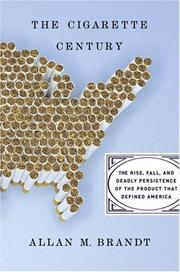
The Cigarette Century

The Cigarette Century

Allan M. Brandt
2007
T2 640 pages · about 10h 40m to read Open Librarygoodreads

The regulatory and litigation environment that set what the tobacco assets were worth.

Summary

Brandt, a historian of medicine at Harvard, wrote a history of the cigarette in twentieth-century America, covering its rise from a marginal product to a mass consumer good, the establishment of its health effects, and the industry's response.

The first part explains how the cigarette was created as a product and as a cultural object. Machine manufacture made mass production possible, and advertising made the product desirable, associating it with modernity, independence and later with women's emancipation through campaigns Edward Bernays designed. Wartime distribution to soldiers established the habit across a generation. Brandt argues the cigarette is the paradigm case of a product whose demand was manufactured rather than discovered.

The second part covers the science. Epidemiological studies in the late 1940s and 1950s, particularly Doll and Hill in Britain and Wynder and Graham in the United States, established the association, and the causal inference criteria developed to interpret them became a foundation of modern epidemiology.

The third part is the industry's response, which Brandt documents from the internal papers released through litigation. The 1953 meeting at the Plaza Hotel produced a coordinated strategy of funding research designed to sustain the appearance of controversy, of publicly demanding proof while privately accepting the findings, and of framing smoking as a matter of individual choice. Brandt argues this created a template that later industries copied for other products and for climate science.

The final part covers litigation, the Master Settlement Agreement, regulation, and the industry's shift to markets outside the United States.

The book is long and academic. Brandt served as an expert witness in tobacco litigation, which he discloses and which readers should weigh, though the documentary record he draws on is public.

Key takeaways 7

  1. Cigarette demand was manufactured through advertising and wartime distribution rather than discovered in existing consumer preference.
  2. The epidemiological studies of the 1950s established the causal link and produced the inference criteria that modern epidemiology still uses.
  3. The industry coordinated in 1953 on a strategy of funding research to sustain the appearance of scientific controversy.
  4. Executives publicly demanded proof of harm while internal documents show they accepted the findings.
  5. Framing smoking as individual choice shifted responsibility to consumers and delayed regulation for decades.
  6. The manufactured-doubt strategy developed for tobacco became a template later applied to other products and to climate science.
  7. Litigation discovery rather than regulation or journalism produced the documents that established what the industry knew.

Who should read it

Operators and investors in regulated consumer categories who want the documented history of how an industry managed scientific evidence against its product.

Similar books 6

Chosen by shared topics, the entries that hold them, and the people who recommended both.
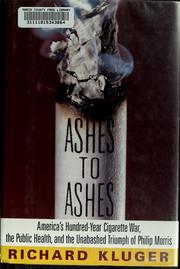
Richard Kluger · 1996

A century of the American cigarette industry, from mass marketing to 1990s lawsuits.
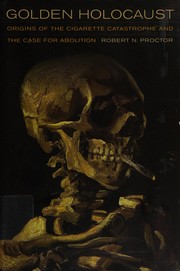
Robert N. Proctor · 2011

How tobacco chemists engineered cigarettes, drawn from the industry's own documents.
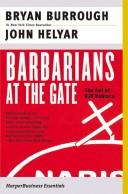
Bryan Burrough, John Helyar · 1989

The 1988 bidding war for RJR Nabisco, the largest leveraged buyout to that date.

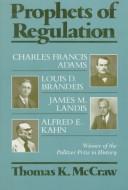
Thomas K. McCraw · 1984

A century of US regulation through four figures, from Charles Francis Adams to Kahn.
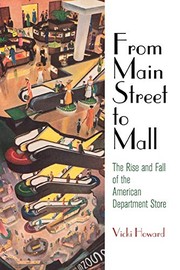
Vicki Howard · 2015

The rise and fall of the American department store, with Sears throughout.
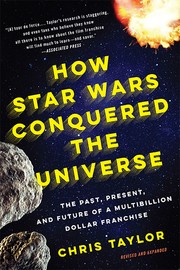
Chris Taylor · 2014

How Star Wars merchandise came to outgrow the films that created it.

Where it sits in the reference 3

Companies
Industries
Business themes

Topics

General HistoryHealth and FitnessSociology and CultureEconomic and Business HistoryConsumer culture and cultural criticism