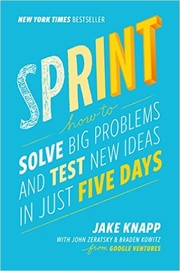
Sprint
The Google Ventures five-day workshop format distilled into a repeatable method for answering critical design questions through rapid prototyping and targeted user testing. Less a design book than a process book — most valuable for teams that struggle to move from ideas to validated decisions quickly.
Summary
Knapp developed the design sprint at Google Ventures and the book gives a five-day process for answering a business question through prototyping and customer testing rather than through discussion and building.
The structure is fixed. Monday maps the problem and selects a target, with the team writing questions, mapping the customer journey, interviewing internal experts, and the decider choosing one target on the map. Tuesday generates solutions, with each person sketching individually rather than brainstorming in a group, on the basis that group ideation produces worse output. Wednesday decides, using structured voting and a decider who breaks ties rather than seeking consensus, and produces a storyboard. Thursday builds a prototype that only needs to survive a customer interview, using whatever tools produce a convincing facade fastest. Friday tests the prototype with five customers in individual interviews, with the team watching together and recording patterns.
The underlying arguments are that individual work produces better ideas than group brainstorming, that a single decider avoids the compromise that consensus produces, that a facade prototype answers the same questions as a working product at a fraction of the cost, and that five interviews reveal the large majority of significant problems.
The method requires clearing five consecutive days for a full team, which is the main obstacle to adoption. It works for questions that a customer interview can answer and does not work for technical feasibility questions or for anything requiring longitudinal data. The specific schedule with times and exercises is the reason to buy the book rather than read a summary.
Key takeaways 8
- A business question can be answered in five days through prototyping and customer testing rather than through months of discussion and building.
- Individuals sketching alone produce better and more varied solutions than group brainstorming does.
- A single decider who breaks ties produces better outcomes than consensus, which converges on the option nobody objects to.
- A prototype needs only to survive a customer interview, which means a convincing facade answers the same question as a working product.
- Five customer interviews reveal the large majority of significant problems, so additional interviews add cost without adding information.
- The whole team watching the interviews together removes the argument about what the results mean, since everyone saw the same thing.
- Starting from the end, meaning defining the long-term goal and the questions that could prevent it, focuses the week on what actually matters.
- The method works for questions a customer interview can answer and does not address technical feasibility or anything requiring longitudinal data.
Who should read it
Product teams stuck in discussion about a significant decision who can clear five consecutive days to test it instead.
Who recommended it 4
Similar books 6
Chosen by shared topics, the entries that hold them, and the people who recommended both.
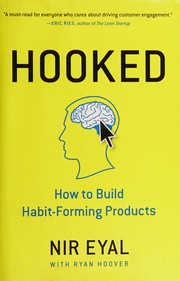
A four-step model for habit-forming products: trigger, action, reward, investment.
Recommended by: Nat Eliason, Alexis Ohanian, Andrew Chen and 6 others
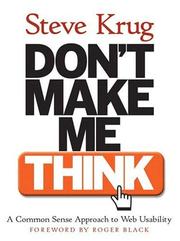
Krug's web usability primer has stayed relevant for over two decades because its core argument — that good interfaces require no instruction — is timeless. The chapters on navigation conventions and usability testing with five users are still the most practical introduction to the discipline.
Recommended by: Brian Armstrong, Andy Budd, Austen Allred and 6 others
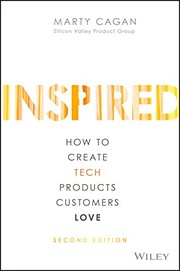
The foundational text of the modern PM role. Cagan's central argument — that most companies build the wrong things because they treat product as a delivery function rather than a discovery function — reframes everything that follows. The chapter on product discovery versus product delivery is worth the price of the book.
Recommended by: Anna Cheng, Marty Cagan
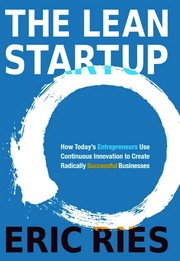
Build, measure, learn: test what customers want with small experiments.
Recommended by: Nat Eliason, Sheryl Sandberg, Andrew Chen and 17 others
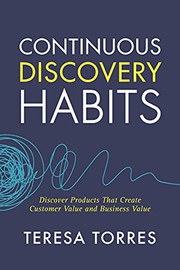
Torres operationalizes what Cagan describes. Weekly customer touchpoints, opportunity-solution trees, assumption testing — this is the most practical account of how discovery actually becomes a habit rather than a quarterly exercise. Pairs directly with Inspired as the how to its what.
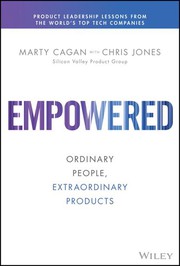
Cagan's follow-on to Inspired shifts from product craft to organizational conditions. The argument: you cannot have great products without empowered product teams, and empowered teams require managers who coach toward outcomes rather than manage toward outputs. Addresses the question Inspired leaves open — what do you change first?
Where it sits in the reference 4
Topics