Updates

  1. Person pages list letters, writing, profiles and links as sortable tables with filters, and show each person's companies as links; Fund letters show each letter's description in its own column.
  2. Experts show a checked job title and a short description of each person; 30 more people have photographs.
  3. Every company, fund, university and publication the experts work for has a page listing the people there.
  4. Fund letters show each letter's thesis and filter by it; 225 person pages list the essays, columns and newsletter issues the person wrote.
  5. Person pages list every essay and newsletter issue a person wrote, and their own books as a table in List view.
  6. Recommends shows the five largest kinds of book and the rest under More; browse pictures load sooner.
  7. Podcasts and talks link the original episode, filter by Audio and video or Press, and list each publisher once.
  8. Pages are wider, Recommends has List and Grid, and a filter clicked again turns off.
  9. Book cards sit in a ruled grid with Open Library and Goodreads links and each book's one-line note.
  10. Funds is now Investors; each investor's styles are buttons that filter the table.
  11. Podcasts and talks on a person's page filter by year and publisher and show as a list or a grid of pictures.
  12. Quotes show only people's own words: 472 summaries written by list sites are gone.
  13. Country pages open from Browse again, and every link on the shelf lands on a page.
  14. Subject and person pages show their sections as tabs, and each book appears once on a person's page.
  15. Book cards show the quote, who said it and the source; grids show five cards to a row.
  16. On a phone, a menu holds the sections, search, Updates, Feedback and dark mode.
  17. Feedback takes a screenshot of the page with no browser prompt, opens a screenshot full size when you click it, and clears itself once sent.
  18. Book cards are centred, search names the topic each book sits in, and any text cut short shows whole on hover.
  19. Search groups its results by kind: people, companies, geographies, subjects, topics, books, funds, fund letters and papers.
  20. The Books table lists who recommended each book by name, and the browser tab names the section you are in.
  21. Feedback can take a screenshot of the page, or one you paste or choose, and opens in the corner beside Updates.
  22. Each rail button reopens its section where you left it, and Browse, Table and People show on every book and subject page.
  23. Filters grey out choices that hold nothing instead of hiding them, and Books › People filters by authors or recommenders.
  24. Feedback takes a subject line and up to three screenshots.
  25. Biographies are grouped by the person they are about: 41 new pages, from Abraham Lincoln to Lee Kuan Yew.
  26. Sport splits into 23 sports, and Religion into one topic per faith.
  27. Book lists show as cards: the cover, one recommendation quote and every recommender by name.
  28. Seventeen subjects that had two or three pages under different names now have one page each.
  29. Every page lists its Experts as authors and recommenders, with a link to them on the Experts tab.
  30. Economics, Financial history, Financial panics and Accounting are subjects of their own, with one page per financial crisis.
  31. Book, person and subject pages open inside the app, so the tabs stay in view.
  32. 996 more book covers, and photographs or logos for 227 more people and companies.
  33. Books › Browse shows every subject as cards, and the rail holds Fund letters, Papers, Experts, Books and Funds.
  34. Every topic over 150 books splits into narrower topics, each with a page of its own.

Send feedback

What is it?
Screenshots, up to 3 (optional)
or paste one with Ctrl+V

We use your email only to reply to you.

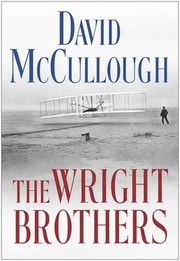
The Wright Brothers

The Wright Brothers

David McCullough
2015
T2 432 pages · about 7h 12m to read Open Librarygoodreads

Two bicycle makers solving flight through iteration and self-funding

Summary

McCullough tells the story of Wilbur and Orville Wright from their Dayton bicycle business through the first powered flights at Kitty Hawk in 1903 and the demonstrations in France and at Fort Myer in 1908 and 1909 that finally established their claim. He drew on the brothers' correspondence, diaries and the family papers.

The most instructive material concerns their method. They identified control as the unsolved problem when others were pursuing power and lift, and worked on gliders for three years before attempting an engine. They built their own wind tunnel after discovering that the published lift coefficient tables from Lilienthal were wrong, and generated their own data across two hundred wing shapes. They taught themselves to fly the gliders before adding power, accumulating hours of practical experience that competitors with better-funded programmes never obtained.

McCullough emphasises that they had no college education, no external funding, no government contracts and no scientific establishment behind them, and that they financed everything from the bicycle shop's profits. He contrasts this with Samuel Langley's federally funded programme, which failed publicly twice. The later sections cover the years of disbelief, in which American newspapers ignored or denied the flights, and the patent litigation that consumed the brothers afterwards and which McCullough treats with less attention than it deserves.

The book is narrative history without technical depth, and readers wanting the aeronautics should look elsewhere. McCullough is admiring throughout and the brothers' commercial failures and litigiousness receive limited treatment. The account of how they identified the right problem and built their own data is the part with the widest application.

Key takeaways 8

  1. The Wrights identified control as the unsolved problem while competitors pursued power and lift, which determined why they succeeded and others did not.
  2. They discovered that the published aeronautical data everyone was using was wrong, and built their own wind tunnel to generate correct figures.
  3. They spent three years on unpowered gliders before attempting flight with an engine, accumulating practical flying experience their competitors never had.
  4. They financed the entire programme from a small bicycle business with no external capital or government support.
  5. Samuel Langley's well-funded federal programme failed publicly while the Wrights succeeded on a fraction of the budget, which McCullough attributes to method rather than resources.
  6. Building and testing at small scale before committing to the full system allowed them to discover errors cheaply.
  7. American newspapers and scientific institutions refused to accept the flights for years after they occurred, which delayed commercial exploitation.
  8. Neither brother had a college education or any formal training in the field they solved.

Who should read it

Founders and engineers who want a case study in identifying the right problem, distrusting published data, and building capability incrementally without capital.

Who recommended it 6 · 3 direct

Bob Igerreported

Similar books 6

Chosen by shared topics, the entries that hold them, and the people who recommended both.
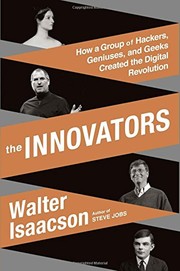
Walter Isaacson · 2014

Computing as a run of collaborations, from Ada Lovelace and Babbage to Google.

Ben R. Rich, Leo Janos, Ben R./Janos, Leo Rich · 1994

Inside Lockheed's secret projects unit, from the U-2 to the stealth fighter.

Recommended by: Patrick Collison, Sam Altman
Matt Ridley · 2020

Innovation is gradual, collective and bottom-up, not the work of lone inventors.

“It's a must-read for entrepreneurs and government officials who want to either be innovative themselves or foster innovation.” — Naval Ravikant

Source: Nav.al — 'Matt Ridley: How Innovation Works, Part 2'

Recommended by: Naval Ravikant, Balaji S. Srinivasan
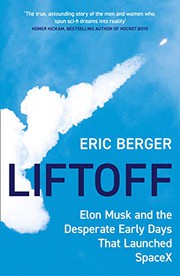
Eric Berger · 2021

SpaceX's first six years, when it nearly failed four times before Falcon 1 flew.

Where it sits in the reference 2

Business themes
Industries

Topics

Biography and MemoirTechnology and ComputingGeneral HistoryScientists, Doctors and ThinkersScience, Technology and MedicineAviation and spaceflight