
Living on the Fault Line
Managing shareholder value through technology discontinuities
Summary
Moore's third major book shifts from marketing technology products to managing a technology company for shareholder value. His organising claim is that management's job is to allocate scarce resources to the activities that create competitive advantage and to systematically remove resources from everything else, because in technology markets the gap between advantaged and unadvantaged activity is unusually wide.
The main analytical tools are the core versus context distinction and the mission-critical versus supporting distinction, which together produce a four-box grid for deciding what to keep, what to outsource, what to automate and what to stop. Core work differentiates the company in a way customers pay for. Context work must be done but produces no differentiation, and it accumulates over time as yesterday's core becomes today's overhead. Moore argues that companies fail to reallocate because context work has internal constituencies and because the people doing it are competent and loyal. He connects this to the technology adoption life cycle from his earlier books, arguing that what counts as core changes as a category moves from early market to mass market to commoditisation.
The book is aimed at executives of established technology companies rather than founders. Its practical value is in the outsourcing and resource reallocation argument, which anticipated a decade of actual practice. The shareholder value framing is presented through a stock price model that is thin as finance, and the case examples are from the 1999 and 2000 period, which dates the specific judgements badly. The revised edition adds material but does not fix the timing problem.
Key takeaways 7
- Every activity in a company is either core, meaning it creates the differentiation customers pay for, or context, meaning it must be done but earns nothing.
- Today's core reliably becomes tomorrow's context, so resource reallocation must be a continuous management process rather than a periodic restructuring.
- Context work that is mission-critical should be outsourced to a partner for whom it is core, not eliminated.
- Companies fail to move resources out of context activities because those activities have competent, loyal internal constituencies.
- What counts as differentiating changes as a technology category moves through the adoption life cycle, so the same activity can shift from core to context without any change in how well it is done.
- Shareholder value in technology companies is driven by the market's assessment of competitive advantage period, not by current earnings.
- Management should concentrate resources rather than spread them, because in technology markets returns to advantage are disproportionate.
Who should read it
Executives at established technology companies deciding what to outsource, automate or stop, rather than founders building a first product.
About Geoffrey A. Moore
American technology-marketing consultant and venture partner at Mohr Davidow Ventures who wrote Crossing the Chasm.
Crossing the Chasm identifies the gap between early adopters and the pragmatic majority and prescribes the beachhead answer: dominate one narrow segment with a complete product before widening. Inside the Tornado and Living on the Fault Line carry the model into hypergrowth and into managing businesses at different stages of maturity at once.
Who recommended it 1 · 1 direct
“Moore's forthcoming book, Living on the Fault Line... is terrific and highly recommended.”
Similar books 6
Chosen by shared topics, the entries that hold them, and the people who recommended both.
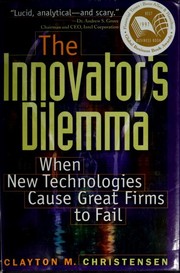
Why well-run firms lose to cheaper, worse products that enter at the market's bottom.
“Awesome book. May move soon to my Top Ten List. If anything will keep CEOs awake at night, reading this book certainly will.” — Mohnish Pabrai
Source: Mohnish's Bookshelf — Books on Sales & Marketing, entry 66
Recommended by: Jim Collins, Mohnish Pabrai, Aaron Levie and 27 others

Why imitating others' innovations matters as much as innovating.
Recommended by: Mohnish Pabrai

Why long-lived companies underperform the market, and how to transform them.
Recommended by: Mohnish Pabrai

How to anticipate change and create your own opportunities in business.
Recommended by: Tom Bilyeu

Recommended by: Ev Williams, Keith Rabois

Why organisations kill breakthrough projects, and how structure can protect them.
Recommended by: Arianna Huffington, Bill Gates and 8 others
Where it sits in the reference 5
Topics