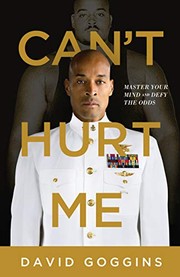
Can't Hurt Me
Summary
Goggins tells his own story: an abusive childhood, a period weighing three hundred pounds working as an exterminator, three rounds of Navy SEAL training including two repeats of Hell Week, subsequent Army Ranger and Air Force tactical air control training, and an ultra-endurance running career that included a hundred-mile race with no preparation.
The method he extracts is deliberate accumulation of voluntary hardship. His concepts include the accountability mirror, meaning writing your actual failures on notes attached to a mirror and reading them daily; callusing the mind through repeated exposure to what you avoid; the forty percent rule, his claim that when a person believes they are finished they have used about forty percent of their capacity; taking souls, meaning outperforming someone who expects you to fail; and the cookie jar, meaning a mental store of past difficulties overcome, retrieved during present difficulty as evidence.
The book is structured with challenges at the end of each chapter that instruct the reader to do specific uncomfortable things.
The factual accuracy of some accounts has been questioned, and the forty percent figure has no basis in physiology as stated. Goggins describes extreme methods including running on fractured legs and severe overtraining, and the book does not distinguish between voluntary discomfort as a training method and injury that produces permanent damage. He has had multiple surgeries. The psychological argument, that avoiding discomfort compounds and that deliberately seeking it builds tolerance, is defensible. The specific practices should not be copied literally. Read it for the argument about self-imposed limits and the accountability mechanism, not as a training programme.
Key takeaways 8
- Most people stop far short of their physical and mental capacity, and the sensation of being finished arrives long before the actual limit.
- Writing your actual failures where you must see them daily produces change that private acknowledgment does not.
- Deliberately doing what you avoid, repeatedly, builds tolerance for discomfort that transfers to unrelated situations.
- A record of past difficulties overcome can be retrieved deliberately as evidence during present difficulty.
- Suffering that a person chooses is a different category from suffering imposed on them, and the first can be used as training.
- Blaming circumstances, however genuine, removes the only mechanism a person has for changing their situation.
- Being underestimated is an advantage that can be used deliberately by outperforming the expectation in front of the person holding it.
- Goggins describes training through fractures and severe injury, which produced lasting damage and should be read as a description rather than as instruction.
Who should read it
Readers who need a direct argument against their own self-imposed limits, with the extreme physical practices treated as biography rather than as a programme.
Who recommended it 10 · 1 direct
Similar books 6
Chosen by shared topics, the entries that hold them, and the people who recommended both.
A news anchor's panic attack on air leads him to meditation, and what it did for him.
Recommended by: Nat Eliason, Arianna Huffington, Peter Attia and 2 others
Life in Nazi concentration camps, and logotherapy: finding meaning to survive.
“I have been deeply influenced by the existentialist and eminent psychiatrist Viktor Frankl, who wrote the perennial best seller Man's Search for Meaning, one of the most influential books I've ever…” — Frank Martin
Source: Martin on one of the most influential books he has read and reread
Recommended by: Frank Martin, Mohnish Pabrai, Nat Eliason and 24 others

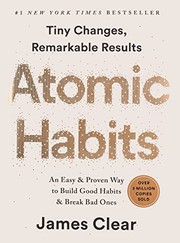
Build habits by making them obvious, attractive, easy and satisfying.
Recommended by: Ali Abdaal, Balaji S. Srinivasan and 21 others

How Rockefeller built Standard Oil, faced its breakup and gave his fortune away.
“…books I've recommended, highlighted to death, or forced on friends.” — Andrew Wilkinson
Source: Andrew Wilkinson's Bookshelf, neverenough.com
Recommended by: Andrew Wilkinson, Charlie Munger and 12 others

Lessons from building CD Baby from a side project to an $85 million business.
Recommended by: Nat Eliason, Ali Abdaal, Paul Jarvis and 2 others
Where it sits in the reference 0
No entry holds this book yet. It reached the reference because someone recommended it.
Topics