Updates

  1. Person pages list letters, writing, profiles and links as sortable tables with filters, and show each person's companies as links; Fund letters show each letter's description in its own column.
  2. Experts show a checked job title and a short description of each person; 30 more people have photographs.
  3. Every company, fund, university and publication the experts work for has a page listing the people there.
  4. Fund letters show each letter's thesis and filter by it; 225 person pages list the essays, columns and newsletter issues the person wrote.
  5. Person pages list every essay and newsletter issue a person wrote, and their own books as a table in List view.
  6. Recommends shows the five largest kinds of book and the rest under More; browse pictures load sooner.
  7. Podcasts and talks link the original episode, filter by Audio and video or Press, and list each publisher once.
  8. Pages are wider, Recommends has List and Grid, and a filter clicked again turns off.
  9. Book cards sit in a ruled grid with Open Library and Goodreads links and each book's one-line note.
  10. Funds is now Investors; each investor's styles are buttons that filter the table.
  11. Podcasts and talks on a person's page filter by year and publisher and show as a list or a grid of pictures.
  12. Quotes show only people's own words: 472 summaries written by list sites are gone.
  13. Country pages open from Browse again, and every link on the shelf lands on a page.
  14. Subject and person pages show their sections as tabs, and each book appears once on a person's page.
  15. Book cards show the quote, who said it and the source; grids show five cards to a row.
  16. On a phone, a menu holds the sections, search, Updates, Feedback and dark mode.
  17. Feedback takes a screenshot of the page with no browser prompt, opens a screenshot full size when you click it, and clears itself once sent.
  18. Book cards are centred, search names the topic each book sits in, and any text cut short shows whole on hover.
  19. Search groups its results by kind: people, companies, geographies, subjects, topics, books, funds, fund letters and papers.
  20. The Books table lists who recommended each book by name, and the browser tab names the section you are in.
  21. Feedback can take a screenshot of the page, or one you paste or choose, and opens in the corner beside Updates.
  22. Each rail button reopens its section where you left it, and Browse, Table and People show on every book and subject page.
  23. Filters grey out choices that hold nothing instead of hiding them, and Books › People filters by authors or recommenders.
  24. Feedback takes a subject line and up to three screenshots.
  25. Biographies are grouped by the person they are about: 41 new pages, from Abraham Lincoln to Lee Kuan Yew.
  26. Sport splits into 23 sports, and Religion into one topic per faith.
  27. Book lists show as cards: the cover, one recommendation quote and every recommender by name.
  28. Seventeen subjects that had two or three pages under different names now have one page each.
  29. Every page lists its Experts as authors and recommenders, with a link to them on the Experts tab.
  30. Economics, Financial history, Financial panics and Accounting are subjects of their own, with one page per financial crisis.
  31. Book, person and subject pages open inside the app, so the tabs stay in view.
  32. 996 more book covers, and photographs or logos for 227 more people and companies.
  33. Books › Browse shows every subject as cards, and the rail holds Fund letters, Papers, Experts, Books and Funds.
  34. Every topic over 150 books splits into narrower topics, each with a page of its own.

Send feedback

What is it?
Screenshots, up to 3 (optional)
or paste one with Ctrl+V

We use your email only to reply to you.

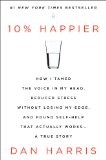
10% Happier

10% Happier

Dan Harris
2014
237 pages · about 3h 57m to read Open Librarygoodreads

Summary

Harris was an ABC News correspondent who had a panic attack on live television in 2004, traced it to untreated anxiety and to recreational drug use following war reporting, and eventually found meditation through covering religion for the network. The book is his account of a sceptic reaching a practice he had dismissed.

The reporting sections cover his encounters with Deepak Chopra and Eckhart Tolle, whom he treats critically, and with Mark Epstein, Joseph Goldstein and Sharon Salzberg, who provided the version of meditation he adopted. He is direct about the commercial self-help industry and about the difficulty of separating the practice from the claims made around it.

The practical content concerns what meditation actually does, which he presents in deliberately modest terms. It does not eliminate ambition, it does not produce enlightenment on any accessible timescale, and the reasonable claim is a moderate reduction in reactivity, which is where the title comes from. The mechanism he describes is noticing the gap between an event and the response to it, which permits a choice that automatic reaction does not.

He addresses the objection that meditation would remove the drive that produced his career, which he had held strongly, and reports that the effect was on the reactivity rather than on the ambition. The book contains no research beyond passing references. The clinical evidence for meditation is more mixed than popular coverage suggests, with small effect sizes in well-designed trials. Harris's own subsequent commercial interest in a meditation application postdates the book. The modest framing of the claim is its main contribution.

Key takeaways 8

  1. The reasonable claim for meditation is a moderate reduction in reactivity rather than any transformation of experience.
  2. The mechanism is noticing the gap between an event and the response to it, which permits a choice that automatic reaction does not.
  3. Meditation does not remove ambition or competitive drive, which is the objection Harris held before starting and tested directly.
  4. The voice in the head narrating and judging continuously is not the same as the person hearing it, which is the first observation the practice produces.
  5. Much of the commercial market around meditation makes claims that the practice does not support and that discredit it with sceptics.
  6. Untreated anxiety and its self-medication produced a public failure that Harris traces directly to conditions he had not examined.
  7. The practice requires ordinary daily repetition rather than any special conditions or beliefs.
  8. Clinical evidence for meditation shows small effect sizes in well-designed trials, which is more modest than popular coverage suggests.

Who should read it

Sceptical high-performing professionals who dismiss meditation and want an account from someone who did the same and tested it.

Who recommended it 5 · 1 direct

Peter Attiareported
Tim Ferrissreported

Similar books 6

Chosen by shared topics, the entries that hold them, and the people who recommended both.
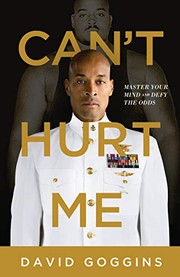
David Goggins · 2018

From abused child and 300-pound exterminator to Navy SEAL, and how to get tough.

Where it sits in the reference 0

No entry holds this book yet. It reached the reference because someone recommended it.

Topics

Health and FitnessReligion and SpiritualityBiography and MemoirPersonal and Spiritual MemoirsBuddhism, Zen, Taoism and mindfulness