Updates

  1. Person pages list letters, writing, profiles and links as sortable tables with filters, and show each person's companies as links; Fund letters show each letter's description in its own column.
  2. Experts show a checked job title and a short description of each person; 30 more people have photographs.
  3. Every company, fund, university and publication the experts work for has a page listing the people there.
  4. Fund letters show each letter's thesis and filter by it; 225 person pages list the essays, columns and newsletter issues the person wrote.
  5. Person pages list every essay and newsletter issue a person wrote, and their own books as a table in List view.
  6. Recommends shows the five largest kinds of book and the rest under More; browse pictures load sooner.
  7. Podcasts and talks link the original episode, filter by Audio and video or Press, and list each publisher once.
  8. Pages are wider, Recommends has List and Grid, and a filter clicked again turns off.
  9. Book cards sit in a ruled grid with Open Library and Goodreads links and each book's one-line note.
  10. Funds is now Investors; each investor's styles are buttons that filter the table.
  11. Podcasts and talks on a person's page filter by year and publisher and show as a list or a grid of pictures.
  12. Quotes show only people's own words: 472 summaries written by list sites are gone.
  13. Country pages open from Browse again, and every link on the shelf lands on a page.
  14. Subject and person pages show their sections as tabs, and each book appears once on a person's page.
  15. Book cards show the quote, who said it and the source; grids show five cards to a row.
  16. On a phone, a menu holds the sections, search, Updates, Feedback and dark mode.
  17. Feedback takes a screenshot of the page with no browser prompt, opens a screenshot full size when you click it, and clears itself once sent.
  18. Book cards are centred, search names the topic each book sits in, and any text cut short shows whole on hover.
  19. Search groups its results by kind: people, companies, geographies, subjects, topics, books, funds, fund letters and papers.
  20. The Books table lists who recommended each book by name, and the browser tab names the section you are in.
  21. Feedback can take a screenshot of the page, or one you paste or choose, and opens in the corner beside Updates.
  22. Each rail button reopens its section where you left it, and Browse, Table and People show on every book and subject page.
  23. Filters grey out choices that hold nothing instead of hiding them, and Books › People filters by authors or recommenders.
  24. Feedback takes a subject line and up to three screenshots.
  25. Biographies are grouped by the person they are about: 41 new pages, from Abraham Lincoln to Lee Kuan Yew.
  26. Sport splits into 23 sports, and Religion into one topic per faith.
  27. Book lists show as cards: the cover, one recommendation quote and every recommender by name.
  28. Seventeen subjects that had two or three pages under different names now have one page each.
  29. Every page lists its Experts as authors and recommenders, with a link to them on the Experts tab.
  30. Economics, Financial history, Financial panics and Accounting are subjects of their own, with one page per financial crisis.
  31. Book, person and subject pages open inside the app, so the tabs stay in view.
  32. 996 more book covers, and photographs or logos for 227 more people and companies.
  33. Books › Browse shows every subject as cards, and the rail holds Fund letters, Papers, Experts, Books and Funds.
  34. Every topic over 150 books splits into narrower topics, each with a page of its own.

Send feedback

What is it?
Screenshots, up to 3 (optional)
or paste one with Ctrl+V

We use your email only to reply to you.

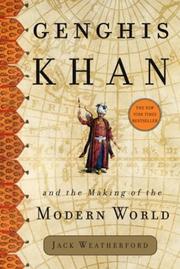
Genghis Khan and the Making of the Modern Wo

Genghis Khan and the Making of the Modern World

Jack Weatherford
2004
352 pages · about 5h 52m to read Open Librarygoodreads

Summary

Weatherford, an anthropologist, argues that the Mongol empire established under Genghis Khan created the conditions for the modern world through trade, communication and the transmission of technology across Eurasia, and that the standard Western picture of pure destruction is a later construction.

The biographical material covers Temujin's origins as an outcast, his rise through the steppe political system, and the specific innovations he introduced. Weatherford emphasises that Genghis reorganised his army by dividing tribal units and mixing them, which broke tribal loyalty and replaced it with loyalty to the structure; promoted on demonstrated ability rather than by birth, including men from defeated enemies; distributed loot by a system that included the families of the dead; and used terror deliberately and selectively, since cities that surrendered were spared and cities that resisted were destroyed as a demonstration.

The administrative material covers religious tolerance as policy, the suppression of torture, a written legal code applying to the ruler as well as the ruled, diplomatic immunity, the postal relay system, the standardisation of weights and the encouragement of long-distance trade. Weatherford's argument that this transmission of technology and ideas across Eurasia contributed directly to the European Renaissance is his most contested claim.

The book is written by an admirer and historians have criticised it for minimising the scale of destruction, for relying heavily on the Secret History of the Mongols as a source, and for overstating the Mongol contribution to European developments. The material on organisational design, meritocracy and the deliberate use of reputation is the part with the widest application.

Key takeaways 8

  1. Genghis Khan broke tribal loyalty by dividing tribal units across a new military structure, which replaced inherited allegiance with loyalty to the organisation.
  2. Promotion was by demonstrated ability including for men from defeated enemies, which converted opponents into capability rather than eliminating them.
  3. Terror was used selectively as a communication strategy, since cities that surrendered were spared and cities that resisted were destroyed publicly.
  4. Religious tolerance was imposed as policy across the empire, which removed a standing source of conflict and administrative cost.
  5. A written legal code applying to the ruler as well as the ruled established a form of accountability unusual for the period.
  6. The postal relay system moved information across the empire faster than any competing state could, which was a direct military and administrative advantage.
  7. Encouraging long-distance trade and protecting merchants transmitted technology and ideas across Eurasia on an unprecedented scale.
  8. Weatherford writes as an admirer and historians dispute both his minimisation of the destruction and his claims about the Mongol contribution to Europe.

Who should read it

Readers interested in organisational design, meritocratic promotion and the deliberate management of reputation, in a contested but readable history.

Who recommended it 5

Ben Horowitzreported
Daymond Johnreported
Justin Kanreported
Tim Ferrissreported

Similar books 6

Chosen by shared topics, the entries that hold them, and the people who recommended both.
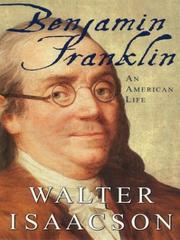
Walter Isaacson · 2003

Franklin's life as printer, scientist, diplomat and founder.

“…books I've recommended, highlighted to death, or forced on friends.” — Andrew Wilkinson

Source: Andrew Wilkinson's Bookshelf, neverenough.com

Recommended by: Alfred Lin, Andrew Wilkinson, Mohnish Pabrai and 7 others

Where it sits in the reference 1

Biographies

Topics

General HistoryBiography and MemoirPolitical Leaders and PolicymakersAncient, Medieval and Renaissance History