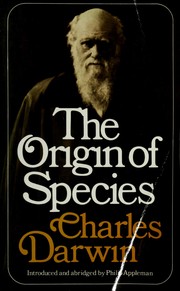
On the Origin of Species
The founding text of natural selection
Summary
Darwin published in 1859 the argument that species change over time through natural selection, meaning that individuals vary, that variation is heritable, that more individuals are produced than can survive, and that those with advantageous variations leave more offspring, which changes the population's composition over generations.
The structure of the argument is worth noting for its method. Darwin opens with artificial selection in domesticated animals and plants, where humans have produced enormous variation within recorded time, to establish that populations are malleable. He then establishes variation in nature, then the struggle for existence drawn from Malthus, and only then states natural selection as the mechanism. He follows with chapters addressing the difficulties with his own theory, including the absence of intermediate forms in the fossil record, the evolution of complex organs such as the eye, and the existence of sterile castes in social insects.
He had no mechanism of inheritance, since Mendel's work was unknown to him, and his own hypothesis of blending inheritance was a genuine problem for the theory which he acknowledged. The reconciliation came with the modern synthesis in the 1930s and 1940s.
The book is long, the prose is Victorian, and much of it consists of accumulated observational detail from pigeons, barnacles and plant breeding. The evidence base is enormously larger now and better organised in modern textbooks. Its interest for a modern reader is the method: Darwin states his own objections at length, gives the strongest form of the counterarguments, and answers them, which is a model of how to make a contested argument.
Key takeaways 8
- Populations change over generations because individuals vary, the variation is heritable, and more offspring are produced than can survive.
- Natural selection requires no designer and no direction, since differential survival alone changes a population's composition.
- Artificial selection in domesticated species demonstrates within recorded time that populations are malleable, which Darwin uses to establish the premise.
- Darwin stated the strongest objections to his own theory at length before answering them, which is why the argument survived contested scrutiny.
- The absence of intermediate forms in the fossil record was a genuine problem that Darwin attributed to the incompleteness of the record.
- Complex organs such as the eye can arise through a sequence of intermediate stages each of which conferred an advantage.
- Sterile castes in social insects appeared to contradict the theory and were later explained by selection acting at the level of shared genes.
- Darwin had no correct mechanism of inheritance and acknowledged this as a serious difficulty, which was resolved only in the twentieth century.
Who should read it
Readers who want the primary text for its method of anticipating and answering objections, rather than for the biology, which modern sources cover better.
Who recommended it 8 · 5 direct
“may have done more than any, with the exception of the Bible, to shape man's self-perception”
Similar books 6
Chosen by shared topics, the entries that hold them, and the people who recommended both.

How natural selection, not a designer, produces the complexity of living things.
Recommended by: Jim Collins, Mohnish Pabrai and 2 others
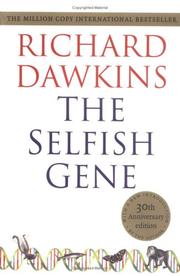
Selection acts on genes; bodies are vehicles that genes build to copy themselves.
Recommended by: Balaji S. Srinivasan, Charlie Munger and 10 others

Twenty-three chapters, one per chromosome, each using a gene to open a subject.
“I highly recommend Genome as well, to figure out the rational basis behind ethics and the origin of virtue.” — Naval Ravikant
Source: Nav.al — 'Matt Ridley: How Innovation Works, Part 2' (Naval's podcast, edited transcript)
Recommended by: Charlie Munger, Mohnish Pabrai and 2 others
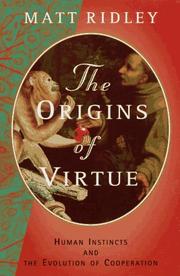
How cooperation and morality evolved from self-interest, via the prisoner's dilemma.
“I really highly, highly recommend picking up Genome, The Red Queen, Origins of Virtue, The Rational Optimist, and The Evolution of Everything.” — Naval Ravikant
Source: The Tim Ferriss Show — Naval Ravikant Q&A, full transcript
Recommended by: Mohnish Pabrai, Naval Ravikant, Ryan Holiday

Sex evolved as a defence against parasites, and that shapes human mating.
“I really highly, highly recommend picking up Genome, The Red Queen, Origins of Virtue, The Rational Optimist, and The Evolution of Everything.” — Naval Ravikant
Source: The Tim Ferriss Show — Naval Ravikant Q&A, full transcript
Recommended by: Mohnish Pabrai, Naval Ravikant, Seth Klarman and 1 other
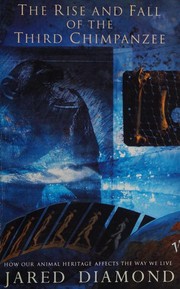
Human behaviour read from evolutionary biology; a Munger latticework staple
Recommended by: Charlie Munger, Mohnish Pabrai
Where it sits in the reference 1
Topics