Updates

  1. Person pages list letters, writing, profiles and links as sortable tables with filters, and show each person's companies as links; Fund letters show each letter's description in its own column.
  2. Experts show a checked job title and a short description of each person; 30 more people have photographs.
  3. Every company, fund, university and publication the experts work for has a page listing the people there.
  4. Fund letters show each letter's thesis and filter by it; 225 person pages list the essays, columns and newsletter issues the person wrote.
  5. Person pages list every essay and newsletter issue a person wrote, and their own books as a table in List view.
  6. Recommends shows the five largest kinds of book and the rest under More; browse pictures load sooner.
  7. Podcasts and talks link the original episode, filter by Audio and video or Press, and list each publisher once.
  8. Pages are wider, Recommends has List and Grid, and a filter clicked again turns off.
  9. Book cards sit in a ruled grid with Open Library and Goodreads links and each book's one-line note.
  10. Funds is now Investors; each investor's styles are buttons that filter the table.
  11. Podcasts and talks on a person's page filter by year and publisher and show as a list or a grid of pictures.
  12. Quotes show only people's own words: 472 summaries written by list sites are gone.
  13. Country pages open from Browse again, and every link on the shelf lands on a page.
  14. Subject and person pages show their sections as tabs, and each book appears once on a person's page.
  15. Book cards show the quote, who said it and the source; grids show five cards to a row.
  16. On a phone, a menu holds the sections, search, Updates, Feedback and dark mode.
  17. Feedback takes a screenshot of the page with no browser prompt, opens a screenshot full size when you click it, and clears itself once sent.
  18. Book cards are centred, search names the topic each book sits in, and any text cut short shows whole on hover.
  19. Search groups its results by kind: people, companies, geographies, subjects, topics, books, funds, fund letters and papers.
  20. The Books table lists who recommended each book by name, and the browser tab names the section you are in.
  21. Feedback can take a screenshot of the page, or one you paste or choose, and opens in the corner beside Updates.
  22. Each rail button reopens its section where you left it, and Browse, Table and People show on every book and subject page.
  23. Filters grey out choices that hold nothing instead of hiding them, and Books › People filters by authors or recommenders.
  24. Feedback takes a subject line and up to three screenshots.
  25. Biographies are grouped by the person they are about: 41 new pages, from Abraham Lincoln to Lee Kuan Yew.
  26. Sport splits into 23 sports, and Religion into one topic per faith.
  27. Book lists show as cards: the cover, one recommendation quote and every recommender by name.
  28. Seventeen subjects that had two or three pages under different names now have one page each.
  29. Every page lists its Experts as authors and recommenders, with a link to them on the Experts tab.
  30. Economics, Financial history, Financial panics and Accounting are subjects of their own, with one page per financial crisis.
  31. Book, person and subject pages open inside the app, so the tabs stay in view.
  32. 996 more book covers, and photographs or logos for 227 more people and companies.
  33. Books › Browse shows every subject as cards, and the rail holds Fund letters, Papers, Experts, Books and Funds.
  34. Every topic over 150 books splits into narrower topics, each with a page of its own.

Send feedback

What is it?
Screenshots, up to 3 (optional)
or paste one with Ctrl+V

We use your email only to reply to you.

Rational Ritual

Rational Ritual

Michael Suk-Young Chwe
2001
T4 148 pages · about 2h 28m to read Open Librarygoodreads

Common knowledge and coordination; why rituals and advertising work

Summary

Chwe, a political scientist, gives a game-theoretic account of why public rituals, ceremonies, advertising during mass audience events and mass media exist. His argument turns on common knowledge, meaning the situation in which everyone knows something, everyone knows that everyone knows it, and so on without limit.

His claim is that coordination problems require common knowledge rather than merely shared knowledge. In a coordination problem each person wants to act only if enough others act, so knowing the fact yourself is insufficient; you must know that others know it, and that they know you know. Rituals solve this because participants see each other seeing. A circular seating arrangement, a public ceremony, a broadcast watched simultaneously by millions all generate common knowledge in a way that private communication of the same information does not.

He applies this across examples: the French Revolution's public festivals, royal progresses, religious ritual, the design of public squares, the pricing of Super Bowl advertising, and the difference between broadcast and targeted media. His treatment of advertising is the most cited: advertisers pay a premium for large simultaneous audiences partly because a product everyone knows everyone has seen is more valuable for goods whose worth depends on other people using them.

The book is short, formally rigorous and clearly written. Its limitation is that the mechanism, while genuinely explanatory, is presented as accounting for more of ritual's function than it plausibly does, and Chwe does not engage much with anthropological accounts that give other explanations.

Key takeaways 7

  1. Coordination requires common knowledge, meaning everyone knows the fact and knows that everyone else knows it, which private communication of the same fact does not produce.
  2. Public rituals generate common knowledge because participants observe each other observing, which is why the physical arrangement of an audience matters.
  3. Advertisers pay a premium for large simultaneous audiences because common knowledge that a product is widely known raises its value for goods whose worth depends on adoption by others.
  4. Circular and inward-facing arrangements in public spaces and buildings exist because they let each participant see the others, which generates common knowledge.
  5. Authoritarian regimes suppress public assembly specifically because assembly generates common knowledge of shared discontent that individuals already privately hold.
  6. Targeted media that reaches the same number of people privately does not substitute for broadcast in creating common knowledge.
  7. The content of a ritual matters less than the fact that it is publicly and mutually observed, which explains why rituals persist after their stated meanings are forgotten.

Who should read it

Founders and marketers thinking about network effects, launch coordination and why broadcast advertising differs from targeted reach.

Who recommended it 1

Similar books 6

Chosen by shared topics, the entries that hold them, and the people who recommended both.

Steven Pinker · 2025

Common knowledge, where everyone knows that everyone knows, and what it does.

Recommended by: Bill Gates
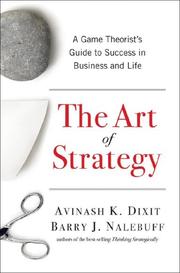
Avinash K. Dixit, Barry J. Nalebuff · 2008

Game theory without maths, with new examples: commitment, signals, bargaining.
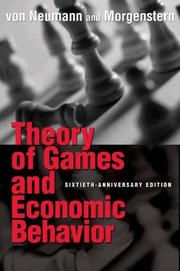
John von Neumann, Oskar Morgenstern · 1944

The founding of game theory: expected utility and strategy among interacting players.

Avinash K. Dixit, Barry J. Nalebuff · 1991

Game theory without maths: look forward, reason back, and make threats credible.

Where it sits in the reference 3

Mental models
Mental models
Economics

Topics

Sociology and CultureEconomicsSocial behaviour and collective action