Updates

  1. Person pages list letters, writing, profiles and links as sortable tables with filters, and show each person's companies as links; Fund letters show each letter's description in its own column.
  2. Experts show a checked job title and a short description of each person; 30 more people have photographs.
  3. Every company, fund, university and publication the experts work for has a page listing the people there.
  4. Fund letters show each letter's thesis and filter by it; 225 person pages list the essays, columns and newsletter issues the person wrote.
  5. Person pages list every essay and newsletter issue a person wrote, and their own books as a table in List view.
  6. Recommends shows the five largest kinds of book and the rest under More; browse pictures load sooner.
  7. Podcasts and talks link the original episode, filter by Audio and video or Press, and list each publisher once.
  8. Pages are wider, Recommends has List and Grid, and a filter clicked again turns off.
  9. Book cards sit in a ruled grid with Open Library and Goodreads links and each book's one-line note.
  10. Funds is now Investors; each investor's styles are buttons that filter the table.
  11. Podcasts and talks on a person's page filter by year and publisher and show as a list or a grid of pictures.
  12. Quotes show only people's own words: 472 summaries written by list sites are gone.
  13. Country pages open from Browse again, and every link on the shelf lands on a page.
  14. Subject and person pages show their sections as tabs, and each book appears once on a person's page.
  15. Book cards show the quote, who said it and the source; grids show five cards to a row.
  16. On a phone, a menu holds the sections, search, Updates, Feedback and dark mode.
  17. Feedback takes a screenshot of the page with no browser prompt, opens a screenshot full size when you click it, and clears itself once sent.
  18. Book cards are centred, search names the topic each book sits in, and any text cut short shows whole on hover.
  19. Search groups its results by kind: people, companies, geographies, subjects, topics, books, funds, fund letters and papers.
  20. The Books table lists who recommended each book by name, and the browser tab names the section you are in.
  21. Feedback can take a screenshot of the page, or one you paste or choose, and opens in the corner beside Updates.
  22. Each rail button reopens its section where you left it, and Browse, Table and People show on every book and subject page.
  23. Filters grey out choices that hold nothing instead of hiding them, and Books › People filters by authors or recommenders.
  24. Feedback takes a subject line and up to three screenshots.
  25. Biographies are grouped by the person they are about: 41 new pages, from Abraham Lincoln to Lee Kuan Yew.
  26. Sport splits into 23 sports, and Religion into one topic per faith.
  27. Book lists show as cards: the cover, one recommendation quote and every recommender by name.
  28. Seventeen subjects that had two or three pages under different names now have one page each.
  29. Every page lists its Experts as authors and recommenders, with a link to them on the Experts tab.
  30. Economics, Financial history, Financial panics and Accounting are subjects of their own, with one page per financial crisis.
  31. Book, person and subject pages open inside the app, so the tabs stay in view.
  32. 996 more book covers, and photographs or logos for 227 more people and companies.
  33. Books › Browse shows every subject as cards, and the rail holds Fund letters, Papers, Experts, Books and Funds.
  34. Every topic over 150 books splits into narrower topics, each with a page of its own.

Send feedback

What is it?
Screenshots, up to 3 (optional)
or paste one with Ctrl+V

We use your email only to reply to you.

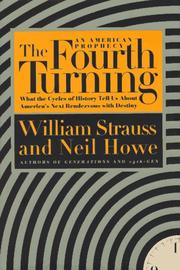
The Fourth Turning: An American Prophecy

The Fourth Turning: An American Prophecy

William Strauss, Neil Howe
1996
400 pages · about 6h 40m to read Open Librarygoodreads

Summary

Strauss and Howe argue that Anglo-American history follows a recurring cycle of roughly eighty to a hundred years, divided into four turnings of about twenty years each, driven by generational succession. The four are a High, a period of strong institutions and weak individualism after a crisis; an Awakening, in which institutions are attacked in the name of personal autonomy; an Unravelling, in which institutions are weak and individualism strong; and a Crisis, in which institutional life is destroyed and rebuilt.

The mechanism is generational. They identify four generational archetypes, Prophet, Nomad, Hero and Artist, each shaped by the turning it grows up in and each producing the next turning through the behaviour of its members as they reach positions of authority. The cycle is driven by the fact that the generation that experienced a crisis eventually dies out, removing the memory that restrained the next one.

Writing in 1997, they predicted a crisis beginning around 2005 and resolving around 2025, and the book has been widely cited since 2008 and again since 2016 for that reason.

The methodological problems are substantial. The turnings are defined loosely enough to accommodate many periods, generational archetypes are broad enough to fit most people, and the theory cannot be falsified by any specific outcome. Historians reject the framework almost entirely. The Anglo-American focus limits its scope even if the mechanism were sound. The book has been influential in political circles, particularly through Steve Bannon, which has attached political associations to it. Its value is as a hypothesis about how the loss of institutional memory affects behaviour, not as a predictive model.

Key takeaways 8

  1. Anglo-American history follows a recurring cycle of roughly eighty to a hundred years, divided into four periods of about twenty years each.
  2. The cycle is driven by generational succession, since each generation is shaped by the period it grows up in and produces the next period through its behaviour.
  3. A crisis produces strong institutions and weak individualism, which is progressively reversed until institutions are destroyed and rebuilt.
  4. The generation that experienced a crisis eventually dies out, removing the institutional memory that restrained the following generations.
  5. The authors predicted a crisis period beginning around 2005 and resolving around 2025, written in 1997.
  6. Each of four generational archetypes recurs in the same sequence, occupying a different position in society at each point of the cycle.
  7. The framework is defined loosely enough that no specific outcome could falsify it, which is the central methodological objection.
  8. Professional historians reject the model, and its influence has come through political rather than academic channels.

Who should read it

Readers who want the generational cycle framework in its original form, treated as an unfalsifiable hypothesis rather than as history or prediction.

Who recommended it 5 · 2 direct

Raoul Palreported
Tony Robbinsreported

Similar books 6

Chosen by shared topics, the entries that hold them, and the people who recommended both.
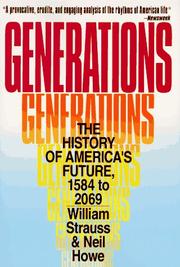
William Strauss, Neil Howe · 1991

Recommended by: Mohnish Pabrai, Tony Robbins

Where it sits in the reference 0

No entry holds this book yet. It reached the reference because someone recommended it.

Topics

General HistorySociology and CultureAmerican HistoryDemography, migration and generations