Updates

  1. Person pages list letters, writing, profiles and links as sortable tables with filters, and show each person's companies as links; Fund letters show each letter's description in its own column.
  2. Experts show a checked job title and a short description of each person; 30 more people have photographs.
  3. Every company, fund, university and publication the experts work for has a page listing the people there.
  4. Fund letters show each letter's thesis and filter by it; 225 person pages list the essays, columns and newsletter issues the person wrote.
  5. Person pages list every essay and newsletter issue a person wrote, and their own books as a table in List view.
  6. Recommends shows the five largest kinds of book and the rest under More; browse pictures load sooner.
  7. Podcasts and talks link the original episode, filter by Audio and video or Press, and list each publisher once.
  8. Pages are wider, Recommends has List and Grid, and a filter clicked again turns off.
  9. Book cards sit in a ruled grid with Open Library and Goodreads links and each book's one-line note.
  10. Funds is now Investors; each investor's styles are buttons that filter the table.
  11. Podcasts and talks on a person's page filter by year and publisher and show as a list or a grid of pictures.
  12. Quotes show only people's own words: 472 summaries written by list sites are gone.
  13. Country pages open from Browse again, and every link on the shelf lands on a page.
  14. Subject and person pages show their sections as tabs, and each book appears once on a person's page.
  15. Book cards show the quote, who said it and the source; grids show five cards to a row.
  16. On a phone, a menu holds the sections, search, Updates, Feedback and dark mode.
  17. Feedback takes a screenshot of the page with no browser prompt, opens a screenshot full size when you click it, and clears itself once sent.
  18. Book cards are centred, search names the topic each book sits in, and any text cut short shows whole on hover.
  19. Search groups its results by kind: people, companies, geographies, subjects, topics, books, funds, fund letters and papers.
  20. The Books table lists who recommended each book by name, and the browser tab names the section you are in.
  21. Feedback can take a screenshot of the page, or one you paste or choose, and opens in the corner beside Updates.
  22. Each rail button reopens its section where you left it, and Browse, Table and People show on every book and subject page.
  23. Filters grey out choices that hold nothing instead of hiding them, and Books › People filters by authors or recommenders.
  24. Feedback takes a subject line and up to three screenshots.
  25. Biographies are grouped by the person they are about: 41 new pages, from Abraham Lincoln to Lee Kuan Yew.
  26. Sport splits into 23 sports, and Religion into one topic per faith.
  27. Book lists show as cards: the cover, one recommendation quote and every recommender by name.
  28. Seventeen subjects that had two or three pages under different names now have one page each.
  29. Every page lists its Experts as authors and recommenders, with a link to them on the Experts tab.
  30. Economics, Financial history, Financial panics and Accounting are subjects of their own, with one page per financial crisis.
  31. Book, person and subject pages open inside the app, so the tabs stay in view.
  32. 996 more book covers, and photographs or logos for 227 more people and companies.
  33. Books › Browse shows every subject as cards, and the rail holds Fund letters, Papers, Experts, Books and Funds.
  34. Every topic over 150 books splits into narrower topics, each with a page of its own.

Send feedback

What is it?
Screenshots, up to 3 (optional)
or paste one with Ctrl+V

We use your email only to reply to you.

Chaos Monkeys

Chaos Monkeys

Antonio Garcia Martinez
2016
T3 320 pages · about 5h 20m to read Open Librarygoodreads

Insider account of Facebook's ads business by a product manager.

Summary

Garcia Martinez left a quantitative role at Goldman Sachs for an advertising technology startup, founded AdGrok, sold it to Twitter in an acquisition that he describes as partly a means of exiting a legal dispute, went to Facebook as a product manager on advertising monetisation, was fired after two years, and wrote this account.

The substantive content concerns online advertising infrastructure. He explains real-time bidding, ad exchanges, demand-side and supply-side platforms, the economics of targeting, and Facebook's transition from an untargeted display business to one built on user data and custom audiences. He covers the internal conflict over Facebook Exchange, the product he worked on, and its eventual deprioritisation in favour of approaches that kept data inside the platform. The account of how advertising identity resolution actually works, and of Facebook's data partnerships, is the most technically informative part of the book.

The startup material covers Y Combinator, the mechanics of a small acquisition, the legal dispute with his former employer, and the way founders' interests diverge from employees' in an acquisition.

The book is deliberately provocative and the tone is a significant obstacle. The passages describing women colleagues drew widespread criticism, and Apple terminated his employment in 2021 after employees objected to the book's content. His portrayal of colleagues is unflattering and some accounts have been disputed. The book is a personal account by someone with grievances, not an analysis. The advertising technology explanation is genuinely useful and hard to find elsewhere at this level of clarity.

Key takeaways 8

  1. Online advertising runs on real-time auctions in which impressions are priced and sold in milliseconds, and understanding that mechanism explains most of the industry's structure.
  2. Facebook's advertising business became valuable when it moved from untargeted display to targeting built on user data and external data partnerships.
  3. Custom audiences, which match advertisers' own customer lists against platform users, changed the economics of the business more than any targeting improvement.
  4. Small acquisitions are frequently talent purchases in which the product is discarded, and the terms reflect the acquirer's interest in the people.
  5. Founders and employees have different economics in an acquisition, and the difference is usually invisible to employees until the transaction.
  6. Startups are subject to legal claims from founders' former employers over intellectual property, and the threat alone can determine an outcome.
  7. Product decisions at large platforms are settled by internal political position as much as by evidence about what works.
  8. The account is written by a participant with grievances and is contested by others involved, so it should be read as one perspective.

Who should read it

Founders and investors who want an explanation of advertising technology mechanics and an insider account of platform monetisation, tolerating a difficult authorial voice.

Who recommended it 6 · 2 direct

Alfred Linreported
Raoul Palreported

Similar books 6

Chosen by shared topics, the entries that hold them, and the people who recommended both.
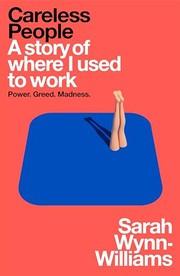
Sarah Wynn-Williams · 2025

A former Facebook policy director's memoir of the company from 2011 to 2017.

David Ogilvy · 1963

How to win and keep agency clients and write advertising that sells.

Sheera Frenkel, Cecilia Kang · 2021

How Facebook mishandled data and spread fake news and hate, and its inner politics.

Jeff Horwitz · 2023

Built on the Facebook Files documents leaked by Frances Haugen.

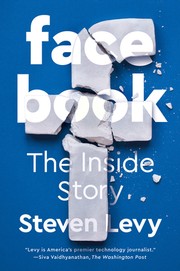
Steven Levy · 2020

Facebook from its founding to 2019, from hundreds of interviews including Zuckerberg.
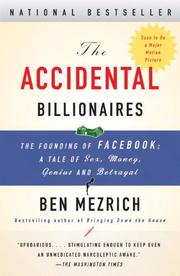
Ben Mezrich · 2009

Dramatised founding story; source for The Social Network.

Where it sits in the reference 2

Companies
Business models

Topics

Technology and ComputingBiography and MemoirExecutives and Corporate InsidersTech company stories