Updates

  1. Person pages list letters, writing, profiles and links as sortable tables with filters, and show each person's companies as links; Fund letters show each letter's description in its own column.
  2. Experts show a checked job title and a short description of each person; 30 more people have photographs.
  3. Every company, fund, university and publication the experts work for has a page listing the people there.
  4. Fund letters show each letter's thesis and filter by it; 225 person pages list the essays, columns and newsletter issues the person wrote.
  5. Person pages list every essay and newsletter issue a person wrote, and their own books as a table in List view.
  6. Recommends shows the five largest kinds of book and the rest under More; browse pictures load sooner.
  7. Podcasts and talks link the original episode, filter by Audio and video or Press, and list each publisher once.
  8. Pages are wider, Recommends has List and Grid, and a filter clicked again turns off.
  9. Book cards sit in a ruled grid with Open Library and Goodreads links and each book's one-line note.
  10. Funds is now Investors; each investor's styles are buttons that filter the table.
  11. Podcasts and talks on a person's page filter by year and publisher and show as a list or a grid of pictures.
  12. Quotes show only people's own words: 472 summaries written by list sites are gone.
  13. Country pages open from Browse again, and every link on the shelf lands on a page.
  14. Subject and person pages show their sections as tabs, and each book appears once on a person's page.
  15. Book cards show the quote, who said it and the source; grids show five cards to a row.
  16. On a phone, a menu holds the sections, search, Updates, Feedback and dark mode.
  17. Feedback takes a screenshot of the page with no browser prompt, opens a screenshot full size when you click it, and clears itself once sent.
  18. Book cards are centred, search names the topic each book sits in, and any text cut short shows whole on hover.
  19. Search groups its results by kind: people, companies, geographies, subjects, topics, books, funds, fund letters and papers.
  20. The Books table lists who recommended each book by name, and the browser tab names the section you are in.
  21. Feedback can take a screenshot of the page, or one you paste or choose, and opens in the corner beside Updates.
  22. Each rail button reopens its section where you left it, and Browse, Table and People show on every book and subject page.
  23. Filters grey out choices that hold nothing instead of hiding them, and Books › People filters by authors or recommenders.
  24. Feedback takes a subject line and up to three screenshots.
  25. Biographies are grouped by the person they are about: 41 new pages, from Abraham Lincoln to Lee Kuan Yew.
  26. Sport splits into 23 sports, and Religion into one topic per faith.
  27. Book lists show as cards: the cover, one recommendation quote and every recommender by name.
  28. Seventeen subjects that had two or three pages under different names now have one page each.
  29. Every page lists its Experts as authors and recommenders, with a link to them on the Experts tab.
  30. Economics, Financial history, Financial panics and Accounting are subjects of their own, with one page per financial crisis.
  31. Book, person and subject pages open inside the app, so the tabs stay in view.
  32. 996 more book covers, and photographs or logos for 227 more people and companies.
  33. Books › Browse shows every subject as cards, and the rail holds Fund letters, Papers, Experts, Books and Funds.
  34. Every topic over 150 books splits into narrower topics, each with a page of its own.

Send feedback

What is it?
Screenshots, up to 3 (optional)
or paste one with Ctrl+V

We use your email only to reply to you.

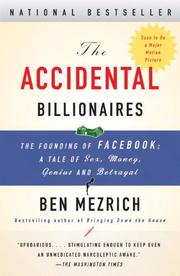
The Accidental Billionaires

The Accidental Billionaires

Ben Mezrich
2009
T3 260 pages · about 4h 20m to read Open Librarygoodreads

Dramatised founding story; source for The Social Network.

Summary

Mezrich wrote a narrative account of Facebook's founding, built primarily on the cooperation of Eduardo Saverin, the co-founder whose stake was diluted and who sued the company. It became the basis for the film The Social Network.

The story covers Harvard in 2003 and 2004, the Facemash incident, the ConnectU dispute with the Winklevoss twins and Divya Narendra, the launch and rapid campus-by-campus expansion, the move to Palo Alto, Sean Parker's involvement, the Thiel investment, and the recapitalisation that reduced Saverin's holding.

The method is the problem. Mezrich writes what he describes as dramatic non-fiction: he reconstructs scenes he did not witness, invents dialogue, attributes internal thoughts to people he did not interview, and composites events. Mark Zuckerberg and most of the company declined to participate, so the account rests heavily on one party to a lawsuit. Facebook disputed the book's accuracy, and Mezrich acknowledged in the text that scenes were recreated.

As business history it is unreliable. The broad sequence of events is corroborated by court filings and other reporting, but specific scenes, motivations and conversations should not be treated as evidence. Anyone wanting the actual history should read Kirkpatrick's The Facebook Effect or Levy's Facebook, both of which had company access and worked from documents.

What the book does convey accurately, because it is visible in the record, is the speed of the early expansion, the effect of the exclusivity strategy in launching campus by campus, and the mechanics by which founder equity is diluted when the company recapitalises and one founder is not present for the decision.

Key takeaways 7

  1. Facebook expanded campus by campus, using exclusivity and existing social networks rather than open registration.
  2. Founder equity can be substantially diluted through a recapitalisation when one founder is not part of the decision.
  3. Early informal founder arrangements without documented vesting or transfer restrictions create the disputes that follow success.
  4. The ConnectU claim rested on an agreement to develop a competing product, which is why it produced a settlement rather than a dismissal.
  5. Sean Parker's contribution was knowledge of how founders lose control, which shaped the company's early governance choices.
  6. The account rests on one party to litigation and reconstructs scenes the author did not witness, so specific claims are unverifiable.
  7. Reconstructed dialogue and attributed internal thoughts make this unsuitable as a source for anything but the general sequence.

Who should read it

Readers who want the popular narrative of Facebook's founding, provided they use Kirkpatrick or Levy for anything factual.

About Ben Mezrich

American author of dramatised nonfiction about card counting, Facebook's founding, the Winklevoss bitcoin position and the GameStop squeeze.

The books reconstruct financial episodes scene by scene from participant interviews, which is why several became films and why they reach readers who never open a market history. Read them as accounts told from one side, with dialogue and detail reconstructed rather than documented.

Similar books 6

Chosen by shared topics, the entries that hold them, and the people who recommended both.

Sheera Frenkel, Cecilia Kang · 2021

How Facebook mishandled data and spread fake news and hate, and its inner politics.

Jeff Horwitz · 2023

Built on the Facebook Files documents leaked by Frances Haugen.

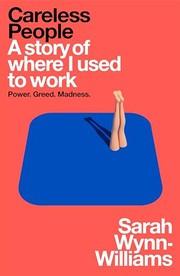
Sarah Wynn-Williams · 2025

A former Facebook policy director's memoir of the company from 2011 to 2017.
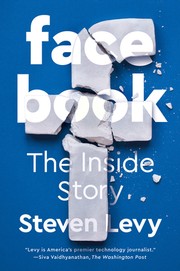
Steven Levy · 2020

Facebook from its founding to 2019, from hundreds of interviews including Zuckerberg.
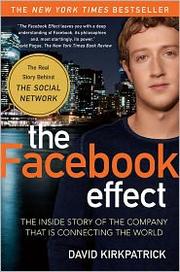
David Kirkpatrick · 2010

Facebook from its Harvard origin to 2010, with wide access to Zuckerberg.

Ben Mezrich · 2023

Fast narrative of the takeover and the layoffs.

Where it sits in the reference 3

Journalists
Companies
Biographies

Topics

Company HistoriesTechnology and ComputingTech company stories