Updates

  1. Person pages list letters, writing, profiles and links as sortable tables with filters, and show each person's companies as links; Fund letters show each letter's description in its own column.
  2. Experts show a checked job title and a short description of each person; 30 more people have photographs.
  3. Every company, fund, university and publication the experts work for has a page listing the people there.
  4. Fund letters show each letter's thesis and filter by it; 225 person pages list the essays, columns and newsletter issues the person wrote.
  5. Person pages list every essay and newsletter issue a person wrote, and their own books as a table in List view.
  6. Recommends shows the five largest kinds of book and the rest under More; browse pictures load sooner.
  7. Podcasts and talks link the original episode, filter by Audio and video or Press, and list each publisher once.
  8. Pages are wider, Recommends has List and Grid, and a filter clicked again turns off.
  9. Book cards sit in a ruled grid with Open Library and Goodreads links and each book's one-line note.
  10. Funds is now Investors; each investor's styles are buttons that filter the table.
  11. Podcasts and talks on a person's page filter by year and publisher and show as a list or a grid of pictures.
  12. Quotes show only people's own words: 472 summaries written by list sites are gone.
  13. Country pages open from Browse again, and every link on the shelf lands on a page.
  14. Subject and person pages show their sections as tabs, and each book appears once on a person's page.
  15. Book cards show the quote, who said it and the source; grids show five cards to a row.
  16. On a phone, a menu holds the sections, search, Updates, Feedback and dark mode.
  17. Feedback takes a screenshot of the page with no browser prompt, opens a screenshot full size when you click it, and clears itself once sent.
  18. Book cards are centred, search names the topic each book sits in, and any text cut short shows whole on hover.
  19. Search groups its results by kind: people, companies, geographies, subjects, topics, books, funds, fund letters and papers.
  20. The Books table lists who recommended each book by name, and the browser tab names the section you are in.
  21. Feedback can take a screenshot of the page, or one you paste or choose, and opens in the corner beside Updates.
  22. Each rail button reopens its section where you left it, and Browse, Table and People show on every book and subject page.
  23. Filters grey out choices that hold nothing instead of hiding them, and Books › People filters by authors or recommenders.
  24. Feedback takes a subject line and up to three screenshots.
  25. Biographies are grouped by the person they are about: 41 new pages, from Abraham Lincoln to Lee Kuan Yew.
  26. Sport splits into 23 sports, and Religion into one topic per faith.
  27. Book lists show as cards: the cover, one recommendation quote and every recommender by name.
  28. Seventeen subjects that had two or three pages under different names now have one page each.
  29. Every page lists its Experts as authors and recommenders, with a link to them on the Experts tab.
  30. Economics, Financial history, Financial panics and Accounting are subjects of their own, with one page per financial crisis.
  31. Book, person and subject pages open inside the app, so the tabs stay in view.
  32. 996 more book covers, and photographs or logos for 227 more people and companies.
  33. Books › Browse shows every subject as cards, and the rail holds Fund letters, Papers, Experts, Books and Funds.
  34. Every topic over 150 books splits into narrower topics, each with a page of its own.

Send feedback

What is it?
Screenshots, up to 3 (optional)
or paste one with Ctrl+V

We use your email only to reply to you.

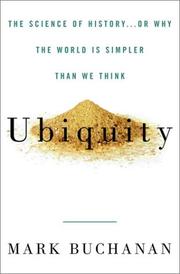
Ubiquity: Why Catastrophes Happen

Ubiquity: Why Catastrophes Happen

Mark Buchanan
2000
T3 273 pages · about 4h 33m to read Open Librarygoodreads

Summary

Buchanan, a physicist turned science writer, explains the concept of self-organised criticality and argues that it accounts for the size distribution of events across many domains, including earthquakes, forest fires, extinctions, market crashes and wars.

The organising model is the sandpile experiment of Bak, Tang and Wiesenfeld. Grains of sand dropped onto a pile build slopes that reach a critical state, after which an added grain can trigger an avalanche of any size, and the distribution of avalanche sizes follows a power law rather than a normal distribution. The system organises itself into the critical state without any tuning, which is why the phenomenon is called self-organised criticality.

Buchanan applies this to earthquakes, where the Gutenberg-Richter law is a power law; to forest fires; to species extinctions in the fossil record; to city sizes; to the size distribution of wars, following Richardson's data; and to financial market movements, following Mandelbrot.

The conceptual consequence is the one that matters for investors. In a critical system the size of an event carries no information about the size of its cause, so searching for a proportionate explanation for a large event is a mistake. The distribution has no characteristic scale, which means averages and standard deviations describe nothing useful and extreme events are far more common than a normal distribution implies.

The book is popular science and the applications outside physics are argued by analogy rather than demonstrated. Whether social and economic systems are genuinely critical remains disputed. The distributional point is correct and consequential regardless.

Key takeaways 7

  1. Systems can organise themselves into a critical state in which a small disturbance triggers an event of any size, without any external tuning.
  2. In a critical system the size of an event carries no information about the size of its cause, so searching for a proportionate explanation is a mistake.
  3. Power law distributions have no characteristic scale, which means averages and standard deviations describe nothing useful about them.
  4. Extreme events are far more common in power law distributed systems than a normal distribution would predict, by orders of magnitude.
  5. Earthquakes, forest fires, extinctions, city sizes and war casualties all follow power law size distributions.
  6. Preventing small events in a critical system can increase the size of the eventual large one, which forest fire suppression demonstrates.
  7. The same statistical signature appears across physical, biological and social systems, which suggests a common structural cause rather than coincidence.

Who should read it

Investors and risk thinkers who want an accessible account of power law distributions and why large events do not require large causes.

Similar books 6

Chosen by shared topics, the entries that hold them, and the people who recommended both.
Benoit Mandelbrot, Richard Hudson · 2004

Why standard finance models understate market risk, from fractal geometry's creator.

Didier Sornette · 2000

Power laws, scaling and critical points across physical and social systems

Recommended by: Nassim Nicholas Taleb
Nassim Nicholas Taleb · 2007

Rare, unforeseen, high-impact events drive history, explained only after the fact.

“The message of The Black Swan is how important it is to realize that the things everyone rules out can still come to pass.” — Howard Marks

Source: Oaktree memo 'The Limits to Negativism'

Recommended by: Howard Marks, Marc Andreessen, Nat Eliason and 18 others
Nassim Nicholas Taleb · 2020

Technical companion to the Incerto; free preprint on arXiv
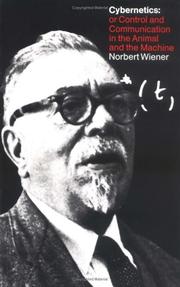
Norbert Wiener · 1948

Control and communication in animals and machines run on the same principles.
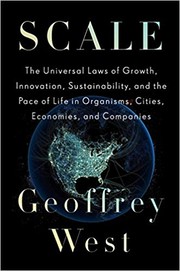
Geoffrey West · 2017

Why organisms, cities and companies follow power laws set by their supply networks.

Where it sits in the reference 4

Mental models
Mental models
Mental models
Mental models

Topics

ScienceMathematics and StatisticsComplexity and systems scienceGames, gambling and quantitative finance