
Critical Phenomena in Natural Sciences
Power laws, scaling and critical points across physical and social systems
Summary
Sornette wrote this as a graduate textbook on the mathematics of complex systems, covering probability, statistics, power laws, fractals, phase transitions, self-organised criticality, percolation and renormalisation group methods, with applications across geophysics, materials science, biology and finance.
The technical content covers: the distinctions between distributions with and without characteristic scales, and why the difference determines every risk conclusion; extreme value theory and the statistics of records; power laws and their generating mechanisms, including multiplicative processes, preferential attachment and criticality, which is important because different mechanisms produce the same distribution and require different responses; fractal and multifractal structures; the renormalisation group as a method for understanding behaviour across scales; percolation models and the appearance of connectivity thresholds; self-organised criticality; and the log-periodic corrections to power law behaviour that Sornette uses in his market crash work.
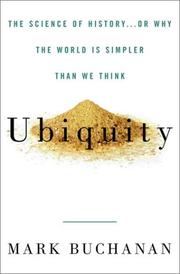
The book is mathematically demanding and assumes a physics or quantitative graduate background. It is a reference and teaching text, not a popular treatment, and readers wanting the ideas without the mathematics should use Why Stock Markets Crash or Buchanan's Ubiquity.
Its value for quantitative practitioners is that it treats the mathematics of heavy tails, criticality and scale invariance rigorously and in one place, and that Sornette is careful about which mechanisms generate which observed behaviour, which most popular treatments of power laws are not.
Key takeaways 7
- Distributions with and without a characteristic scale require entirely different statistical treatment, and confusing them invalidates every risk conclusion.
- Several distinct mechanisms generate power law distributions, and identifying which one applies determines what interventions are possible.
- Multiplicative random processes generate heavy-tailed distributions without any criticality, which means a power law is not by itself evidence of a critical system.
- Renormalisation group methods analyse how a system's behaviour changes with the scale of observation, which is the tool for scale-invariant phenomena.
- Percolation models show that connectivity in a network appears abruptly at a threshold rather than gradually as links are added.
- Self-organised criticality describes systems that drive themselves to a critical state without external tuning, which makes large events intrinsic.
- Log-periodic corrections to power law behaviour arise from discrete scale invariance and are the basis of Sornette's crash prediction work.
Who should read it
Quantitative practitioners and researchers who need the rigorous mathematics of heavy tails, criticality and scale invariance in one reference.
Who recommended it 1
Similar books 6
Chosen by shared topics, the entries that hold them, and the people who recommended both.

Why standard finance models understate market risk, from fractal geometry's creator.
Recommended by: Mohnish Pabrai, Nassim Nicholas Taleb and 1 other
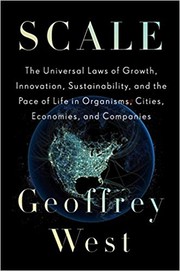
Why organisms, cities and companies follow power laws set by their supply networks.
Recommended by: Nat Eliason, Bill Miller, Marc Benioff and 2 others
Rare, unforeseen, high-impact events drive history, explained only after the fact.
“The message of The Black Swan is how important it is to realize that the things everyone rules out can still come to pass.” — Howard Marks
Source: Oaktree memo 'The Limits to Negativism'
Recommended by: Howard Marks, Marc Andreessen, Nat Eliason and 18 others
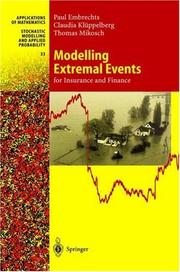
The technical reference on extreme value theory for insurance and finance
Recommended by: Nassim Nicholas Taleb
Log-periodic power laws as a physicist's model of crash formation
Recommended by: Nassim Nicholas Taleb
Where it sits in the reference 2
Topics