
Modelling Extremal Events
The technical reference on extreme value theory for insurance and finance
Summary
Embrechts, Kluppelberg and Mikosch wrote the standard graduate reference on extreme value theory for insurance and finance. It presents the mathematics of the tails of distributions: the behaviour of maxima, the theory of regular variation, heavy-tailed distributions, point process methods, and the estimation of tail parameters from data.
The two central results are the Fisher-Tippett theorem, which establishes that the maximum of a sample, appropriately normalised, converges to one of three distributions collectively described by the generalised extreme value family, and the Pickands-Balkema-de Haan theorem, which establishes that exceedances over a high threshold converge to the generalised Pareto distribution. Together these give a principled way to estimate the probability of events beyond anything observed in the sample, which is what risk measurement requires and what standard distributional assumptions cannot supply.
The book covers the peaks-over-threshold method, the Hill estimator and its instability, the difficulty of choosing a threshold, and the estimation problems that arise from having, by construction, very few observations in the region of interest. The applications are to insurance claims, operational risk and financial returns.
It is a mathematics text and requires probability theory at graduate level. Its practical value to risk practitioners is real, and it is the reference behind most tail risk measurement in insurance and banking. The authors are explicit about the method's limits, particularly that extreme value theory assumes independent identically distributed observations, which financial returns violate through volatility clustering, and that parameter uncertainty in the tail is irreducibly large.
Key takeaways 7
- The maximum of a sample, appropriately normalised, converges to one of only three limiting distributions, which gives a principled basis for extrapolating beyond observed data.
- Exceedances over a high threshold converge to the generalised Pareto distribution regardless of the underlying distribution, which is the foundation of practical tail estimation.
- Estimating tail probabilities requires methods designed for the tail, since fitting a distribution to the whole sample fits the centre and misrepresents the extremes.
- Threshold selection in peaks-over-threshold estimation involves a trade-off between bias and variance that has no objective solution.
- Parameter uncertainty in tail estimation is irreducibly large, because the region of interest contains very few observations by construction.
- Extreme value theory assumes independent identically distributed observations, which financial return series violate through volatility clustering.
- Heavy-tailed distributions can have infinite variance, which invalidates any risk measure or portfolio method that relies on variance.
Who should read it
Quantitative risk practitioners and researchers who need the mathematical foundation for tail estimation, with graduate probability as a prerequisite.
Who recommended it 1
Similar books 6
Chosen by shared topics, the entries that hold them, and the people who recommended both.

Log-periodic power laws as a physicist's model of crash formation
Recommended by: Nassim Nicholas Taleb
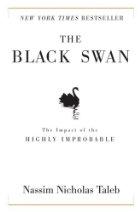
Rare, unforeseen, high-impact events drive history, explained only after the fact.
“The message of The Black Swan is how important it is to realize that the things everyone rules out can still come to pass.” — Howard Marks
Source: Oaktree memo 'The Limits to Negativism'
Recommended by: Howard Marks, Marc Andreessen, Nat Eliason and 18 others
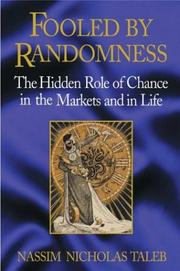
Why people mistake luck for skill, above all in markets.
“Fooled by Randomness is a serious, intellectually sophisticated book, well worth reading carefully. At times, the book is condescending. Nevertheless, there are some great insights.” — Barton Biggs
Source: Biggs on a sophisticated book worth reading carefully
Recommended by: Barton Biggs, Michael Mauboussin and 11 others
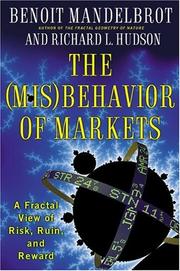
Why standard finance models understate market risk, from fractal geometry's creator.
Recommended by: Mohnish Pabrai, Nassim Nicholas Taleb and 1 other
A risk manager's history of quantitative risk and what value-at-risk is for.

Power laws, scaling and critical points across physical and social systems
Recommended by: Nassim Nicholas Taleb
Where it sits in the reference 2
Topics