Updates

  1. Person pages list letters, writing, profiles and links as sortable tables with filters, and show each person's companies as links; Fund letters show each letter's description in its own column.
  2. Experts show a checked job title and a short description of each person; 30 more people have photographs.
  3. Every company, fund, university and publication the experts work for has a page listing the people there.
  4. Fund letters show each letter's thesis and filter by it; 225 person pages list the essays, columns and newsletter issues the person wrote.
  5. Person pages list every essay and newsletter issue a person wrote, and their own books as a table in List view.
  6. Recommends shows the five largest kinds of book and the rest under More; browse pictures load sooner.
  7. Podcasts and talks link the original episode, filter by Audio and video or Press, and list each publisher once.
  8. Pages are wider, Recommends has List and Grid, and a filter clicked again turns off.
  9. Book cards sit in a ruled grid with Open Library and Goodreads links and each book's one-line note.
  10. Funds is now Investors; each investor's styles are buttons that filter the table.
  11. Podcasts and talks on a person's page filter by year and publisher and show as a list or a grid of pictures.
  12. Quotes show only people's own words: 472 summaries written by list sites are gone.
  13. Country pages open from Browse again, and every link on the shelf lands on a page.
  14. Subject and person pages show their sections as tabs, and each book appears once on a person's page.
  15. Book cards show the quote, who said it and the source; grids show five cards to a row.
  16. On a phone, a menu holds the sections, search, Updates, Feedback and dark mode.
  17. Feedback takes a screenshot of the page with no browser prompt, opens a screenshot full size when you click it, and clears itself once sent.
  18. Book cards are centred, search names the topic each book sits in, and any text cut short shows whole on hover.
  19. Search groups its results by kind: people, companies, geographies, subjects, topics, books, funds, fund letters and papers.
  20. The Books table lists who recommended each book by name, and the browser tab names the section you are in.
  21. Feedback can take a screenshot of the page, or one you paste or choose, and opens in the corner beside Updates.
  22. Each rail button reopens its section where you left it, and Browse, Table and People show on every book and subject page.
  23. Filters grey out choices that hold nothing instead of hiding them, and Books › People filters by authors or recommenders.
  24. Feedback takes a subject line and up to three screenshots.
  25. Biographies are grouped by the person they are about: 41 new pages, from Abraham Lincoln to Lee Kuan Yew.
  26. Sport splits into 23 sports, and Religion into one topic per faith.
  27. Book lists show as cards: the cover, one recommendation quote and every recommender by name.
  28. Seventeen subjects that had two or three pages under different names now have one page each.
  29. Every page lists its Experts as authors and recommenders, with a link to them on the Experts tab.
  30. Economics, Financial history, Financial panics and Accounting are subjects of their own, with one page per financial crisis.
  31. Book, person and subject pages open inside the app, so the tabs stay in view.
  32. 996 more book covers, and photographs or logos for 227 more people and companies.
  33. Books › Browse shows every subject as cards, and the rail holds Fund letters, Papers, Experts, Books and Funds.
  34. Every topic over 150 books splits into narrower topics, each with a page of its own.

Send feedback

What is it?
Screenshots, up to 3 (optional)
or paste one with Ctrl+V

We use your email only to reply to you.

High Growth Handbook

High Growth Handbook

Elad Gil
2018
T3 349 pages · about 5h 49m to read Open Librarygoodreads

Operating manual for scaling a company from fifty to thousands

Summary

Gil assembles operating guidance for companies moving from roughly ten to several thousand employees, the stage he argues is least covered by existing startup writing. He worked at Google, co-founded Color Genomics, and has advised or invested in Airbnb, Coinbase, Stripe, Instacart and others, and the book draws on that specific stage of those companies.

The material covers the CEO's changing role, managing the board, hiring and organising executive teams, mergers and acquisitions, later-stage financing, and the mechanics of running a company that is doubling. The chapters on executive hiring are the most concrete, covering when to hire each functional leader, how to assess candidates who have operated at larger scale, and how to remove executives who have stopped scaling. Gil argues that most founders wait too long on both hiring and firing.

A large part of the book is interviews, including Reid Hoffman on blitzscaling, Marc Andreessen on the CEO role and board management, Claire Hughes Johnson on operations, Aaron Levie on marketing, Sam Altman on late-stage financing and Naval Ravikant on secondary sales. These give first-person detail rather than framework.

The book is a compilation, so it is uneven and repeats itself. It assumes venture-funded companies growing quickly in Silicon Valley and does not transfer well to other financing or growth models. The advice is specific to conditions between roughly 2010 and 2018, particularly on financing and on secondary markets. It is best used as a reference for a specific problem rather than read through.

Key takeaways 8

  1. Founders consistently hire executives too late and remove failing executives too late, and both errors compound at high growth rates.
  2. The CEO's job changes completely between ten and a thousand employees, and the skills that produced the early success actively obstruct the later stage.
  3. Hiring an executive who has operated at the next scale up is different from hiring one who has operated only at much larger scale, and the second frequently fails.
  4. A board should be managed actively with pre-circulated materials and no surprises, because board meetings run reactively consume the CEO's leverage.
  5. Organisational structure should be redesigned repeatedly during rapid growth, and treating any structure as permanent creates the next crisis.
  6. Acquisitions at this stage work mainly for acquiring teams and products, and the integration decision should be made before the deal rather than after.
  7. Allowing founders and early employees limited secondary sales reduces pressure to sell the company prematurely.
  8. Most late-stage financing decisions should be evaluated by the terms and the investor's behaviour in a downturn rather than by valuation.

Who should read it

Founders and executives at companies past product-market fit that are growing quickly, needing specific answers about hiring, structure and financing.

Who recommended it 12 · 2 direct

Aaron Leviereported
Chris Dixonreported
David Cancelreported
Leo Polovetsreported
Max Levchinreported
Reid Hoffmanreported

Similar books 6

Chosen by shared topics, the entries that hold them, and the people who recommended both.
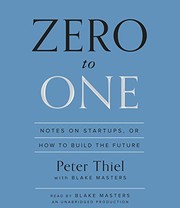
Peter Thiel, Blake Masters · 2014

Why startups should build something new and own a small market before growing.

Reid Hoffman, Chris Yeh · 2018

When and how to put speed before efficiency to capture a market before rivals.

Noam Wasserman · 2012

Data on 10,000 founders: co-founders, hiring, investors, control and succession.

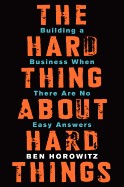
Ben Horowitz · 2014

Subtitled 'Building a Business When There Are No Easy Answers'

“…books I've recommended, highlighted to death, or forced on friends.” — Andrew Wilkinson

Source: Andrew Wilkinson's Bookshelf, neverenough.com

Recommended by: Andrew Wilkinson, Balaji S. Srinivasan and 34 others

Verne Harnish

An operating framework for growing firms: priorities, data and meeting rhythm.

Recommended by: Julie Stevanja
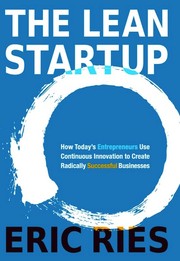
Eric Ries · 2011

Build, measure, learn: test what customers want with small experiments.

Where it sits in the reference 5

Business models
Business themes
Business themes
Business themes
Assets

Topics

Entrepreneurship and StartupsBusiness and ManagementScaling and Leading a Startup