Updates

  1. Person pages list letters, writing, profiles and links as sortable tables with filters, and show each person's companies as links; Fund letters show each letter's description in its own column.
  2. Experts show a checked job title and a short description of each person; 30 more people have photographs.
  3. Every company, fund, university and publication the experts work for has a page listing the people there.
  4. Fund letters show each letter's thesis and filter by it; 225 person pages list the essays, columns and newsletter issues the person wrote.
  5. Person pages list every essay and newsletter issue a person wrote, and their own books as a table in List view.
  6. Recommends shows the five largest kinds of book and the rest under More; browse pictures load sooner.
  7. Podcasts and talks link the original episode, filter by Audio and video or Press, and list each publisher once.
  8. Pages are wider, Recommends has List and Grid, and a filter clicked again turns off.
  9. Book cards sit in a ruled grid with Open Library and Goodreads links and each book's one-line note.
  10. Funds is now Investors; each investor's styles are buttons that filter the table.
  11. Podcasts and talks on a person's page filter by year and publisher and show as a list or a grid of pictures.
  12. Quotes show only people's own words: 472 summaries written by list sites are gone.
  13. Country pages open from Browse again, and every link on the shelf lands on a page.
  14. Subject and person pages show their sections as tabs, and each book appears once on a person's page.
  15. Book cards show the quote, who said it and the source; grids show five cards to a row.
  16. On a phone, a menu holds the sections, search, Updates, Feedback and dark mode.
  17. Feedback takes a screenshot of the page with no browser prompt, opens a screenshot full size when you click it, and clears itself once sent.
  18. Book cards are centred, search names the topic each book sits in, and any text cut short shows whole on hover.
  19. Search groups its results by kind: people, companies, geographies, subjects, topics, books, funds, fund letters and papers.
  20. The Books table lists who recommended each book by name, and the browser tab names the section you are in.
  21. Feedback can take a screenshot of the page, or one you paste or choose, and opens in the corner beside Updates.
  22. Each rail button reopens its section where you left it, and Browse, Table and People show on every book and subject page.
  23. Filters grey out choices that hold nothing instead of hiding them, and Books › People filters by authors or recommenders.
  24. Feedback takes a subject line and up to three screenshots.
  25. Biographies are grouped by the person they are about: 41 new pages, from Abraham Lincoln to Lee Kuan Yew.
  26. Sport splits into 23 sports, and Religion into one topic per faith.
  27. Book lists show as cards: the cover, one recommendation quote and every recommender by name.
  28. Seventeen subjects that had two or three pages under different names now have one page each.
  29. Every page lists its Experts as authors and recommenders, with a link to them on the Experts tab.
  30. Economics, Financial history, Financial panics and Accounting are subjects of their own, with one page per financial crisis.
  31. Book, person and subject pages open inside the app, so the tabs stay in view.
  32. 996 more book covers, and photographs or logos for 227 more people and companies.
  33. Books › Browse shows every subject as cards, and the rail holds Fund letters, Papers, Experts, Books and Funds.
  34. Every topic over 150 books splits into narrower topics, each with a page of its own.

Send feedback

What is it?
Screenshots, up to 3 (optional)
or paste one with Ctrl+V

We use your email only to reply to you.

7 Powers: The Foundations of Business Strate

7 Powers: The Foundations of Business Strategy

Hamilton Helmer
2016
T1 210 pages · about 3h 30m to read Open Librarygoodreads

Self-published via Deep Strategy

Summary

Helmer defines strategy narrowly as the study of what makes a business durably valuable, and reduces it to seven sources of power. Power in his definition requires two things simultaneously: a benefit, meaning a material improvement in cash flow, and a barrier, meaning something that prevents competitors from arbitraging that benefit away. Anything lacking both is not power.

The seven are scale economies, network economies, counter-positioning, switching costs, branding, cornered resource and process power. Counter-positioning is his original contribution: a newcomer adopts a business model that the incumbent will not copy because copying would damage its existing business more than not copying does. He uses Vanguard against active managers and Kodak's response to digital photography as examples, and argues that incumbents fail here through rational calculation rather than through inertia or stupidity.

Helmer adds a dynamic dimension, arguing that each power type can only be established during a particular stage of an industry's development, and that the origination of power almost always coincides with invention. He worked as a strategy consultant and taught at Stanford, and the book uses mathematical treatment where it clarifies, including a formal expression of the value of power.

The book is short and dense, which some readers find abrupt. Its examples are mostly familiar large-company cases and it does not test the framework systematically. It says almost nothing about execution, organisation or people, by deliberate exclusion. Investors use it more than operators do, because it gives a checklist for assessing whether a company's advantage will survive competition.

Key takeaways 8

  1. Power requires both a benefit that improves cash flow and a barrier that prevents competitors from removing it, and one without the other is not an advantage.
  2. There are exactly seven sources of durable business power, and any claimed advantage that fits none of them will be competed away.
  3. Counter-positioning describes a new entrant adopting a model that the incumbent rationally declines to copy because copying would damage its existing business.
  4. Incumbents fail against counter-positioning through correct short-term calculation, not through stupidity or complacency.
  5. Network economies produce winner-take-most outcomes because value to each user increases with the number of other users.
  6. Each type of power can only be established at a particular stage of an industry's development, so timing determines which powers are available.
  7. Operational excellence is not strategy, because competitors can copy it and it therefore fails the barrier test.
  8. Scale economies require that unit cost declines with volume in a way competitors cannot match at their own volume, which many claimed scale advantages fail.

Who should read it

Investors testing whether a company's advantage is durable, and founders deciding which kind of advantage their business can actually build.

About Hamilton Helmer

Co-founder and Chief Investment Officer, Strategy Capital; strategy consultant for four decades and long-time lecturer in economics at Stanford

7 Powers is the reference taxonomy investors and operators use for durable competitive advantage, but it is his only published work.

Strategy Capital, Stanford

Who recommended it 9

Brett Adcockreported
Daniel Ekreported
Guy Spierreported
Keith Raboisreported

Similar books 6

Chosen by shared topics, the entries that hold them, and the people who recommended both.
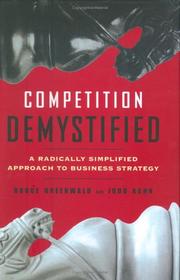
Bruce Greenwald, Judd Kahn · 2005

Barriers to entry as the only durable source of a toll.

Recommended by: Mohnish Pabrai, Li Lu
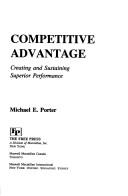
Michael E. Porter · 1985

The value chain: how to find where a firm's cost or differentiation advantage lies.
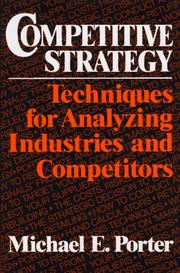
Michael E. Porter · 1980

Techniques for Analyzing Industries and Competitors

Pat Dorsey · 2008

How to spot a durable economic moat from public information, and what isn't one.

Recommended by: Mohnish Pabrai

Hermann Simon · 2015

Price is the strongest profit lever and the least managed; how to set it well.

Recommended by: Michael Mauboussin
Where it sits in the reference 9

Investors
Business models
Business models
Business themes
Investment philosophy
Mental models
Business themes
Business themes
Business themes

Topics

Business and Management