Updates

  1. Person pages list letters, writing, profiles and links as sortable tables with filters, and show each person's companies as links; Fund letters show each letter's description in its own column.
  2. Experts show a checked job title and a short description of each person; 30 more people have photographs.
  3. Every company, fund, university and publication the experts work for has a page listing the people there.
  4. Fund letters show each letter's thesis and filter by it; 225 person pages list the essays, columns and newsletter issues the person wrote.
  5. Person pages list every essay and newsletter issue a person wrote, and their own books as a table in List view.
  6. Recommends shows the five largest kinds of book and the rest under More; browse pictures load sooner.
  7. Podcasts and talks link the original episode, filter by Audio and video or Press, and list each publisher once.
  8. Pages are wider, Recommends has List and Grid, and a filter clicked again turns off.
  9. Book cards sit in a ruled grid with Open Library and Goodreads links and each book's one-line note.
  10. Funds is now Investors; each investor's styles are buttons that filter the table.
  11. Podcasts and talks on a person's page filter by year and publisher and show as a list or a grid of pictures.
  12. Quotes show only people's own words: 472 summaries written by list sites are gone.
  13. Country pages open from Browse again, and every link on the shelf lands on a page.
  14. Subject and person pages show their sections as tabs, and each book appears once on a person's page.
  15. Book cards show the quote, who said it and the source; grids show five cards to a row.
  16. On a phone, a menu holds the sections, search, Updates, Feedback and dark mode.
  17. Feedback takes a screenshot of the page with no browser prompt, opens a screenshot full size when you click it, and clears itself once sent.
  18. Book cards are centred, search names the topic each book sits in, and any text cut short shows whole on hover.
  19. Search groups its results by kind: people, companies, geographies, subjects, topics, books, funds, fund letters and papers.
  20. The Books table lists who recommended each book by name, and the browser tab names the section you are in.
  21. Feedback can take a screenshot of the page, or one you paste or choose, and opens in the corner beside Updates.
  22. Each rail button reopens its section where you left it, and Browse, Table and People show on every book and subject page.
  23. Filters grey out choices that hold nothing instead of hiding them, and Books › People filters by authors or recommenders.
  24. Feedback takes a subject line and up to three screenshots.
  25. Biographies are grouped by the person they are about: 41 new pages, from Abraham Lincoln to Lee Kuan Yew.
  26. Sport splits into 23 sports, and Religion into one topic per faith.
  27. Book lists show as cards: the cover, one recommendation quote and every recommender by name.
  28. Seventeen subjects that had two or three pages under different names now have one page each.
  29. Every page lists its Experts as authors and recommenders, with a link to them on the Experts tab.
  30. Economics, Financial history, Financial panics and Accounting are subjects of their own, with one page per financial crisis.
  31. Book, person and subject pages open inside the app, so the tabs stay in view.
  32. 996 more book covers, and photographs or logos for 227 more people and companies.
  33. Books › Browse shows every subject as cards, and the rail holds Fund letters, Papers, Experts, Books and Funds.
  34. Every topic over 150 books splits into narrower topics, each with a page of its own.

Send feedback

What is it?
Screenshots, up to 3 (optional)
or paste one with Ctrl+V

We use your email only to reply to you.

Toll roads and tollbooth businesses

Buffett's term for a business that clips a fee on activity it does not have to fund. There is no dedicated literature; the Buffett source texts and the moat and pricing-power books are where the idea is actually worked out.

Start here

  1. The Little Book That Builds WealthPat Dorsey, 2008
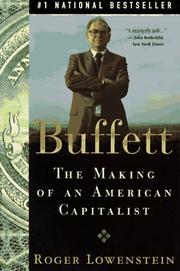
  2. BuffettRoger Lowenstein, 1995
  3. 7 PowersHamilton Helmer, 2016
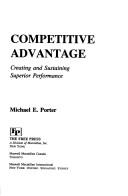
Michael E. Porter · 1985

The value chain: how to find where a firm's cost or differentiation advantage lies.
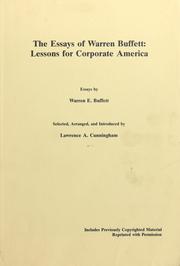
Warren Buffett, Lawrence A. Cunningham · 1997

Berkshire's shareholder letters arranged by topic: governance, valuation, mergers.

“The resource is as valuable as Larry Cunningham's The Essays of Warren Buffett, which similarly organizes by subject matter” — Christopher Bloomstran

Source: Semper Augustus 2024 Letter to Clients, 'Books and Tunes for Walking', p. 96

Recommended by: Christopher Bloomstran, Francois Rochon and 11 others

Hamilton Helmer · 2016

Seven sources of lasting advantage, each a benefit plus a barrier to rivals.

Roger Lowenstein · 1995

Buffett's life from Omaha and Graham's class to building Berkshire Hathaway.

“…books I've recommended, highlighted to death, or forced on friends.” — Andrew Wilkinson

Source: Andrew Wilkinson's Bookshelf, neverenough.com

Recommended by: Andrew Wilkinson, Christopher Bloomstran and 12 others
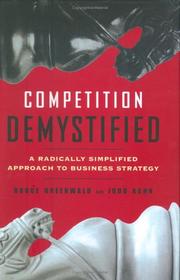
Bruce Greenwald, Judd Kahn · 2005

Barriers to entry as the only durable source of a toll.

Recommended by: Mohnish Pabrai, Li Lu
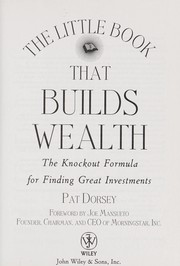
Pat Dorsey · 2008

How to spot a durable economic moat from public information, and what isn't one.

Recommended by: Mohnish Pabrai

Lawrence A. Cunningham, Torkell T. Eide, Patrick Hargreaves · 2016

What makes a business high quality and worth owning for years at a fair price.

Recommended by: Patrick O'Shaughnessy

Heather Brilliant, Elizabeth Collins · 2014

Moat ratings applied sector by sector.

More business models