Updates

  1. Person pages list letters, writing, profiles and links as sortable tables with filters, and show each person's companies as links; Fund letters show each letter's description in its own column.
  2. Experts show a checked job title and a short description of each person; 30 more people have photographs.
  3. Every company, fund, university and publication the experts work for has a page listing the people there.
  4. Fund letters show each letter's thesis and filter by it; 225 person pages list the essays, columns and newsletter issues the person wrote.
  5. Person pages list every essay and newsletter issue a person wrote, and their own books as a table in List view.
  6. Recommends shows the five largest kinds of book and the rest under More; browse pictures load sooner.
  7. Podcasts and talks link the original episode, filter by Audio and video or Press, and list each publisher once.
  8. Pages are wider, Recommends has List and Grid, and a filter clicked again turns off.
  9. Book cards sit in a ruled grid with Open Library and Goodreads links and each book's one-line note.
  10. Funds is now Investors; each investor's styles are buttons that filter the table.
  11. Podcasts and talks on a person's page filter by year and publisher and show as a list or a grid of pictures.
  12. Quotes show only people's own words: 472 summaries written by list sites are gone.
  13. Country pages open from Browse again, and every link on the shelf lands on a page.
  14. Subject and person pages show their sections as tabs, and each book appears once on a person's page.
  15. Book cards show the quote, who said it and the source; grids show five cards to a row.
  16. On a phone, a menu holds the sections, search, Updates, Feedback and dark mode.
  17. Feedback takes a screenshot of the page with no browser prompt, opens a screenshot full size when you click it, and clears itself once sent.
  18. Book cards are centred, search names the topic each book sits in, and any text cut short shows whole on hover.
  19. Search groups its results by kind: people, companies, geographies, subjects, topics, books, funds, fund letters and papers.
  20. The Books table lists who recommended each book by name, and the browser tab names the section you are in.
  21. Feedback can take a screenshot of the page, or one you paste or choose, and opens in the corner beside Updates.
  22. Each rail button reopens its section where you left it, and Browse, Table and People show on every book and subject page.
  23. Filters grey out choices that hold nothing instead of hiding them, and Books › People filters by authors or recommenders.
  24. Feedback takes a subject line and up to three screenshots.
  25. Biographies are grouped by the person they are about: 41 new pages, from Abraham Lincoln to Lee Kuan Yew.
  26. Sport splits into 23 sports, and Religion into one topic per faith.
  27. Book lists show as cards: the cover, one recommendation quote and every recommender by name.
  28. Seventeen subjects that had two or three pages under different names now have one page each.
  29. Every page lists its Experts as authors and recommenders, with a link to them on the Experts tab.
  30. Economics, Financial history, Financial panics and Accounting are subjects of their own, with one page per financial crisis.
  31. Book, person and subject pages open inside the app, so the tabs stay in view.
  32. 996 more book covers, and photographs or logos for 227 more people and companies.
  33. Books › Browse shows every subject as cards, and the rail holds Fund letters, Papers, Experts, Books and Funds.
  34. Every topic over 150 books splits into narrower topics, each with a page of its own.

Send feedback

What is it?
Screenshots, up to 3 (optional)
or paste one with Ctrl+V

We use your email only to reply to you.

The Company

The Company

John Micklethwait, Adrian Wooldridge
2003
T2 214 pages · about 3h 34m to read Open Librarygoodreads

Short history of the limited-liability corporation as a legal invention.

Summary

Micklethwait and Wooldridge, then at The Economist, wrote a short history of the joint stock company as an institution, from ancient precedents through the chartered trading companies to the modern multinational.

Their central argument is that the limited liability joint stock company is one of the most consequential institutional inventions in history, and that its key features developed slowly and for specific reasons. The corporate form requires legal personality, so the entity can own property and contract in its own name; perpetual existence, so it survives its members; transferable shares, so ownership can change without disrupting the enterprise; and limited liability, so investors risk only what they invest, which is what makes it possible to raise capital from strangers.

The historical narrative covers the Roman societates, medieval guilds and Italian partnerships, the chartered companies including the English and Dutch East India Companies which combined commerce with sovereignty, the British legislation of 1856 and 1862 that made general incorporation available without a specific charter, the American development of the large managerial corporation, and the twentieth-century multinational.

They also cover the recurring political argument about corporate power, which they trace from the South Sea Bubble through the trust-busting era to the present.

The book is short and is a synthesis for general readers rather than original research. Its treatment of the company's costs and of the critical literature is proportionately lighter than its treatment of the institution's benefits, which reflects the authors' position.

Key takeaways 7

  1. The limited liability joint stock company required four features together: legal personality, perpetual existence, transferable shares and limited liability.
  2. Limited liability is what makes it possible to raise capital from strangers, since an investor who could lose more than they invested would not participate.
  3. Perpetual existence separates the enterprise's life from its members', which is what permits investment on horizons longer than a human career.
  4. Chartered trading companies combined commerce with sovereignty, exercising governmental powers over territories as a normal part of their operations.
  5. General incorporation available by registration rather than by specific charter was British legislative innovation of the 1850s and 1860s.
  6. Political argument about corporate power has recurred in the same form since the South Sea Bubble, which suggests it is structural rather than episodic.
  7. The corporation's ability to concentrate capital and to persist is simultaneously its economic contribution and the source of every objection to it.

Who should read it

Readers wanting a short institutional history of the corporation and why its specific legal features developed.

Who recommended it 1

Paul Grahamreported

Similar books 6

Chosen by shared topics, the entries that hold them, and the people who recommended both.
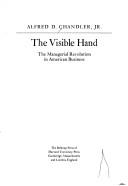
Alfred D. Chandler Jr. · 1977

How salaried managers replaced markets in coordinating US business, 1840 to 1920.

Recommended by: Paul Graham
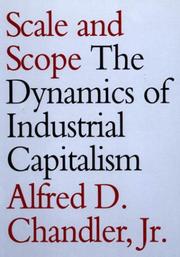
Alfred D. Chandler Jr. · 1990

Why big industrial firms in the US, Britain and Germany rose or lagged, 1880 to 1940.
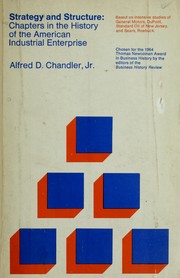
Alfred D. Chandler Jr. · 1962

How DuPont, GM, Standard Oil and Sears built the multidivisional firm.

Geoffrey Jones · 2010

Harvard business historian; sets her brand-building against the whole industry.

R. James Breiding · 2012

Why a small country without resources produces so many world-leading companies.
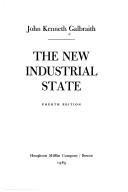
John Kenneth Galbraith · 1967

How large corporations run by a technostructure of experts plan rather than compete.

Recommended by: Paul Graham

Where it sits in the reference 3

Business themes
Business themes
Business themes

Topics

General HistoryBusiness and ManagementEconomic and Business History