Updates

  1. Person pages list letters, writing, profiles and links as sortable tables with filters, and show each person's companies as links; Fund letters show each letter's description in its own column.
  2. Experts show a checked job title and a short description of each person; 30 more people have photographs.
  3. Every company, fund, university and publication the experts work for has a page listing the people there.
  4. Fund letters show each letter's thesis and filter by it; 225 person pages list the essays, columns and newsletter issues the person wrote.
  5. Person pages list every essay and newsletter issue a person wrote, and their own books as a table in List view.
  6. Recommends shows the five largest kinds of book and the rest under More; browse pictures load sooner.
  7. Podcasts and talks link the original episode, filter by Audio and video or Press, and list each publisher once.
  8. Pages are wider, Recommends has List and Grid, and a filter clicked again turns off.
  9. Book cards sit in a ruled grid with Open Library and Goodreads links and each book's one-line note.
  10. Funds is now Investors; each investor's styles are buttons that filter the table.
  11. Podcasts and talks on a person's page filter by year and publisher and show as a list or a grid of pictures.
  12. Quotes show only people's own words: 472 summaries written by list sites are gone.
  13. Country pages open from Browse again, and every link on the shelf lands on a page.
  14. Subject and person pages show their sections as tabs, and each book appears once on a person's page.
  15. Book cards show the quote, who said it and the source; grids show five cards to a row.
  16. On a phone, a menu holds the sections, search, Updates, Feedback and dark mode.
  17. Feedback takes a screenshot of the page with no browser prompt, opens a screenshot full size when you click it, and clears itself once sent.
  18. Book cards are centred, search names the topic each book sits in, and any text cut short shows whole on hover.
  19. Search groups its results by kind: people, companies, geographies, subjects, topics, books, funds, fund letters and papers.
  20. The Books table lists who recommended each book by name, and the browser tab names the section you are in.
  21. Feedback can take a screenshot of the page, or one you paste or choose, and opens in the corner beside Updates.
  22. Each rail button reopens its section where you left it, and Browse, Table and People show on every book and subject page.
  23. Filters grey out choices that hold nothing instead of hiding them, and Books › People filters by authors or recommenders.
  24. Feedback takes a subject line and up to three screenshots.
  25. Biographies are grouped by the person they are about: 41 new pages, from Abraham Lincoln to Lee Kuan Yew.
  26. Sport splits into 23 sports, and Religion into one topic per faith.
  27. Book lists show as cards: the cover, one recommendation quote and every recommender by name.
  28. Seventeen subjects that had two or three pages under different names now have one page each.
  29. Every page lists its Experts as authors and recommenders, with a link to them on the Experts tab.
  30. Economics, Financial history, Financial panics and Accounting are subjects of their own, with one page per financial crisis.
  31. Book, person and subject pages open inside the app, so the tabs stay in view.
  32. 996 more book covers, and photographs or logos for 227 more people and companies.
  33. Books › Browse shows every subject as cards, and the rail holds Fund letters, Papers, Experts, Books and Funds.
  34. Every topic over 150 books splits into narrower topics, each with a page of its own.

Send feedback

What is it?
Screenshots, up to 3 (optional)
or paste one with Ctrl+V

We use your email only to reply to you.

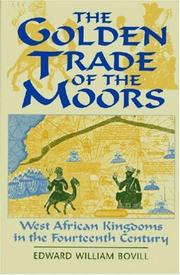
The Golden Trade of the Moors

The Golden Trade of the Moors

E. W. Bovill
1958
T3 293 pages · about 4h 53m to read Open Librarygoodreads

Trans-Saharan gold and salt trade; the medieval West African economy

Summary

Bovill wrote a history of trans-Saharan trade from antiquity through the nineteenth century, centred on the exchange of West African gold for Saharan salt and North African goods, and on the empires of Ghana, Mali and Songhai that the trade supported.

The economic mechanics are the substance. Gold was abundant in West Africa and salt was scarce; salt was abundant in the Sahara and gold was not. The exchange ratio at times approached one for one by weight. The trade required camel caravans crossing the desert on established routes with fixed wells, which meant control of a few oases and of the caravan cities, principally Timbuktu, Gao and Sijilmasa, was control of the trade. Bovill covers the silent trade convention by which gold was exchanged without the parties meeting, the Islamic legal and commercial institutions that made long-distance credit possible, the pilgrimage of Mansa Musa and its effect on Mediterranean gold prices, and the Moroccan invasion of Songhai in 1591.

He also covers the trade's later decline as Portuguese maritime routes bypassed the Sahara entirely, which is a case of a technology change destroying an intermediary position rather than a competitor doing so.

The book is from 1958 and its scholarship reflects that period, including a colonial-era framing that later Africanist historians have substantially revised. It remains readable and the economic geography is well handled. Specific claims should be checked against more recent scholarship.

Key takeaways 7

  1. Trans-Saharan trade rested on the exchange of West African gold for Saharan salt, and the exchange ratio at times approached parity by weight.
  2. Control of the desert's fixed wells and caravan cities was control of the trade, which is why political power concentrated in a few locations far from the goods themselves.
  3. Islamic legal and commercial institutions made long-distance credit and agency possible across the desert, which is what allowed the trade to scale.
  4. Mansa Musa's pilgrimage spending measurably depressed gold prices in Egypt and the Mediterranean, which shows the scale of the West African supply.
  5. Portuguese maritime routes destroyed the trans-Saharan intermediary position by bypassing it entirely, rather than by competing on the same route.
  6. The empires of Ghana, Mali and Songhai were built on taxing trade passing through rather than on producing the goods traded.
  7. An intermediary whose position rests on a physical route is destroyed by a technology that creates a different route, not by a better competitor on the same one.

Who should read it

Readers interested in the economics of chokepoint control and in how a route-based intermediary position is destroyed by a new technology.

Who recommended it 1 · 1 direct

“Bovill, The Golden Trade of the Moors”

Similar books 6

Chosen by shared topics, the entries that hold them, and the people who recommended both.

Marc Levinson · 2006

How the shipping container cut freight costs and remade global trade.

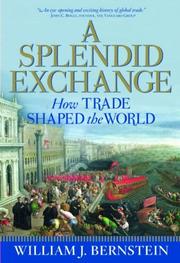
William J. Bernstein · 2008

Long-distance trade from Mesopotamia and the spice routes to modern globalisation.

Where it sits in the reference 3

Geographies
Assets
Economics

Topics

General HistoryEconomicsAsia, Africa, Latin America and the Middle East