Updates

  1. Person pages list letters, writing, profiles and links as sortable tables with filters, and show each person's companies as links; Fund letters show each letter's description in its own column.
  2. Experts show a checked job title and a short description of each person; 30 more people have photographs.
  3. Every company, fund, university and publication the experts work for has a page listing the people there.
  4. Fund letters show each letter's thesis and filter by it; 225 person pages list the essays, columns and newsletter issues the person wrote.
  5. Person pages list every essay and newsletter issue a person wrote, and their own books as a table in List view.
  6. Recommends shows the five largest kinds of book and the rest under More; browse pictures load sooner.
  7. Podcasts and talks link the original episode, filter by Audio and video or Press, and list each publisher once.
  8. Pages are wider, Recommends has List and Grid, and a filter clicked again turns off.
  9. Book cards sit in a ruled grid with Open Library and Goodreads links and each book's one-line note.
  10. Funds is now Investors; each investor's styles are buttons that filter the table.
  11. Podcasts and talks on a person's page filter by year and publisher and show as a list or a grid of pictures.
  12. Quotes show only people's own words: 472 summaries written by list sites are gone.
  13. Country pages open from Browse again, and every link on the shelf lands on a page.
  14. Subject and person pages show their sections as tabs, and each book appears once on a person's page.
  15. Book cards show the quote, who said it and the source; grids show five cards to a row.
  16. On a phone, a menu holds the sections, search, Updates, Feedback and dark mode.
  17. Feedback takes a screenshot of the page with no browser prompt, opens a screenshot full size when you click it, and clears itself once sent.
  18. Book cards are centred, search names the topic each book sits in, and any text cut short shows whole on hover.
  19. Search groups its results by kind: people, companies, geographies, subjects, topics, books, funds, fund letters and papers.
  20. The Books table lists who recommended each book by name, and the browser tab names the section you are in.
  21. Feedback can take a screenshot of the page, or one you paste or choose, and opens in the corner beside Updates.
  22. Each rail button reopens its section where you left it, and Browse, Table and People show on every book and subject page.
  23. Filters grey out choices that hold nothing instead of hiding them, and Books › People filters by authors or recommenders.
  24. Feedback takes a subject line and up to three screenshots.
  25. Biographies are grouped by the person they are about: 41 new pages, from Abraham Lincoln to Lee Kuan Yew.
  26. Sport splits into 23 sports, and Religion into one topic per faith.
  27. Book lists show as cards: the cover, one recommendation quote and every recommender by name.
  28. Seventeen subjects that had two or three pages under different names now have one page each.
  29. Every page lists its Experts as authors and recommenders, with a link to them on the Experts tab.
  30. Economics, Financial history, Financial panics and Accounting are subjects of their own, with one page per financial crisis.
  31. Book, person and subject pages open inside the app, so the tabs stay in view.
  32. 996 more book covers, and photographs or logos for 227 more people and companies.
  33. Books › Browse shows every subject as cards, and the rail holds Fund letters, Papers, Experts, Books and Funds.
  34. Every topic over 150 books splits into narrower topics, each with a page of its own.

Send feedback

What is it?
Screenshots, up to 3 (optional)
or paste one with Ctrl+V

We use your email only to reply to you.

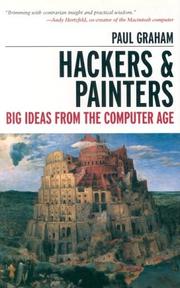
Hackers & Painters

Hackers & Painters

Paul Graham
2004
T3 258 pages · about 4h 18m to read Open Librarygoodreads

Subtitled 'Big Ideas from the Computer Age'; collects early essays

Summary

Graham collects essays written around 2001 to 2004 on programming, startups, wealth creation and independent thinking. The title essay argues that programmers are makers rather than scientists, that programming resembles painting more than mathematics, and that the practice of designing while building is legitimate rather than sloppy.

The most cited essays are How to Make Wealth and Mind the Gap. The first argues that wealth is not money and is not zero-sum, that a startup is a mechanism for compressing a working life into a few years in order to obtain measurement and leverage, and that the two requirements are measurement of individual contribution and leverage over outcomes. The second argues that income inequality partly reflects genuine differences in what people produce, and that technology increases the productivity gap between the most and least effective people in any field.

Other essays cover the argument that popular programming languages are not the most powerful ones, that Lisp gave Viaweb a competitive advantage his competitors could not match, that spam can be filtered with Bayesian methods, which Graham demonstrated practically, and that schools produce social hierarchies that reward conformity and punish independent thinking.

The essays date from a specific period and Graham's later writing at Y Combinator supersedes some of them. The programming language arguments are contested by many working programmers, and the Lisp advantage claim rests on a single case. The Mind the Gap argument is politically contentious and Graham asserts more than he demonstrates. The essays about what startups are for and about measurement and leverage remain the clearest short statement of the case.

Key takeaways 8

  1. Wealth is what people want and is created rather than transferred, which means the total is not fixed and taking a share is not the only way to become rich.
  2. A startup compresses a working life into a few years, which is why the returns can be large and why the work is unpleasant.
  3. Creating wealth requires both measurement of individual contribution and leverage over outcomes, and ordinary employment provides neither.
  4. Small groups produce more per person than large ones because measurement is possible and the effort of individuals is visible.
  5. Programming is a design activity performed while building rather than a specification executed afterwards, which resembles painting more than engineering.
  6. A more powerful programming language provides a real competitive advantage that competitors cannot see, because they cannot evaluate what they do not use.
  7. Technology increases the gap in output between the most and least productive people in any field, which produces measured inequality independent of any unfairness.
  8. Schools generate social hierarchies that reward conformity, which is why people who later do original work were often unpopular in them.

Who should read it

Technical founders who want the early statement of Graham's argument about what startups are for and why measurement and leverage matter.

About Paul Graham

Co-founder of Viaweb and Y Combinator; essayist and Lisp programmer

His essay archive is the primary source that the modern startup canon quotes, argues with and reuses; the essays matter more than the books.

Viaweb, Y Combinator

Who recommended it 6

Ev Williamsreported
Keith Raboisreported
Nir Eyalreported
Ryan Holidayreported

Similar books 6

Chosen by shared topics, the entries that hold them, and the people who recommended both.

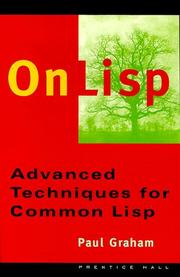
Paul Graham · 1993

Out of print; Graham distributes it free as a PDF

Recommended by: Paul Graham, Patrick Collison

Randall E. Stross · 2012

Inside Y Combinator in the years before Altman ran it.

Recommended by: Garry Tan, Paul Graham

Chris Dixon

Recommended by: Brian Armstrong

Where it sits in the reference 2

Founders
Companies

Topics

Technology and ComputingEntrepreneurship and StartupsStartup Method and PlaybooksProgramming and computer science