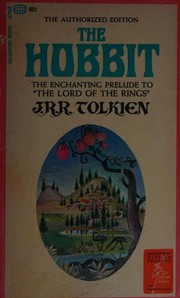
The Lord of the Rings
Summary
Tolkien's novel, published in three volumes in 1954 and 1955, follows the destruction of a ring of power that cannot be used for good purposes because its nature corrupts anyone who wields it. The narrative divides into the journey of Frodo and Sam to Mount Doom and the war fought by Aragorn, Gandalf and others largely as a distraction to enable it.
The central argument concerns power. The ring offers effectiveness and its use converts the user into what they were opposing, which is why the wise characters refuse it when offered. Gandalf, Galadriel and Aragorn each decline it explicitly, and Boromir's argument for using it against the enemy is presented as reasonable and as exactly the mistake the ring produces. The resolution comes not through strength but through the accumulated consequence of an earlier act of mercy, when Bilbo spared Gollum.
The secondary themes include the smallness of the actors who decide the outcome, the loss involved in every victory, and the argument that the world after the war is diminished rather than restored. Tolkien constructed the languages first and the narrative to house them, and he denied that the work was allegory of any kind, including of the world wars.
The book is long, the pacing is uneven, the poetry and appendices will not suit every reader, and the female characters are few. Its business readership is smaller than its general one, and the transferable material is the argument that some instruments cannot be used for good ends because using them changes the user, which applies to any tool that offers effectiveness at the cost of what the organisation is.
Key takeaways 8
- Some instruments of power cannot be used for good purposes, because using them converts the user into what they opposed.
- The characters who understand power best are the ones who refuse it when it is offered, and their refusal is presented as the hardest available choice.
- An argument for using a dangerous instrument against a worse enemy is exactly the reasoning that the instrument produces in those it corrupts.
- The outcome is decided by people with no power or standing, whom every calculating party overlooks precisely because they are insignificant.
- An act of mercy that appeared to be a mistake determines the resolution decades later, which is Tolkien's argument against evaluating decisions by their immediate consequences.
- Every victory in the story involves permanent loss, and the world afterwards is diminished rather than restored.
- Endurance without any expectation of success is presented as the central virtue, distinct from courage in action.
- Tolkien denied that the work is allegory, and readings that map it onto specific historical conflicts were rejected by the author.
Who should read it
Readers who want the argument that some instruments corrupt those who use them, in a long novel whose business relevance is thematic rather than direct.
Who recommended it 8 · 1 direct
Similar books 6
Chosen by shared topics, the entries that hold them, and the people who recommended both.
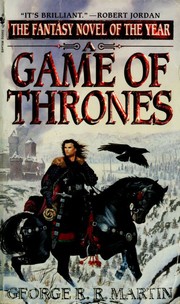
Recommended by: Elon Musk, Sophie Bakalar
Where it sits in the reference 0
No entry holds this book yet. It reached the reference because someone recommended it.
Topics