The Manual of Ideas
Where small-cap and special-situation ideas actually come from.
Summary
Mihaljevic edits an investment research publication and organises the book around nine categories of value investing idea, giving the reasoning, the screening approach and the specific risks for each.
The categories include deep value in the Graham tradition, meaning securities trading below net current asset value or at severe discounts to tangible assets; sum of the parts, where a company's segments are worth more separately than the market values them together; jockey stocks, meaning investments made primarily on the quality of the managers rather than on the business; followers, meaning positions taken alongside investors with strong records, using public disclosure filings; small companies below the coverage threshold of institutional analysts; special situations including spinoffs, merger securities and post-bankruptcy equity; equity stubs and leveraged situations; international and emerging market opportunities where information is less complete; and businesses with durable competitive advantages available at reasonable prices.
For each he covers where the mispricing comes from, how to screen for candidates, the analytical steps required, and the specific ways the category produces losses. The book also covers the process of generating ideas systematically, maintaining a research pipeline, and the discipline of position sizing.
The reference has verified the book's structure and its categorical approach and has not verified every case study in detail. It is a practitioner's reference rather than an argument, which makes it useful as a checklist for where to look and less useful read straight through. The screening approaches assume access to data services. Several categories have become more crowded since publication, particularly spinoffs and disclosure-following.
Key takeaways 8
- Value investing ideas fall into a limited number of categories, each with a distinct source of mispricing and a distinct failure mode.
- Deep value situations trading below net asset value provide protection independent of any forecast about the business.
- Sum of the parts opportunities exist where a company's segments are worth more separately than the market values them combined.
- Investing primarily on the quality of management is a distinct category with its own risks, since the assessment cannot be verified from the financial statements.
- Following the disclosed positions of investors with strong records is a legitimate source of ideas provided the analysis is repeated independently.
- Companies below the size threshold at which institutional analysts cover them remain the most reliable source of mispricing for small investors.
- Each category requires different analytical work, and applying a general approach to all of them produces predictable errors.
- Systematically generating and maintaining a pipeline of ideas matters more than the analysis of any individual one.
Who should read it
Value investors who want a categorised reference of where to look for mispricing and what specifically goes wrong in each category.
Who recommended it 4 · 4 direct
“John Mihaljevic outdid himself and released a second edition of his terrific, The Manual of Ideas, a superb read on investment idea generation”
Similar books 6
Chosen by shared topics, the entries that hold them, and the people who recommended both.
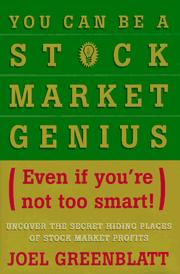
Where to find mispriced stocks: spinoffs, mergers, bankruptcies and restructurings.
“Joel Greenblatt wrote probably the best book ever 'You can be a Stock Market Genius'.” — Dan Loeb
Source: Loeb calling it probably the best book ever written on investing
Recommended by: Dan Loeb, Guy Spier, Mohnish Pabrai and 6 others

The amateur's edge argument from the Magellan record.
“One book that probably made the biggest impact on my career in those early formidable years back in the day was Peter Lynch's 'One Up on Wall Street.'” — David Rolfe
Source: Rolfe on the book that most shaped his early career
Recommended by: David Rolfe, Francisco Garcia Parames and 9 others
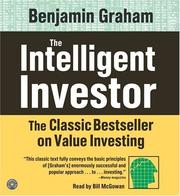
Treat stocks as parts of businesses and buy only with a margin of safety.
“I have been accused of telling all my secrets. I have written a number of books, and I reveal them all in these books.” — Benjamin Graham
Source: Graham on revealing everything he knows in his books
Recommended by: Benjamin Graham, Christopher Bloomstran and 27 others
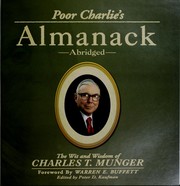
Speeches making the case for a latticework of mental models from many fields.
“…books I've recommended, highlighted to death, or forced on friends.” — Andrew Wilkinson
Source: Andrew Wilkinson's Bookshelf, neverenough.com
Recommended by: Andrew Wilkinson, Charlie Munger and 26 others
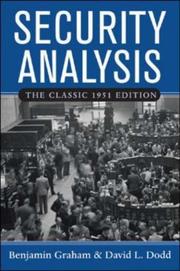
How to read financial statements sceptically and value bonds and stocks.
“I've spent more time with all of the editions of Benjamin Graham and David Dodd's Security Analysis than with any other book” — Christopher Bloomstran
Source: Semper Augustus 2024 Letter to Clients, 'Books and Tunes for Walking', p. 95
Recommended by: Christopher Bloomstran, Howard Marks and 11 others

Buffett's life to 2008, written with full access to his files and his friends.
“…books I've recommended, highlighted to death, or forced on friends.” — Andrew Wilkinson
Source: Andrew Wilkinson's Bookshelf, neverenough.com
Recommended by: Andrew Wilkinson, Guy Spier, Mohnish Pabrai and 5 others