Updates

  1. Person pages list letters, writing, profiles and links as sortable tables with filters, and show each person's companies as links; Fund letters show each letter's description in its own column.
  2. Experts show a checked job title and a short description of each person; 30 more people have photographs.
  3. Every company, fund, university and publication the experts work for has a page listing the people there.
  4. Fund letters show each letter's thesis and filter by it; 225 person pages list the essays, columns and newsletter issues the person wrote.
  5. Person pages list every essay and newsletter issue a person wrote, and their own books as a table in List view.
  6. Recommends shows the five largest kinds of book and the rest under More; browse pictures load sooner.
  7. Podcasts and talks link the original episode, filter by Audio and video or Press, and list each publisher once.
  8. Pages are wider, Recommends has List and Grid, and a filter clicked again turns off.
  9. Book cards sit in a ruled grid with Open Library and Goodreads links and each book's one-line note.
  10. Funds is now Investors; each investor's styles are buttons that filter the table.
  11. Podcasts and talks on a person's page filter by year and publisher and show as a list or a grid of pictures.
  12. Quotes show only people's own words: 472 summaries written by list sites are gone.
  13. Country pages open from Browse again, and every link on the shelf lands on a page.
  14. Subject and person pages show their sections as tabs, and each book appears once on a person's page.
  15. Book cards show the quote, who said it and the source; grids show five cards to a row.
  16. On a phone, a menu holds the sections, search, Updates, Feedback and dark mode.
  17. Feedback takes a screenshot of the page with no browser prompt, opens a screenshot full size when you click it, and clears itself once sent.
  18. Book cards are centred, search names the topic each book sits in, and any text cut short shows whole on hover.
  19. Search groups its results by kind: people, companies, geographies, subjects, topics, books, funds, fund letters and papers.
  20. The Books table lists who recommended each book by name, and the browser tab names the section you are in.
  21. Feedback can take a screenshot of the page, or one you paste or choose, and opens in the corner beside Updates.
  22. Each rail button reopens its section where you left it, and Browse, Table and People show on every book and subject page.
  23. Filters grey out choices that hold nothing instead of hiding them, and Books › People filters by authors or recommenders.
  24. Feedback takes a subject line and up to three screenshots.
  25. Biographies are grouped by the person they are about: 41 new pages, from Abraham Lincoln to Lee Kuan Yew.
  26. Sport splits into 23 sports, and Religion into one topic per faith.
  27. Book lists show as cards: the cover, one recommendation quote and every recommender by name.
  28. Seventeen subjects that had two or three pages under different names now have one page each.
  29. Every page lists its Experts as authors and recommenders, with a link to them on the Experts tab.
  30. Economics, Financial history, Financial panics and Accounting are subjects of their own, with one page per financial crisis.
  31. Book, person and subject pages open inside the app, so the tabs stay in view.
  32. 996 more book covers, and photographs or logos for 227 more people and companies.
  33. Books › Browse shows every subject as cards, and the rail holds Fund letters, Papers, Experts, Books and Funds.
  34. Every topic over 150 books splits into narrower topics, each with a page of its own.

Send feedback

What is it?
Screenshots, up to 3 (optional)
or paste one with Ctrl+V

We use your email only to reply to you.

Kelly Criterion

The fraction of capital that maximises long-run compound growth given an edge: edge divided by odds. Oversize the bet and volatility ruins you even when the odds genuinely favour you, which is why practitioners bet a fraction of full Kelly. Its lesson is that sizing is not a footnote - the same insight held at the wrong weight compounds to zero.

Start here

  1. Fortune's FormulaWilliam Poundstone, 2005
  2. A Man for All MarketsEdward O. Thorp, 2017
  3. The Kelly Capital Growth Investment CriterionLeonard C. MacLean, Edward O. Thorp, William T. Ziemba, 2011
Edward O. Thorp · 2017

From beating blackjack with maths to pricing warrants and running a hedge fund.
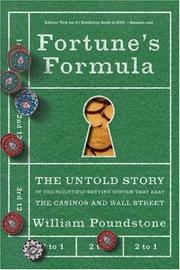
William Poundstone · 2005

The Kelly criterion for sizing bets, from Bell Labs to casinos and hedge funds.

Recommended by: Mohnish Pabrai
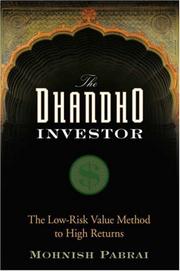
Mohnish Pabrai · 2007

The explicit argument for cloning rather than originating ideas.

“It is, without a doubt, my most recommended book on investing” — Andrew Wilkinson

Source: @awilkinson on X, 22 May 2024

Recommended by: Andrew Wilkinson, Guy Spier and 1 other

Aaron Brown · 2006

“To quote Aaron Brown—a legendary Morgan Stanley derivatives trader and poker expert—from his extraordinary book” — Marc Andreessen

Source: The Pmarca Guide to Career Planning, Part 1: Opportunity

Recommended by: Marc Andreessen

Leonard C. MacLean, Edward O. Thorp, William T. Ziemba · 2011

Edited volume of collected papers.

Recommended by: Nassim Nicholas Taleb

More mental models