Updates

  1. Person pages list letters, writing, profiles and links as sortable tables with filters, and show each person's companies as links; Fund letters show each letter's description in its own column.
  2. Experts show a checked job title and a short description of each person; 30 more people have photographs.
  3. Every company, fund, university and publication the experts work for has a page listing the people there.
  4. Fund letters show each letter's thesis and filter by it; 225 person pages list the essays, columns and newsletter issues the person wrote.
  5. Person pages list every essay and newsletter issue a person wrote, and their own books as a table in List view.
  6. Recommends shows the five largest kinds of book and the rest under More; browse pictures load sooner.
  7. Podcasts and talks link the original episode, filter by Audio and video or Press, and list each publisher once.
  8. Pages are wider, Recommends has List and Grid, and a filter clicked again turns off.
  9. Book cards sit in a ruled grid with Open Library and Goodreads links and each book's one-line note.
  10. Funds is now Investors; each investor's styles are buttons that filter the table.
  11. Podcasts and talks on a person's page filter by year and publisher and show as a list or a grid of pictures.
  12. Quotes show only people's own words: 472 summaries written by list sites are gone.
  13. Country pages open from Browse again, and every link on the shelf lands on a page.
  14. Subject and person pages show their sections as tabs, and each book appears once on a person's page.
  15. Book cards show the quote, who said it and the source; grids show five cards to a row.
  16. On a phone, a menu holds the sections, search, Updates, Feedback and dark mode.
  17. Feedback takes a screenshot of the page with no browser prompt, opens a screenshot full size when you click it, and clears itself once sent.
  18. Book cards are centred, search names the topic each book sits in, and any text cut short shows whole on hover.
  19. Search groups its results by kind: people, companies, geographies, subjects, topics, books, funds, fund letters and papers.
  20. The Books table lists who recommended each book by name, and the browser tab names the section you are in.
  21. Feedback can take a screenshot of the page, or one you paste or choose, and opens in the corner beside Updates.
  22. Each rail button reopens its section where you left it, and Browse, Table and People show on every book and subject page.
  23. Filters grey out choices that hold nothing instead of hiding them, and Books › People filters by authors or recommenders.
  24. Feedback takes a subject line and up to three screenshots.
  25. Biographies are grouped by the person they are about: 41 new pages, from Abraham Lincoln to Lee Kuan Yew.
  26. Sport splits into 23 sports, and Religion into one topic per faith.
  27. Book lists show as cards: the cover, one recommendation quote and every recommender by name.
  28. Seventeen subjects that had two or three pages under different names now have one page each.
  29. Every page lists its Experts as authors and recommenders, with a link to them on the Experts tab.
  30. Economics, Financial history, Financial panics and Accounting are subjects of their own, with one page per financial crisis.
  31. Book, person and subject pages open inside the app, so the tabs stay in view.
  32. 996 more book covers, and photographs or logos for 227 more people and companies.
  33. Books › Browse shows every subject as cards, and the rail holds Fund letters, Papers, Experts, Books and Funds.
  34. Every topic over 150 books splits into narrower topics, each with a page of its own.

Send feedback

What is it?
Screenshots, up to 3 (optional)
or paste one with Ctrl+V

We use your email only to reply to you.

The Rise of Superman

The Rise of Superman

Steven Kotler
2014
Open Librarygoodreads

Summary

Kotler argues that action and adventure sports athletes have advanced their performance at rates far exceeding other domains, and that the explanation is their systematic access to flow states. He builds on Csikszentmihalyi's work and adds a neurobiological account.

His mechanism combines transient hypofrontality, meaning reduced activity in the prefrontal cortex which removes self-monitoring and the sense of time, with a specific neurochemical combination of norepinephrine, dopamine, endorphins, anandamide and serotonin, which he argues produces both the performance enhancement and the addictive quality of the state.

He identifies triggers that reliably produce flow, grouped as psychological, including clear goals, immediate feedback and challenge slightly exceeding skill; environmental, including high consequences, a rich environment and deep embodiment; social, including shared goals, close listening and equal participation; and creative, meaning pattern recognition and risk. The high consequence trigger is his explanation for why action sports athletes reach the state reliably: the risk of death removes the possibility of divided attention.

The book is heavily criticised on its science. Kotler states neurochemical mechanisms with a confidence that the underlying research does not support, particularly the specific cocktail claims, and much of the neuroscience is inferred rather than measured. The performance advance he documents in action sports is real, and the attribution to flow is asserted. The trigger list is practically useful even where the mechanism is unsupported. Readers should treat the neuroscience sections as speculation.

Key takeaways 8

  1. Action and adventure sports performance has advanced at rates far exceeding other athletic domains over recent decades.
  2. Flow states involve reduced prefrontal activity, which removes self-monitoring and the sense of time passing.
  3. High consequence environments produce flow reliably because the risk removes the possibility of divided attention.
  4. Flow can be triggered deliberately through identifiable psychological, environmental, social and creative conditions rather than only arriving unpredictably.
  5. Challenge should exceed current skill by roughly four percent, which is Kotler's specific version of the challenge and skill balance.
  6. Group flow requires shared goals, close listening, equal participation and a sense of control distributed across the group.
  7. Performance gains from flow states are followed by a recovery requirement, which means the state cannot be sustained continuously.
  8. The specific neurochemical claims are stated with a confidence the underlying research does not support and should be treated as speculation.

Who should read it

Readers interested in deliberately producing flow states, taking the trigger list and treating the neuroscience as unsupported.

Who recommended it 5 · 1 direct

Adam Fisherreported
Chase Jarvisreported
Jim Kwikreported

Similar books 6

Chosen by shared topics, the entries that hold them, and the people who recommended both.

Judd Biasiotto

A powerlifter's guide to the mental training behind world-class strength.

Recommended by: Nat Eliason

Matthew Syed · 2010

Recommended by: The Barefoot Investor

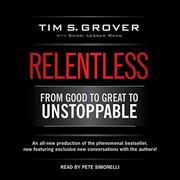
Shari Lesser Wenk, Tim Grover · 2013

Where it sits in the reference 0

No entry holds this book yet. It reached the reference because someone recommended it.

Topics

SportPsychology and BehaviourLearning, expertise and creativitySport in general