Updates

  1. Person pages list letters, writing, profiles and links as sortable tables with filters, and show each person's companies as links; Fund letters show each letter's description in its own column.
  2. Experts show a checked job title and a short description of each person; 30 more people have photographs.
  3. Every company, fund, university and publication the experts work for has a page listing the people there.
  4. Fund letters show each letter's thesis and filter by it; 225 person pages list the essays, columns and newsletter issues the person wrote.
  5. Person pages list every essay and newsletter issue a person wrote, and their own books as a table in List view.
  6. Recommends shows the five largest kinds of book and the rest under More; browse pictures load sooner.
  7. Podcasts and talks link the original episode, filter by Audio and video or Press, and list each publisher once.
  8. Pages are wider, Recommends has List and Grid, and a filter clicked again turns off.
  9. Book cards sit in a ruled grid with Open Library and Goodreads links and each book's one-line note.
  10. Funds is now Investors; each investor's styles are buttons that filter the table.
  11. Podcasts and talks on a person's page filter by year and publisher and show as a list or a grid of pictures.
  12. Quotes show only people's own words: 472 summaries written by list sites are gone.
  13. Country pages open from Browse again, and every link on the shelf lands on a page.
  14. Subject and person pages show their sections as tabs, and each book appears once on a person's page.
  15. Book cards show the quote, who said it and the source; grids show five cards to a row.
  16. On a phone, a menu holds the sections, search, Updates, Feedback and dark mode.
  17. Feedback takes a screenshot of the page with no browser prompt, opens a screenshot full size when you click it, and clears itself once sent.
  18. Book cards are centred, search names the topic each book sits in, and any text cut short shows whole on hover.
  19. Search groups its results by kind: people, companies, geographies, subjects, topics, books, funds, fund letters and papers.
  20. The Books table lists who recommended each book by name, and the browser tab names the section you are in.
  21. Feedback can take a screenshot of the page, or one you paste or choose, and opens in the corner beside Updates.
  22. Each rail button reopens its section where you left it, and Browse, Table and People show on every book and subject page.
  23. Filters grey out choices that hold nothing instead of hiding them, and Books › People filters by authors or recommenders.
  24. Feedback takes a subject line and up to three screenshots.
  25. Biographies are grouped by the person they are about: 41 new pages, from Abraham Lincoln to Lee Kuan Yew.
  26. Sport splits into 23 sports, and Religion into one topic per faith.
  27. Book lists show as cards: the cover, one recommendation quote and every recommender by name.
  28. Seventeen subjects that had two or three pages under different names now have one page each.
  29. Every page lists its Experts as authors and recommenders, with a link to them on the Experts tab.
  30. Economics, Financial history, Financial panics and Accounting are subjects of their own, with one page per financial crisis.
  31. Book, person and subject pages open inside the app, so the tabs stay in view.
  32. 996 more book covers, and photographs or logos for 227 more people and companies.
  33. Books › Browse shows every subject as cards, and the rail holds Fund letters, Papers, Experts, Books and Funds.
  34. Every topic over 150 books splits into narrower topics, each with a page of its own.

Send feedback

What is it?
Screenshots, up to 3 (optional)
or paste one with Ctrl+V

We use your email only to reply to you.

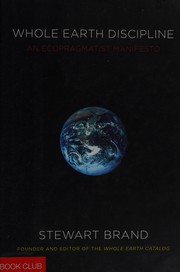
Whole Earth Discipline

Whole Earth Discipline

Stewart Brand
2009
T3 325 pages · about 5h 25m to read Open Librarygoodreads

Environmentalist case for nuclear power, dense cities and genetic engineering

Summary

Brand founded the Whole Earth Catalog and was a central figure in the environmental movement, and this book argues that the movement is wrong on several of its defining positions and must reverse them to address climate change. He identifies as an ecopragmatist and states the argument as a set of reversals of his own earlier views.

His four main positions are that cities are environmentally beneficial because urban density reduces per-person resource consumption and because urbanisation reduces birth rates, so slum growth should be supported rather than resisted; that nuclear power is necessary because it produces large quantities of baseload electricity without carbon emissions and because its waste problem is small and tractable compared to the alternative; that genetically engineered crops are beneficial and that opposition to them has caused measurable harm, particularly in agricultural yields and in reduced pesticide use; and that geoengineering research must proceed because the emissions trajectory makes some form of intervention likely to be needed.

His general argument is that the environmental movement's positions were formed as a romantic reaction and have not been updated against evidence, and that treating nature as something to be left alone is not available given the scale of human effect.

The book was published in 2009 and the debates have moved. Nuclear costs have risen and renewable costs have fallen far more than Brand anticipated, which weakens the nuclear argument on economic rather than environmental grounds. The genetic engineering position has become closer to mainstream scientific consensus. Environmentalists dispute several claims, particularly on slums and on geoengineering risk.

Key takeaways 8

  1. Urban density reduces per-person resource consumption, which makes cities environmentally beneficial rather than harmful.
  2. Urbanisation reduces birth rates faster than any policy intervention, which addresses population growth as a side effect.
  3. Nuclear power produces large quantities of baseload electricity without carbon emissions, and its waste problem is small compared to the alternative.
  4. Genetically engineered crops raise yields and reduce pesticide use, and opposition to them has produced measurable harm.
  5. Geoengineering research should proceed because the emissions trajectory makes some form of intervention likely to be required.
  6. Environmental positions formed as a romantic reaction have not been updated against evidence, which is Brand's criticism of his own movement.
  7. Treating nature as something to be left alone is not available given the scale of existing human effect on every system.
  8. Nuclear economics have deteriorated and renewable costs have fallen far more than the book anticipated, which weakens its central energy argument.

Who should read it

Readers and investors in energy and agriculture who want a challenge to standard environmental positions from inside the movement, published in 2009.

Who recommended it 4 · 1 direct

“on why even environmentalists should be pro building, pro cities, pro nuclear, and pro genetic engineering”

Jack Dorseyreported

Similar books 6

Chosen by shared topics, the entries that hold them, and the people who recommended both.
Andrew McAfee · 2019

Evidence that rich economies now grow while using fewer physical resources.

“on how modern technological economies can build more outputs with less inputs” — Marc Andreessen

Source: @pmarca, companion thread to 'It's Time to Build'

Recommended by: Marc Andreessen
Henry Pollack

Ice cores, old shorelines and fossil pollen show how fast the climate now changes.

Hannah Ritchie · 2025

Data-driven look at emissions and what actually reduces them

Recommended by: Bill Gates
Saul Griffith · 2021

The demand side: what full electrification of homes and vehicles requires.
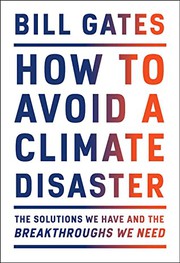
Bill Gates · 2021

What it would take to cut greenhouse gas emissions to zero, sector by sector.

Recommended by: Bill Gates
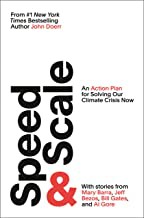
John Doerr · 2021

A plan with measurable goals for reaching net-zero emissions.

Where it sits in the reference 2

Secular themes
Secular themes

Topics

Environment and EnergyTechnology and ComputingTechnology and societyClimate change and sustainability