Updates

  1. Person pages list letters, writing, profiles and links as sortable tables with filters, and show each person's companies as links; Fund letters show each letter's description in its own column.
  2. Experts show a checked job title and a short description of each person; 30 more people have photographs.
  3. Every company, fund, university and publication the experts work for has a page listing the people there.
  4. Fund letters show each letter's thesis and filter by it; 225 person pages list the essays, columns and newsletter issues the person wrote.
  5. Person pages list every essay and newsletter issue a person wrote, and their own books as a table in List view.
  6. Recommends shows the five largest kinds of book and the rest under More; browse pictures load sooner.
  7. Podcasts and talks link the original episode, filter by Audio and video or Press, and list each publisher once.
  8. Pages are wider, Recommends has List and Grid, and a filter clicked again turns off.
  9. Book cards sit in a ruled grid with Open Library and Goodreads links and each book's one-line note.
  10. Funds is now Investors; each investor's styles are buttons that filter the table.
  11. Podcasts and talks on a person's page filter by year and publisher and show as a list or a grid of pictures.
  12. Quotes show only people's own words: 472 summaries written by list sites are gone.
  13. Country pages open from Browse again, and every link on the shelf lands on a page.
  14. Subject and person pages show their sections as tabs, and each book appears once on a person's page.
  15. Book cards show the quote, who said it and the source; grids show five cards to a row.
  16. On a phone, a menu holds the sections, search, Updates, Feedback and dark mode.
  17. Feedback takes a screenshot of the page with no browser prompt, opens a screenshot full size when you click it, and clears itself once sent.
  18. Book cards are centred, search names the topic each book sits in, and any text cut short shows whole on hover.
  19. Search groups its results by kind: people, companies, geographies, subjects, topics, books, funds, fund letters and papers.
  20. The Books table lists who recommended each book by name, and the browser tab names the section you are in.
  21. Feedback can take a screenshot of the page, or one you paste or choose, and opens in the corner beside Updates.
  22. Each rail button reopens its section where you left it, and Browse, Table and People show on every book and subject page.
  23. Filters grey out choices that hold nothing instead of hiding them, and Books › People filters by authors or recommenders.
  24. Feedback takes a subject line and up to three screenshots.
  25. Biographies are grouped by the person they are about: 41 new pages, from Abraham Lincoln to Lee Kuan Yew.
  26. Sport splits into 23 sports, and Religion into one topic per faith.
  27. Book lists show as cards: the cover, one recommendation quote and every recommender by name.
  28. Seventeen subjects that had two or three pages under different names now have one page each.
  29. Every page lists its Experts as authors and recommenders, with a link to them on the Experts tab.
  30. Economics, Financial history, Financial panics and Accounting are subjects of their own, with one page per financial crisis.
  31. Book, person and subject pages open inside the app, so the tabs stay in view.
  32. 996 more book covers, and photographs or logos for 227 more people and companies.
  33. Books › Browse shows every subject as cards, and the rail holds Fund letters, Papers, Experts, Books and Funds.
  34. Every topic over 150 books splits into narrower topics, each with a page of its own.

Send feedback

What is it?
Screenshots, up to 3 (optional)
or paste one with Ctrl+V

We use your email only to reply to you.

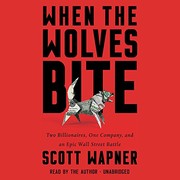
When the Wolves Bite

When the Wolves Bite

Scott Wapner
2018
T3 122 pages · about 2h 2m to read Open Librarygoodreads

Ackman against Icahn over Herbalife; the MLM model argued in public.

Summary

Wapner, a CNBC anchor, reconstructs the public fight between Bill Ackman and Carl Icahn over Herbalife, the multi-level marketing company selling nutrition products. Ackman announced a large short position in December 2012, presenting a detailed case that Herbalife operated as a pyramid scheme whose distributors made money from recruiting rather than from selling product, and predicted the shares would go to zero. Icahn took the other side, built a large long position, and the two men attacked each other on television.

The reporting covers the mechanics of the campaign as much as the merits. Ackman's fund spent heavily on research, lobbied regulators and legislators, funded Latino community organisations to file complaints, and organised media coverage. Herbalife responded with its own lobbying and public relations. Other investors including Daniel Loeb and George Soros's fund took positions on both sides at various points. The Federal Trade Commission investigated and in 2016 settled with Herbalife for two hundred million dollars and required restructuring of its compensation, without calling it a pyramid scheme. The shares rose and Ackman eventually closed the position at a large loss.

Wapner's argument is that the fight demonstrated how activist short selling had become a public campaign rather than a research exercise, and that the outcome turned on positioning, financing and short squeeze dynamics rather than on whether Ackman's analysis was correct.

The book is business journalism built on interviews and public record, with limited independent analysis of the underlying company. Readers wanting an evaluation of multi-level marketing economics will need other sources. The account is also written from close to the television coverage, which gives it the emphasis of that medium.

Key takeaways 7

  1. A public short campaign is a lobbying and media operation as much as an investment thesis.
  2. Being right about a company's business model does not produce a profit if the position can be squeezed before the thesis is proven.
  3. Concentrated short positions in a company with a small float invite deliberate accumulation by opponents.
  4. Regulators settled with Herbalife on compensation practices without accepting the pyramid scheme characterisation, which left both sides claiming vindication.
  5. Ackman's decision to announce and defend the position publicly removed his ability to exit quietly when it moved against him.
  6. Hedge fund positions became public entertainment during this period, which changed the incentives of the managers involved.
  7. Multi-level marketing companies derive a large share of distributor income from recruitment rather than from retail sales, which is the contested factual question at the centre of the dispute.

Who should read it

Investors considering activist short positions who need a case study in how position size, float and publicity can defeat a correct analysis.

Who recommended it 1 · 1 direct

“Wall Street"-esque battle between Bill Ackman and Carl Icahn over unlikely target Herbalife.”

Similar books 6

Chosen by shared topics, the entries that hold them, and the people who recommended both.

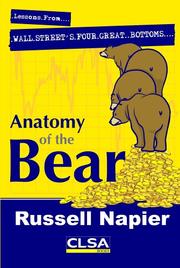
Russell Napier · 2005

What markets looked like at the US stock bottoms of 1921, 1932, 1949 and 1982.

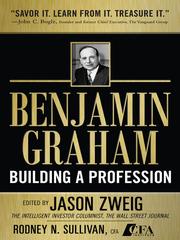
Jason Zweig, Rodney N. Sullivan · 2010

Edited collection of Graham's own writings and interviews
Peter L. Bernstein · 1992

How Markowitz, Sharpe, Fama, Black and Scholes built the theory of modern finance.

Where it sits in the reference 2

Business models
Financial history

Topics

InvestingFinancial History