
What You Do Is Who You Are
Subtitled 'How to Create Your Business Culture'
Summary
Horowitz argues that culture is not a set of stated values but the behaviour that occurs when the leader is absent, and that it must be designed through specific practices rather than declared. He builds the book from four historical cases and extracts principles from each.
The cases are Toussaint Louverture, who led the Haitian revolution and reprogrammed a slave army's culture; Shaka Senghor, who ran a prison gang and later rebuilt its code; Miyamoto Musashi and the bushido code, which Horowitz uses to argue that virtues must be stated as actions rather than beliefs; and Genghis Khan, who built loyalty through inclusion and meritocracy across conquered populations.
The principles he extracts include the use of shocking rules, meaning a rule strange enough that everyone asks why it exists and therefore learns the underlying value; the requirement that leaders demonstrate the culture personally because employees watch behaviour rather than statements; the deliberate inclusion of outsiders to prevent cultural narrowing; the design of decision rules that force the values to be applied under pressure; and the necessity of matching culture to strategy rather than importing a culture that worked elsewhere.
He covers his own cases from Opsware and from Andreessen Horowitz portfolio companies, including the culture failures at Uber, which he analyses as values that were operative rather than aspirational. The historical readings are simplified and specialists in each period would object. The connection between the cases and the business lessons is looser than Horowitz claims. The core argument, that culture is what people do when nobody is watching and that stated values are irrelevant to it, is well made and hard to dispute.
Key takeaways 8
- Culture is what people do when the leader is absent, and stated values have no effect on it unless they are enforced in decisions.
- A rule strange enough that everyone asks why it exists teaches the underlying value more effectively than any statement of the value.
- Leaders must demonstrate the culture personally, because employees infer what is acceptable from behaviour rather than from documents.
- Virtues should be stated as actions a person takes rather than as beliefs they hold, since only actions can be observed and enforced.
- Including outsiders deliberately prevents the cultural narrowing that occurs when an organisation hires only people like its existing members.
- Culture must match the strategy the company is executing, and importing a culture that worked at a different company with a different strategy fails.
- The behaviour a company tolerates from its highest performers defines its actual culture regardless of what it says.
- Uber's culture failures resulted from values that were operative in decisions rather than from an absence of stated values.
Who should read it
Founders designing culture deliberately who want an argument for specific enforceable practices rather than for values statements.
About Ben Horowitz
Co-founder of Opsware/Loudcloud; co-founder and general partner, Andreessen Horowitz
The Hard Thing About Hard Things is the primary operator's text on running a company under duress, and his blog posts are the source most later management writing on startups cites.
Who recommended it 5 · 1 direct
Similar books 6
Chosen by shared topics, the entries that hold them, and the people who recommended both.
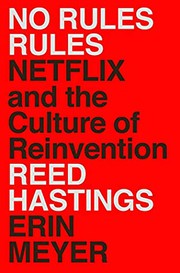
How Netflix built talent density and candour so it could remove controls.
Recommended by: Matt Mullenweg, Alex Lieberman, Ben Horowitz and 2 others

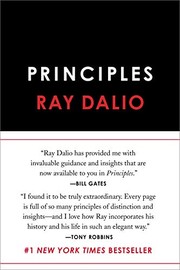
Decision rules from building Bridgewater: radical truth and radical transparency.
Recommended by: Alfred Lin, Nat Eliason, Andrew Lokenauth and 28 others
Subtitled 'Building a Business When There Are No Easy Answers'
“…books I've recommended, highlighted to death, or forced on friends.” — Andrew Wilkinson
Source: Andrew Wilkinson's Bookshelf, neverenough.com
Recommended by: Andrew Wilkinson, Balaji S. Srinivasan and 34 others

Recommended by: Mohnish Pabrai

Recommended by: Mohnish Pabrai
Where it sits in the reference 3
Topics