Updates

  1. Person pages list letters, writing, profiles and links as sortable tables with filters, and show each person's companies as links; Fund letters show each letter's description in its own column.
  2. Experts show a checked job title and a short description of each person; 30 more people have photographs.
  3. Every company, fund, university and publication the experts work for has a page listing the people there.
  4. Fund letters show each letter's thesis and filter by it; 225 person pages list the essays, columns and newsletter issues the person wrote.
  5. Person pages list every essay and newsletter issue a person wrote, and their own books as a table in List view.
  6. Recommends shows the five largest kinds of book and the rest under More; browse pictures load sooner.
  7. Podcasts and talks link the original episode, filter by Audio and video or Press, and list each publisher once.
  8. Pages are wider, Recommends has List and Grid, and a filter clicked again turns off.
  9. Book cards sit in a ruled grid with Open Library and Goodreads links and each book's one-line note.
  10. Funds is now Investors; each investor's styles are buttons that filter the table.
  11. Podcasts and talks on a person's page filter by year and publisher and show as a list or a grid of pictures.
  12. Quotes show only people's own words: 472 summaries written by list sites are gone.
  13. Country pages open from Browse again, and every link on the shelf lands on a page.
  14. Subject and person pages show their sections as tabs, and each book appears once on a person's page.
  15. Book cards show the quote, who said it and the source; grids show five cards to a row.
  16. On a phone, a menu holds the sections, search, Updates, Feedback and dark mode.
  17. Feedback takes a screenshot of the page with no browser prompt, opens a screenshot full size when you click it, and clears itself once sent.
  18. Book cards are centred, search names the topic each book sits in, and any text cut short shows whole on hover.
  19. Search groups its results by kind: people, companies, geographies, subjects, topics, books, funds, fund letters and papers.
  20. The Books table lists who recommended each book by name, and the browser tab names the section you are in.
  21. Feedback can take a screenshot of the page, or one you paste or choose, and opens in the corner beside Updates.
  22. Each rail button reopens its section where you left it, and Browse, Table and People show on every book and subject page.
  23. Filters grey out choices that hold nothing instead of hiding them, and Books › People filters by authors or recommenders.
  24. Feedback takes a subject line and up to three screenshots.
  25. Biographies are grouped by the person they are about: 41 new pages, from Abraham Lincoln to Lee Kuan Yew.
  26. Sport splits into 23 sports, and Religion into one topic per faith.
  27. Book lists show as cards: the cover, one recommendation quote and every recommender by name.
  28. Seventeen subjects that had two or three pages under different names now have one page each.
  29. Every page lists its Experts as authors and recommenders, with a link to them on the Experts tab.
  30. Economics, Financial history, Financial panics and Accounting are subjects of their own, with one page per financial crisis.
  31. Book, person and subject pages open inside the app, so the tabs stay in view.
  32. 996 more book covers, and photographs or logos for 227 more people and companies.
  33. Books › Browse shows every subject as cards, and the rail holds Fund letters, Papers, Experts, Books and Funds.
  34. Every topic over 150 books splits into narrower topics, each with a page of its own.

Send feedback

What is it?
Screenshots, up to 3 (optional)
or paste one with Ctrl+V

We use your email only to reply to you.

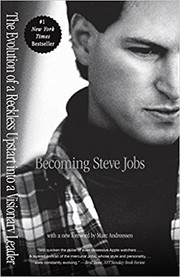
Becoming Steve Jobs

Becoming Steve Jobs

Brent Schlender, Rick Tetzeli
2015
T2 448 pages · about 7h 28m to read Open Librarygoodreads

Revisionist counterweight to Isaacson, built on decades of Schlender's interviews.

Summary

Schlender covered Jobs as a journalist for twenty-five years and had extended personal access, and with Tetzeli he argues that Isaacson's biography overweighted the young Jobs and failed to explain how he changed. The book's thesis is that the NeXT and Pixar years, generally treated as a failure period, were where Jobs learned the management skills that made the Apple turnaround possible.

The argument runs through specific changes. At NeXT, Jobs failed commercially and had to accept that his instincts about hardware and pricing were wrong. At Pixar, he worked with Ed Catmull and John Lasseter, who would not accept his interference in creative decisions, and he learned to fund and protect a team rather than direct it. He also learned from Disney's negotiating leverage what a real distribution position was worth.

The book documents the partnership with Tim Cook in detail, arguing that Jobs' willingness to depend on an operations executive he could not replicate was itself the evidence of change. It covers the product decisions of the second Apple period with more attention to the business mechanics than Isaacson gives, including the retail strategy, the music label negotiations and the carrier negotiations for the iPhone.

The access is the problem as well as the strength. Schlender had a personal relationship with Jobs and the book was supported by Cook, Ive and other Apple executives who were unhappy with Isaacson's portrait. It is more favourable and it minimises the cruelty that Isaacson documents. Read the two together rather than either alone.

Key takeaways 8

  1. The NeXT and Pixar years, usually treated as a failure period, were where Jobs learned to manage rather than only to direct.
  2. Working with Catmull and Lasseter at Pixar taught Jobs to fund and protect creative teams rather than override them.
  3. Jobs' partnership with Tim Cook shows a willingness to depend entirely on a capability he did not possess, which he had previously refused to do.
  4. The Apple turnaround depended as much on operations and supply chain decisions as on product design, which most accounts underweight.
  5. Failure at NeXT forced Jobs to accept that his instincts about pricing and market positioning had been wrong, which changed how he tested decisions afterwards.
  6. Jobs negotiated the iPhone carrier terms to preserve Apple's control of the device and its software, which reversed the industry's standard arrangement.
  7. His management of the music label negotiations required accepting terms and constraints he would not have tolerated a decade earlier.
  8. The authors argue that the cruelty of the early Jobs diminished substantially, which is the claim readers should weigh against Isaacson's evidence.

Who should read it

Readers who want the counterargument to the Isaacson biography, particularly on how Jobs' management changed and on the business mechanics of the second Apple period.

Who recommended it 8 · 1 direct

Bill Gatesreported
Ed Catmullreported
Jack Dorseyreported
Keith Raboisreported
Peter Attiareported

Similar books 6

Chosen by shared topics, the entries that hold them, and the people who recommended both.
Leander Kahney · 2008

Management-lessons treatment of Jobs's second tenure.
Walter Isaacson · 2011

Steve Jobs's life and Apple's products, from forty interviews with him and many more.

Randall E. Stross · 1993

Contemporaneous account of the NeXT failure.

Recommended by: Mohnish Pabrai, Keith Rabois
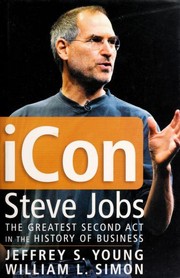
Jeffrey S. Young, William L. Simon · 2005

Steve Jobs's success at Pixar and his revival of Apple with the iMac and iPod.
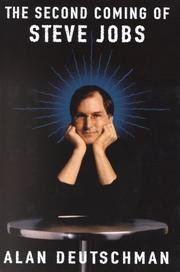
Alan Deutschman · 2000

Steve Jobs's years at NeXT and Pixar and his return to Apple.
Where it sits in the reference 2

Companies
Biographies

Topics

Biography and MemoirCompany HistoriesFounders and Entrepreneurs