Updates

  1. Person pages list letters, writing, profiles and links as sortable tables with filters, and show each person's companies as links; Fund letters show each letter's description in its own column.
  2. Experts show a checked job title and a short description of each person; 30 more people have photographs.
  3. Every company, fund, university and publication the experts work for has a page listing the people there.
  4. Fund letters show each letter's thesis and filter by it; 225 person pages list the essays, columns and newsletter issues the person wrote.
  5. Person pages list every essay and newsletter issue a person wrote, and their own books as a table in List view.
  6. Recommends shows the five largest kinds of book and the rest under More; browse pictures load sooner.
  7. Podcasts and talks link the original episode, filter by Audio and video or Press, and list each publisher once.
  8. Pages are wider, Recommends has List and Grid, and a filter clicked again turns off.
  9. Book cards sit in a ruled grid with Open Library and Goodreads links and each book's one-line note.
  10. Funds is now Investors; each investor's styles are buttons that filter the table.
  11. Podcasts and talks on a person's page filter by year and publisher and show as a list or a grid of pictures.
  12. Quotes show only people's own words: 472 summaries written by list sites are gone.
  13. Country pages open from Browse again, and every link on the shelf lands on a page.
  14. Subject and person pages show their sections as tabs, and each book appears once on a person's page.
  15. Book cards show the quote, who said it and the source; grids show five cards to a row.
  16. On a phone, a menu holds the sections, search, Updates, Feedback and dark mode.
  17. Feedback takes a screenshot of the page with no browser prompt, opens a screenshot full size when you click it, and clears itself once sent.
  18. Book cards are centred, search names the topic each book sits in, and any text cut short shows whole on hover.
  19. Search groups its results by kind: people, companies, geographies, subjects, topics, books, funds, fund letters and papers.
  20. The Books table lists who recommended each book by name, and the browser tab names the section you are in.
  21. Feedback can take a screenshot of the page, or one you paste or choose, and opens in the corner beside Updates.
  22. Each rail button reopens its section where you left it, and Browse, Table and People show on every book and subject page.
  23. Filters grey out choices that hold nothing instead of hiding them, and Books › People filters by authors or recommenders.
  24. Feedback takes a subject line and up to three screenshots.
  25. Biographies are grouped by the person they are about: 41 new pages, from Abraham Lincoln to Lee Kuan Yew.
  26. Sport splits into 23 sports, and Religion into one topic per faith.
  27. Book lists show as cards: the cover, one recommendation quote and every recommender by name.
  28. Seventeen subjects that had two or three pages under different names now have one page each.
  29. Every page lists its Experts as authors and recommenders, with a link to them on the Experts tab.
  30. Economics, Financial history, Financial panics and Accounting are subjects of their own, with one page per financial crisis.
  31. Book, person and subject pages open inside the app, so the tabs stay in view.
  32. 996 more book covers, and photographs or logos for 227 more people and companies.
  33. Books › Browse shows every subject as cards, and the rail holds Fund letters, Papers, Experts, Books and Funds.
  34. Every topic over 150 books splits into narrower topics, each with a page of its own.

Send feedback

What is it?
Screenshots, up to 3 (optional)
or paste one with Ctrl+V

We use your email only to reply to you.

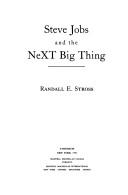
Steve Jobs and the NeXT Big Thing

Steve Jobs and the NeXT Big Thing

Randall E. Stross
1993
T3 374 pages · about 6h 14m to read Open Librarygoodreads

Contemporaneous account of the NeXT failure.

Summary

This is the second catalogue entry for Randall Stross's 1993 account of NeXT, the company Steve Jobs founded after leaving Apple, listed elsewhere in this reference under a variant title.

Stross covers NeXT from the 1985 founding through the abandonment of the hardware business. The company built an expensive workstation aimed at higher education, priced it above what the market would pay, constructed an automated factory ahead of demand, made component decisions including an optical drive and the omission of a floppy drive that customers rejected, and shipped years behind schedule. It raised very large sums from Ross Perot and Canon and sold a small fraction of projected volume.

The book was written before the sequel. NeXTSTEP, the operating system, was acquired by Apple in 1996, became the basis of Mac OS X and iOS, and brought Jobs back to Apple. The hardware failure the book documents produced the software asset that turned out to matter.

Stross wrote without cooperation and the treatment of Jobs is critical throughout, presenting the decisions as products of unchecked founder conviction. That assessment was made at the low point of Jobs' career and did not survive the following decade, which readers should hold in mind. As a case study in a well-capitalised company executing the wrong product competently, it remains useful.

Key takeaways 7

  1. NeXT's workstation was priced above what its target education market would pay, which product quality could not compensate for.
  2. An automated factory built ahead of demand converted variable costs into fixed ones before any volume existed to absorb them.
  3. Large capital raises allowed wrong decisions to persist for years by delaying the feedback that would have corrected them.
  4. Component decisions made on the founder's judgement rather than on customer evidence, including the optical drive and the absent floppy, were rejected by buyers.
  5. Shipping years late means competing against a different generation of machines than the product was designed against.
  6. The operating system rather than the hardware was the company's real asset, which was not apparent until Apple acquired it.
  7. The book's critical judgement of Jobs was made at the low point of his career and did not survive the decade that followed.

Who should read it

Founders and investors studying well-funded product failure, noting this duplicates the other NeXT entry in this reference.

About Randall E. Stross

Business historian and journalist, longtime professor at San Jose State University; wrote reported histories of Edison, Microsoft, Google and Y Combinator.

Each book reports one organisation from inside over a defined stretch of time: a year among Y Combinator's batch companies, Benchmark's partners through the dot-com IPO wave, Edison's Menlo Park laboratory. The result records how venture firms and inventors actually spent their days, which reads as evidence rather than retrospective summary.

San Jose State University

Who recommended it 2 · 1 direct

Keith Raboisreported

Similar books 6

Chosen by shared topics, the entries that hold them, and the people who recommended both.
Brent Schlender, Rick Tetzeli · 2015

How the NeXT and Pixar years changed Steve Jobs into the leader who rebuilt Apple.

Walter Isaacson · 2011

Steve Jobs's life and Apple's products, from forty interviews with him and many more.

Jeffrey S. Young, William L. Simon · 2005

Steve Jobs's success at Pixar and his revival of Apple with the iMac and iPod.

Leander Kahney · 2008

Management-lessons treatment of Jobs's second tenure.
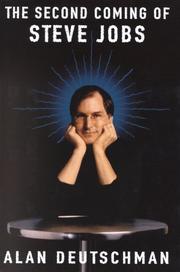
Alan Deutschman · 2000

Steve Jobs's years at NeXT and Pixar and his return to Apple.

Where it sits in the reference 3

Journalists
Companies
Biographies

Topics

Biography and MemoirCompany HistoriesFounders and EntrepreneursTech company stories