Updates

  1. Person pages list letters, writing, profiles and links as sortable tables with filters, and show each person's companies as links; Fund letters show each letter's description in its own column.
  2. Experts show a checked job title and a short description of each person; 30 more people have photographs.
  3. Every company, fund, university and publication the experts work for has a page listing the people there.
  4. Fund letters show each letter's thesis and filter by it; 225 person pages list the essays, columns and newsletter issues the person wrote.
  5. Person pages list every essay and newsletter issue a person wrote, and their own books as a table in List view.
  6. Recommends shows the five largest kinds of book and the rest under More; browse pictures load sooner.
  7. Podcasts and talks link the original episode, filter by Audio and video or Press, and list each publisher once.
  8. Pages are wider, Recommends has List and Grid, and a filter clicked again turns off.
  9. Book cards sit in a ruled grid with Open Library and Goodreads links and each book's one-line note.
  10. Funds is now Investors; each investor's styles are buttons that filter the table.
  11. Podcasts and talks on a person's page filter by year and publisher and show as a list or a grid of pictures.
  12. Quotes show only people's own words: 472 summaries written by list sites are gone.
  13. Country pages open from Browse again, and every link on the shelf lands on a page.
  14. Subject and person pages show their sections as tabs, and each book appears once on a person's page.
  15. Book cards show the quote, who said it and the source; grids show five cards to a row.
  16. On a phone, a menu holds the sections, search, Updates, Feedback and dark mode.
  17. Feedback takes a screenshot of the page with no browser prompt, opens a screenshot full size when you click it, and clears itself once sent.
  18. Book cards are centred, search names the topic each book sits in, and any text cut short shows whole on hover.
  19. Search groups its results by kind: people, companies, geographies, subjects, topics, books, funds, fund letters and papers.
  20. The Books table lists who recommended each book by name, and the browser tab names the section you are in.
  21. Feedback can take a screenshot of the page, or one you paste or choose, and opens in the corner beside Updates.
  22. Each rail button reopens its section where you left it, and Browse, Table and People show on every book and subject page.
  23. Filters grey out choices that hold nothing instead of hiding them, and Books › People filters by authors or recommenders.
  24. Feedback takes a subject line and up to three screenshots.
  25. Biographies are grouped by the person they are about: 41 new pages, from Abraham Lincoln to Lee Kuan Yew.
  26. Sport splits into 23 sports, and Religion into one topic per faith.
  27. Book lists show as cards: the cover, one recommendation quote and every recommender by name.
  28. Seventeen subjects that had two or three pages under different names now have one page each.
  29. Every page lists its Experts as authors and recommenders, with a link to them on the Experts tab.
  30. Economics, Financial history, Financial panics and Accounting are subjects of their own, with one page per financial crisis.
  31. Book, person and subject pages open inside the app, so the tabs stay in view.
  32. 996 more book covers, and photographs or logos for 227 more people and companies.
  33. Books › Browse shows every subject as cards, and the rail holds Fund letters, Papers, Experts, Books and Funds.
  34. Every topic over 150 books splits into narrower topics, each with a page of its own.

Send feedback

What is it?
Screenshots, up to 3 (optional)
or paste one with Ctrl+V

We use your email only to reply to you.

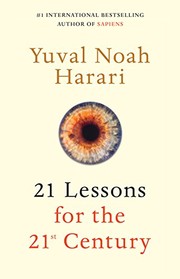
21 Lessons for the 21st Century

21 Lessons for the 21st Century

Yuval Noah Harari
2018
400 pages · about 6h 40m to read Open Librarygoodreads

Summary

Harari's third book addresses the present rather than the past or the future, and is organised as twenty-one essays across five sections covering technological challenge, political challenge, despair and hope, truth, and resilience. The technology essays argue that the combination of biotechnology and machine learning threatens liberal democracy's foundational assumption that individual choice is authoritative, because systems that know a person better than they know themselves can predict and manipulate their decisions. He also raises the prospect of a large class of people who are economically irrelevant rather than exploited, which he argues is a novel political problem without historical precedent.

The political essays address the failure of nationalism, religion and traditional ideologies to address problems that are global by nature, specifically nuclear weapons, ecological collapse and technological disruption, and argue that no national government can address any of them alone.

The essays on truth cover post-truth politics, arguing that humans have always organised around fictions and that the current moment is not exceptional, and cover the responsibility of individuals in an information environment designed to capture attention. The final essays cover education, arguing that specific knowledge is a poor investment when the relevant knowledge changes within a career, and meditation, where Harari describes his own practice.

The book is a collection of essays adapted from journalism and it repeats material from his earlier books substantially. The arguments are stated confidently without much supporting evidence, and specialists in each area find the treatment shallow. Its value is as a compact statement of the questions rather than as analysis of any one of them.

Key takeaways 8

  1. Systems that combine biological knowledge with computing power can know a person better than they know themselves, which undermines the assumption that individual choice is authoritative.
  2. The political problem of the coming decades may be a class of people who are economically irrelevant rather than exploited, which has no historical precedent.
  3. Nuclear weapons, ecological collapse and technological disruption are global problems that no national government can address alone.
  4. Nationalism can address problems within a nation and has no mechanism for problems that cross borders by nature.
  5. Humans have always organised around collective fictions, so the current concern about post-truth misidentifies a permanent condition as a new crisis.
  6. Specific knowledge is a poor educational investment when the relevant knowledge changes several times within a career, which favours adaptability over content.
  7. Attention is the resource being competed for, and the information environment is designed to capture it rather than to inform.
  8. Harari treats none of these as settled, and the book states questions more effectively than it answers them.

Who should read it

Readers wanting a compact statement of the technological and political questions of the present decade, treating it as provocation rather than analysis.

Who recommended it 7 · 1 direct

Alfred Linreported
Anna Chengreported
Daniel Petrereported
Vinod Khoslareported

Similar books 6

Chosen by shared topics, the entries that hold them, and the people who recommended both.

Yuval Noah Harari · 2024

How information networks, from the Stone Age to AI, have made and unmade societies.

Recommended by: Andrew Wilkinson
Niall Ferguson · 2011

Six advantages, from competition to the work ethic, that let the West pull ahead.

Recommended by: Mohnish Pabrai

Where it sits in the reference 0

No entry holds this book yet. It reached the reference because someone recommended it.

Topics

Sociology and CultureGeneral HistoryWorld and Big HistoryMedia and technology in society