
Updates

  1. Person pages list letters, writing, profiles and links as sortable tables with filters, and show each person's companies as links; Fund letters show each letter's description in its own column.
  2. Experts show a checked job title and a short description of each person; 30 more people have photographs.
  3. Every company, fund, university and publication the experts work for has a page listing the people there.
  4. Fund letters show each letter's thesis and filter by it; 225 person pages list the essays, columns and newsletter issues the person wrote.
  5. Person pages list every essay and newsletter issue a person wrote, and their own books as a table in List view.
  6. Recommends shows the five largest kinds of book and the rest under More; browse pictures load sooner.
  7. Podcasts and talks link the original episode, filter by Audio and video or Press, and list each publisher once.
  8. Pages are wider, Recommends has List and Grid, and a filter clicked again turns off.
  9. Book cards sit in a ruled grid with Open Library and Goodreads links and each book's one-line note.
  10. Funds is now Investors; each investor's styles are buttons that filter the table.
  11. Podcasts and talks on a person's page filter by year and publisher and show as a list or a grid of pictures.
  12. Quotes show only people's own words: 472 summaries written by list sites are gone.
  13. Country pages open from Browse again, and every link on the shelf lands on a page.
  14. Subject and person pages show their sections as tabs, and each book appears once on a person's page.
  15. Book cards show the quote, who said it and the source; grids show five cards to a row.
  16. On a phone, a menu holds the sections, search, Updates, Feedback and dark mode.
  17. Feedback takes a screenshot of the page with no browser prompt, opens a screenshot full size when you click it, and clears itself once sent.
  18. Book cards are centred, search names the topic each book sits in, and any text cut short shows whole on hover.
  19. Search groups its results by kind: people, companies, geographies, subjects, topics, books, funds, fund letters and papers.
  20. The Books table lists who recommended each book by name, and the browser tab names the section you are in.
  21. Feedback can take a screenshot of the page, or one you paste or choose, and opens in the corner beside Updates.
  22. Each rail button reopens its section where you left it, and Browse, Table and People show on every book and subject page.
  23. Filters grey out choices that hold nothing instead of hiding them, and Books › People filters by authors or recommenders.
  24. Feedback takes a subject line and up to three screenshots.
  25. Biographies are grouped by the person they are about: 41 new pages, from Abraham Lincoln to Lee Kuan Yew.
  26. Sport splits into 23 sports, and Religion into one topic per faith.
  27. Book lists show as cards: the cover, one recommendation quote and every recommender by name.
  28. Seventeen subjects that had two or three pages under different names now have one page each.
  29. Every page lists its Experts as authors and recommenders, with a link to them on the Experts tab.
  30. Economics, Financial history, Financial panics and Accounting are subjects of their own, with one page per financial crisis.
  31. Book, person and subject pages open inside the app, so the tabs stay in view.
  32. 996 more book covers, and photographs or logos for 227 more people and companies.
  33. Books › Browse shows every subject as cards, and the rail holds Fund letters, Papers, Experts, Books and Funds.
  34. Every topic over 150 books splits into narrower topics, each with a page of its own.

Send feedback

What is it?
Screenshots, up to 3 (optional)
or paste one with Ctrl+V

We use your email only to reply to you.

Eating the Big Fish

Eating the Big Fish

Adam Morgan
1999
T3 320 pages · about 5h 20m to read Open Librarygoodreads

Challenger-brand economics against a dominant incumbent.

Summary

Morgan, an advertising strategist, wrote this about how brands that are not market leaders can compete against those that are.

His definition of a challenger is structural rather than about size: a challenger is not the leader in its market, does not have the resources to outspend the leader, and has ambitions exceeding its conventional marketing resources. This combination forces a different approach, since the leader's methods depend on resources the challenger does not have.

The framework is eight credos derived from his study of successful challengers. Break with the immediate past, meaning explicitly reject the assumptions the category has operated on. Build a lighthouse identity, meaning project a strong and visible sense of who you are rather than positioning against consumer needs, so customers navigate toward you. Assume thought leadership of the category, meaning behave as though you set the terms of debate. Create symbols of re-evaluation, meaning actions dramatic enough to make consumers reconsider a decision they had stopped thinking about. Sacrifice, meaning give up audiences, messages and distribution deliberately in order to concentrate. Overcommit, meaning apply disproportionate resources to the few things chosen. Use advertising and communications to enter popular culture rather than only to communicate benefits. Become idea-centred rather than consumer-centred, which requires organisational commitment to sustain the position.

Sacrifice is the credo he treats as decisive and the one companies find hardest, because concentration requires refusing revenue that is available.

The cases are drawn from Morgan's advertising career and include brands that were challengers when he wrote and have since become leaders or failed. The framework is derived from successful cases, so it cannot distinguish the practices from those of challengers who did the same things and lost. It remains widely used in marketing practice.

Key takeaways 7

  1. A challenger is defined by not leading, by lacking the resources to outspend the leader, and by having ambitions exceeding those resources.
  2. A challenger must project a strong identity rather than positioning against consumer needs, because it cannot afford to be found through category search.
  3. Sacrifice, meaning deliberately giving up audiences, messages and channels, is what makes concentration possible and is what companies find hardest.
  4. Overcommitting resources to a small number of chosen things is the only way limited resources produce visible effect.
  5. Symbols of re-evaluation are actions dramatic enough to make consumers reconsider a decision they had stopped thinking about.
  6. Entering popular culture produces attention that paid communication cannot buy at a challenger's budget.
  7. The framework derives from successful challengers, so it cannot distinguish these practices from those of challengers who failed.

Who should read it

Founders and marketers competing against a better-resourced leader who need a framework for concentration and for building visible identity.

Who recommended it 1

Vinod Khoslareported

Similar books 6

Chosen by shared topics, the entries that hold them, and the people who recommended both.

David A. Aaker · 1996

How to build and manage a brand, using the four parts of brand equity.

Mark Jeffery · 2010

Fifteen metrics that show which marketing spending works and which does not.

Recommended by: Mohnish Pabrai, Jeff Bezos
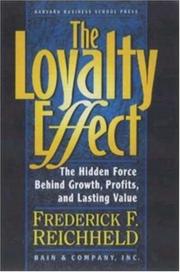
Frederick F. Reichheld, Thomas Teal · 1996

Keeping customers, employees and investors is what drives profit and growth.

“In his seminal book, The Loyalty Effect, Fred Reichheld shows that a 5 percentage point improvement in retention rate” — Michael Mauboussin

Source: The Economics of Customer Businesses (Legg Mason Capital Management)

Recommended by: Michael Mauboussin
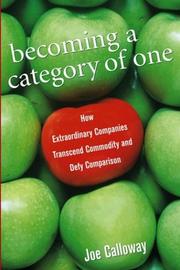
Marty Neumeier

Recommended by: Vinod Khosla

Where it sits in the reference 3

Business models
Business themes
Business themes

Topics

Sales and MarketingBusiness and ManagementBrands, positioning and luxury