Updates

  1. Person pages list letters, writing, profiles and links as sortable tables with filters, and show each person's companies as links; Fund letters show each letter's description in its own column.
  2. Experts show a checked job title and a short description of each person; 30 more people have photographs.
  3. Every company, fund, university and publication the experts work for has a page listing the people there.
  4. Fund letters show each letter's thesis and filter by it; 225 person pages list the essays, columns and newsletter issues the person wrote.
  5. Person pages list every essay and newsletter issue a person wrote, and their own books as a table in List view.
  6. Recommends shows the five largest kinds of book and the rest under More; browse pictures load sooner.
  7. Podcasts and talks link the original episode, filter by Audio and video or Press, and list each publisher once.
  8. Pages are wider, Recommends has List and Grid, and a filter clicked again turns off.
  9. Book cards sit in a ruled grid with Open Library and Goodreads links and each book's one-line note.
  10. Funds is now Investors; each investor's styles are buttons that filter the table.
  11. Podcasts and talks on a person's page filter by year and publisher and show as a list or a grid of pictures.
  12. Quotes show only people's own words: 472 summaries written by list sites are gone.
  13. Country pages open from Browse again, and every link on the shelf lands on a page.
  14. Subject and person pages show their sections as tabs, and each book appears once on a person's page.
  15. Book cards show the quote, who said it and the source; grids show five cards to a row.
  16. On a phone, a menu holds the sections, search, Updates, Feedback and dark mode.
  17. Feedback takes a screenshot of the page with no browser prompt, opens a screenshot full size when you click it, and clears itself once sent.
  18. Book cards are centred, search names the topic each book sits in, and any text cut short shows whole on hover.
  19. Search groups its results by kind: people, companies, geographies, subjects, topics, books, funds, fund letters and papers.
  20. The Books table lists who recommended each book by name, and the browser tab names the section you are in.
  21. Feedback can take a screenshot of the page, or one you paste or choose, and opens in the corner beside Updates.
  22. Each rail button reopens its section where you left it, and Browse, Table and People show on every book and subject page.
  23. Filters grey out choices that hold nothing instead of hiding them, and Books › People filters by authors or recommenders.
  24. Feedback takes a subject line and up to three screenshots.
  25. Biographies are grouped by the person they are about: 41 new pages, from Abraham Lincoln to Lee Kuan Yew.
  26. Sport splits into 23 sports, and Religion into one topic per faith.
  27. Book lists show as cards: the cover, one recommendation quote and every recommender by name.
  28. Seventeen subjects that had two or three pages under different names now have one page each.
  29. Every page lists its Experts as authors and recommenders, with a link to them on the Experts tab.
  30. Economics, Financial history, Financial panics and Accounting are subjects of their own, with one page per financial crisis.
  31. Book, person and subject pages open inside the app, so the tabs stay in view.
  32. 996 more book covers, and photographs or logos for 227 more people and companies.
  33. Books › Browse shows every subject as cards, and the rail holds Fund letters, Papers, Experts, Books and Funds.
  34. Every topic over 150 books splits into narrower topics, each with a page of its own.

Send feedback

What is it?
Screenshots, up to 3 (optional)
or paste one with Ctrl+V

We use your email only to reply to you.

Data-Driven Marketing

Data-Driven Marketing

Mark Jeffery
2010
T4 298 pages · about 4h 58m to read Open Librarygoodreads

Fifteen marketing metrics and how to hold advertising spending accountable

Summary

Jeffery, who taught at Kellogg, argues that most marketing spending is not measured and that a small number of metrics would let executives distinguish what works from what does not. His central claim is that roughly half of marketing spending in the companies he studied could not be connected to any outcome.

His framework identifies fifteen metrics organised into classic marketing measures and internet-specific ones. The classic set includes brand awareness, test drive meaning trial, churn, customer satisfaction, take rate, profit, net present value, internal rate of return, payback and customer lifetime value. The internet set includes cost per click, transaction conversion rate, return on advertising spend, bounce rate, word of mouth and its measurement through referral behaviour.

His argument for customer lifetime value as the central measure is that it connects acquisition spending to the actual return, which allows a company to determine what it can afford to pay for a customer rather than setting a budget by precedent.

He covers the organisational obstacles, including that marketing departments resist measurement because it exposes ineffective spending, that data is held in incompatible systems, and that the incentives reward campaign activity rather than measured return. His testing material argues for controlled experiments with holdout groups rather than before-and-after comparisons, since the second cannot separate the campaign from everything else that changed. The reference has verified the framework rather than every case. The book is from 2010 and the internet metrics and the attribution technology have changed considerably. The fifteen metrics and the argument for holdout testing remain applicable.

Key takeaways 8

  1. Roughly half of marketing spending in the companies studied could not be connected to any measurable outcome.
  2. A small number of metrics, around fifteen, is sufficient to distinguish marketing spending that works from spending that does not.
  3. Customer lifetime value connects acquisition spending to actual return, which determines what a company can afford to pay for a customer.
  4. Setting a marketing budget by precedent or by percentage of revenue substitutes for the calculation that would determine the right amount.
  5. Controlled experiments with holdout groups are required, since before-and-after comparisons cannot separate the campaign from everything else that changed.
  6. Marketing departments resist measurement because it exposes ineffective spending, which is an organisational obstacle rather than a technical one.
  7. Brand metrics and financial metrics must both be tracked, since optimising only for immediate response degrades the brand that makes response possible.
  8. The specific internet metrics and the attribution technology have changed substantially since publication.

Who should read it

Marketing leaders and executives who want a defined metric set and the argument for holdout testing, with the digital specifics treated as dated.

Who recommended it 2 · 1 direct

Similar books 6

Chosen by shared topics, the entries that hold them, and the people who recommended both.

David A. Aaker · 1996

How to build and manage a brand, using the four parts of brand equity.

Adam Morgan · 1999

Challenger-brand economics against a dominant incumbent.

Recommended by: Vinod Khosla

Frederick F. Reichheld, Thomas Teal · 1996

Keeping customers, employees and investors is what drives profit and growth.

“In his seminal book, The Loyalty Effect, Fred Reichheld shows that a 5 percentage point improvement in retention rate” — Michael Mauboussin

Source: The Economics of Customer Businesses (Legg Mason Capital Management)

Recommended by: Michael Mauboussin
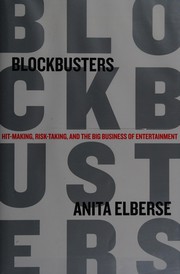
Anita Elberse · 2013

Hit economics that explain Netflix's later spending strategy.

Clayton Christensen, Taddy Hall, Karen Dillon, David S. Duncan · 2016

Customers hire products to do a job; innovate by finding the job, not the buyer type.

Hermann Simon · 2015

Price is the strongest profit lever and the least managed; how to set it well.

Recommended by: Michael Mauboussin

Where it sits in the reference 4

Business models
Accounting
Business themes
Business themes

Topics

Sales and MarketingBusiness and ManagementGrowth, pricing and channels