Updates

  1. Person pages list letters, writing, profiles and links as sortable tables with filters, and show each person's companies as links; Fund letters show each letter's description in its own column.
  2. Experts show a checked job title and a short description of each person; 30 more people have photographs.
  3. Every company, fund, university and publication the experts work for has a page listing the people there.
  4. Fund letters show each letter's thesis and filter by it; 225 person pages list the essays, columns and newsletter issues the person wrote.
  5. Person pages list every essay and newsletter issue a person wrote, and their own books as a table in List view.
  6. Recommends shows the five largest kinds of book and the rest under More; browse pictures load sooner.
  7. Podcasts and talks link the original episode, filter by Audio and video or Press, and list each publisher once.
  8. Pages are wider, Recommends has List and Grid, and a filter clicked again turns off.
  9. Book cards sit in a ruled grid with Open Library and Goodreads links and each book's one-line note.
  10. Funds is now Investors; each investor's styles are buttons that filter the table.
  11. Podcasts and talks on a person's page filter by year and publisher and show as a list or a grid of pictures.
  12. Quotes show only people's own words: 472 summaries written by list sites are gone.
  13. Country pages open from Browse again, and every link on the shelf lands on a page.
  14. Subject and person pages show their sections as tabs, and each book appears once on a person's page.
  15. Book cards show the quote, who said it and the source; grids show five cards to a row.
  16. On a phone, a menu holds the sections, search, Updates, Feedback and dark mode.
  17. Feedback takes a screenshot of the page with no browser prompt, opens a screenshot full size when you click it, and clears itself once sent.
  18. Book cards are centred, search names the topic each book sits in, and any text cut short shows whole on hover.
  19. Search groups its results by kind: people, companies, geographies, subjects, topics, books, funds, fund letters and papers.
  20. The Books table lists who recommended each book by name, and the browser tab names the section you are in.
  21. Feedback can take a screenshot of the page, or one you paste or choose, and opens in the corner beside Updates.
  22. Each rail button reopens its section where you left it, and Browse, Table and People show on every book and subject page.
  23. Filters grey out choices that hold nothing instead of hiding them, and Books › People filters by authors or recommenders.
  24. Feedback takes a subject line and up to three screenshots.
  25. Biographies are grouped by the person they are about: 41 new pages, from Abraham Lincoln to Lee Kuan Yew.
  26. Sport splits into 23 sports, and Religion into one topic per faith.
  27. Book lists show as cards: the cover, one recommendation quote and every recommender by name.
  28. Seventeen subjects that had two or three pages under different names now have one page each.
  29. Every page lists its Experts as authors and recommenders, with a link to them on the Experts tab.
  30. Economics, Financial history, Financial panics and Accounting are subjects of their own, with one page per financial crisis.
  31. Book, person and subject pages open inside the app, so the tabs stay in view.
  32. 996 more book covers, and photographs or logos for 227 more people and companies.
  33. Books › Browse shows every subject as cards, and the rail holds Fund letters, Papers, Experts, Books and Funds.
  34. Every topic over 150 books splits into narrower topics, each with a page of its own.

Send feedback

What is it?
Screenshots, up to 3 (optional)
or paste one with Ctrl+V

We use your email only to reply to you.

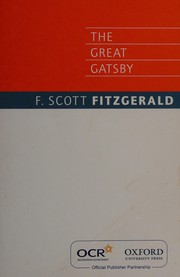
The Great Gatsby

The Great Gatsby

F. Scott Fitzgerald
1920
185 pages · about 3h 5m to read Open Librarygoodreads

Summary

Fitzgerald's 1925 novel is narrated by Nick Carraway, who moves to Long Island and becomes involved with his neighbour Jay Gatsby, a wealthy man of unexplained origin who holds enormous parties. Gatsby's purpose is to recover Daisy Buchanan, whom he loved five years earlier before he had money, and whose husband Tom is wealthy by inheritance.

The class structure is the novel's subject. Fitzgerald separates inherited wealth, represented by the Buchanans and by East Egg, from acquired wealth, represented by Gatsby and West Egg, and shows that the second cannot buy entry into the first regardless of quantity. Gatsby's money comes from bootlegging and from securities fraud, and the novel is precise that the source matters less than the fact of acquisition rather than inheritance.

The central argument is stated at the end, that Gatsby's error was believing the past could be repeated and that money could restore a position that time had removed. Nick's judgment that Tom and Daisy were careless people who smashed things and retreated into their money is the book's moral conclusion. The novel sold poorly during Fitzgerald's life and became canonical afterwards, largely through wartime distribution to American troops.

It is short and the prose is the reason to read it. Its business readership treats it as a study of new money against old, of the limits of what wealth purchases, and of a person whose entire construction of self is directed at a single objective that cannot be achieved. Readings that treat Gatsby as an aspirational figure invert what the novel says about him.

Key takeaways 8

  1. Acquired wealth cannot purchase entry into inherited wealth, and the amount is irrelevant to the distinction.
  2. Gatsby constructed an entire identity, including his name and his history, directed at a single objective that could not be achieved.
  3. The belief that the past can be recovered is the specific error the novel identifies, and money accelerates rather than corrects it.
  4. People with inherited wealth can damage others and retreat into their money, which is Nick's summary judgment on Tom and Daisy.
  5. Social position is enforced through knowledge of origin rather than through current circumstances, which is why Gatsby's history could not be escaped.
  6. The parties Gatsby holds attract people who know nothing about him and who do not attend his funeral, which the novel presents as the return on the expenditure.
  7. Wealth acquired through crime and wealth acquired legitimately are treated identically by the class structure, which cares only about inheritance.
  8. Readings that treat Gatsby as an aspirational model invert the novel's judgment on him.

Who should read it

Readers who want a short novel on the limits of what acquired wealth purchases and on the construction of an identity around an unachievable objective.

Who recommended it 6 · 2 direct

Anna Chengreported
Bill Gatesreported
Ev Williamsreported

Similar books 6

Chosen by shared topics, the entries that hold them, and the people who recommended both.
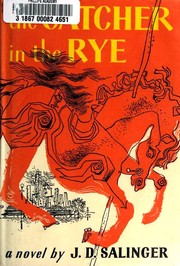
J.D. Salinger · 1945

A novel of a sixteen-year-old's days alone in New York after his school expels him.

William Golding · 1954

A novel of schoolboys stranded on an island whose self-rule collapses into violence.

Where it sits in the reference 0

No entry holds this book yet. It reached the reference because someone recommended it.

Topics

FictionClassic novels and stories