Updates

  1. Person pages list letters, writing, profiles and links as sortable tables with filters, and show each person's companies as links; Fund letters show each letter's description in its own column.
  2. Experts show a checked job title and a short description of each person; 30 more people have photographs.
  3. Every company, fund, university and publication the experts work for has a page listing the people there.
  4. Fund letters show each letter's thesis and filter by it; 225 person pages list the essays, columns and newsletter issues the person wrote.
  5. Person pages list every essay and newsletter issue a person wrote, and their own books as a table in List view.
  6. Recommends shows the five largest kinds of book and the rest under More; browse pictures load sooner.
  7. Podcasts and talks link the original episode, filter by Audio and video or Press, and list each publisher once.
  8. Pages are wider, Recommends has List and Grid, and a filter clicked again turns off.
  9. Book cards sit in a ruled grid with Open Library and Goodreads links and each book's one-line note.
  10. Funds is now Investors; each investor's styles are buttons that filter the table.
  11. Podcasts and talks on a person's page filter by year and publisher and show as a list or a grid of pictures.
  12. Quotes show only people's own words: 472 summaries written by list sites are gone.
  13. Country pages open from Browse again, and every link on the shelf lands on a page.
  14. Subject and person pages show their sections as tabs, and each book appears once on a person's page.
  15. Book cards show the quote, who said it and the source; grids show five cards to a row.
  16. On a phone, a menu holds the sections, search, Updates, Feedback and dark mode.
  17. Feedback takes a screenshot of the page with no browser prompt, opens a screenshot full size when you click it, and clears itself once sent.
  18. Book cards are centred, search names the topic each book sits in, and any text cut short shows whole on hover.
  19. Search groups its results by kind: people, companies, geographies, subjects, topics, books, funds, fund letters and papers.
  20. The Books table lists who recommended each book by name, and the browser tab names the section you are in.
  21. Feedback can take a screenshot of the page, or one you paste or choose, and opens in the corner beside Updates.
  22. Each rail button reopens its section where you left it, and Browse, Table and People show on every book and subject page.
  23. Filters grey out choices that hold nothing instead of hiding them, and Books › People filters by authors or recommenders.
  24. Feedback takes a subject line and up to three screenshots.
  25. Biographies are grouped by the person they are about: 41 new pages, from Abraham Lincoln to Lee Kuan Yew.
  26. Sport splits into 23 sports, and Religion into one topic per faith.
  27. Book lists show as cards: the cover, one recommendation quote and every recommender by name.
  28. Seventeen subjects that had two or three pages under different names now have one page each.
  29. Every page lists its Experts as authors and recommenders, with a link to them on the Experts tab.
  30. Economics, Financial history, Financial panics and Accounting are subjects of their own, with one page per financial crisis.
  31. Book, person and subject pages open inside the app, so the tabs stay in view.
  32. 996 more book covers, and photographs or logos for 227 more people and companies.
  33. Books › Browse shows every subject as cards, and the rail holds Fund letters, Papers, Experts, Books and Funds.
  34. Every topic over 150 books splits into narrower topics, each with a page of its own.

Send feedback

What is it?
Screenshots, up to 3 (optional)
or paste one with Ctrl+V

We use your email only to reply to you.

The Catcher in the Rye

The Catcher in the Rye

J.D. Salinger
1945
240 pages · about 4h to read Open Librarygoodreads

Summary

Salinger's 1951 novel is narrated by Holden Caulfield, a sixteen-year-old recounting the days after his expulsion from a fourth school, spent alone in New York before returning home. The narration is retrospective, delivered from what is implied to be a psychiatric facility.

The recurring subject is Holden's charge of phoniness, which he applies to almost everyone he encounters and which he uses to reject the adult world he is being prepared to enter. Salinger constructs the novel so that Holden's judgments are frequently accurate and his own behaviour is equally inconsistent, which the narration reveals without commenting on.

The underlying material is grief. Holden's younger brother Allie died of leukaemia three years earlier, an event Holden mentions repeatedly and never processes, and his breakdown across the novel proceeds from it. The title comes from his misremembering of a Burns poem, in which he imagines catching children before they fall off a cliff, which is his statement of what he wants to do and which his sister Phoebe identifies as impossible.

The novel's cultural position is enormous and has been complicated by its association with several violent individuals who carried it. It is a first-person voice novel and readers who dislike the voice will find nothing else in it. The class position of the narrator, a wealthy boy in expensive schools, limits how universal the alienation is. Its business readership is small and its relevance is as a document of how a person constructs a moral position out of grief they cannot name.

Key takeaways 7

  1. Holden's charge of phoniness is frequently accurate and is also the mechanism by which he avoids participating in anything.
  2. The narration reveals that Holden's own behaviour is as inconsistent as the behaviour he condemns, without stating it.
  3. Unprocessed grief for his brother's death drives the breakdown, and Holden never connects the two explicitly.
  4. His stated wish to protect children from falling is identified as impossible by his sister, which is the novel's only direct challenge to him.
  5. Rejecting a whole social world as inauthentic leaves the person with nowhere to go, which is where the novel ends.
  6. The alienation described belongs to a wealthy boy in expensive schools, which limits how universal the position is.
  7. The novel is entirely a voice, and readers who do not accept the voice will find nothing else available in it.

Who should read it

Readers who want the canonical American novel of adolescent alienation and its construction of a moral stance from unexamined grief.

Who recommended it 5 · 2 direct

Bill Gatesreported
Ev Williamsreported

Similar books 6

Chosen by shared topics, the entries that hold them, and the people who recommended both.

F. Scott Fitzgerald · 1920

A novel of a rich man of unknown origin on Long Island and the woman he wants back.

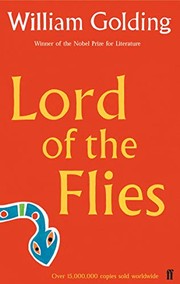
William Golding · 1954

A novel of schoolboys stranded on an island whose self-rule collapses into violence.

Where it sits in the reference 0

No entry holds this book yet. It reached the reference because someone recommended it.

Topics

FictionClassic novels and stories