Updates

  1. Person pages list letters, writing, profiles and links as sortable tables with filters, and show each person's companies as links; Fund letters show each letter's description in its own column.
  2. Experts show a checked job title and a short description of each person; 30 more people have photographs.
  3. Every company, fund, university and publication the experts work for has a page listing the people there.
  4. Fund letters show each letter's thesis and filter by it; 225 person pages list the essays, columns and newsletter issues the person wrote.
  5. Person pages list every essay and newsletter issue a person wrote, and their own books as a table in List view.
  6. Recommends shows the five largest kinds of book and the rest under More; browse pictures load sooner.
  7. Podcasts and talks link the original episode, filter by Audio and video or Press, and list each publisher once.
  8. Pages are wider, Recommends has List and Grid, and a filter clicked again turns off.
  9. Book cards sit in a ruled grid with Open Library and Goodreads links and each book's one-line note.
  10. Funds is now Investors; each investor's styles are buttons that filter the table.
  11. Podcasts and talks on a person's page filter by year and publisher and show as a list or a grid of pictures.
  12. Quotes show only people's own words: 472 summaries written by list sites are gone.
  13. Country pages open from Browse again, and every link on the shelf lands on a page.
  14. Subject and person pages show their sections as tabs, and each book appears once on a person's page.
  15. Book cards show the quote, who said it and the source; grids show five cards to a row.
  16. On a phone, a menu holds the sections, search, Updates, Feedback and dark mode.
  17. Feedback takes a screenshot of the page with no browser prompt, opens a screenshot full size when you click it, and clears itself once sent.
  18. Book cards are centred, search names the topic each book sits in, and any text cut short shows whole on hover.
  19. Search groups its results by kind: people, companies, geographies, subjects, topics, books, funds, fund letters and papers.
  20. The Books table lists who recommended each book by name, and the browser tab names the section you are in.
  21. Feedback can take a screenshot of the page, or one you paste or choose, and opens in the corner beside Updates.
  22. Each rail button reopens its section where you left it, and Browse, Table and People show on every book and subject page.
  23. Filters grey out choices that hold nothing instead of hiding them, and Books › People filters by authors or recommenders.
  24. Feedback takes a subject line and up to three screenshots.
  25. Biographies are grouped by the person they are about: 41 new pages, from Abraham Lincoln to Lee Kuan Yew.
  26. Sport splits into 23 sports, and Religion into one topic per faith.
  27. Book lists show as cards: the cover, one recommendation quote and every recommender by name.
  28. Seventeen subjects that had two or three pages under different names now have one page each.
  29. Every page lists its Experts as authors and recommenders, with a link to them on the Experts tab.
  30. Economics, Financial history, Financial panics and Accounting are subjects of their own, with one page per financial crisis.
  31. Book, person and subject pages open inside the app, so the tabs stay in view.
  32. 996 more book covers, and photographs or logos for 227 more people and companies.
  33. Books › Browse shows every subject as cards, and the rail holds Fund letters, Papers, Experts, Books and Funds.
  34. Every topic over 150 books splits into narrower topics, each with a page of its own.

Send feedback

What is it?
Screenshots, up to 3 (optional)
or paste one with Ctrl+V

We use your email only to reply to you.

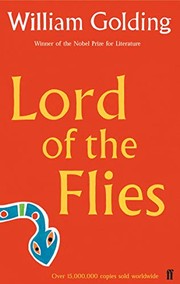
Lord of the Flies

Lord of the Flies

William Golding
1954
243 pages · about 4h 3m to read Open Librarygoodreads

Summary

Golding's 1954 novel places a group of British schoolboys on an uninhabited island after a plane crash with no adults, and follows their attempt at self-government and its collapse into violence. Golding wrote it against the tradition of adventure stories in which British boys demonstrate civilised competence in such circumstances, and specifically against R. M. Ballantyne's The Coral Island.

The political structure is the substance. Ralph is elected on the basis of the conch shell he found and organises around rescue, shelter and the signal fire. Jack builds an alternative power base around hunting, meat and the provision of excitement, and Golding shows the transfer of allegiance occurring not through argument but through the satisfaction of immediate wants. Piggy holds the intelligence and the glasses that make fire possible and has no standing because he is physically weak and socially marginal. Simon understands what is happening and cannot communicate it.

Golding's argument is that the defects of society trace to the defects of human nature, which he stated directly, and that civilisation is a restraint rather than a condition. The beast the boys fear turns out to be themselves.

The novel has been criticised on several grounds. Its claim about human nature is asserted through a constructed scenario rather than demonstrated. Rutger Bregman documented an actual case in which six shipwrecked Tongan boys cooperated successfully for fifteen months, which runs directly against Golding's premise. The characters are all boys of a specific class and nationality. Its value for organisational readers is the depiction of how legitimate authority is displaced by whoever satisfies immediate wants.

Key takeaways 8

  1. Legitimate authority based on rules and long-term objectives is displaced by whoever satisfies immediate wants, which happens without any argument being won.
  2. Symbols of authority hold only as long as the group chooses to honour them, and the conch has no power once anyone refuses it.
  3. Intelligence without social standing has no influence, which the treatment of Piggy demonstrates throughout.
  4. Fear of an external threat is used to consolidate power, and the threat's non-existence does not weaken its usefulness.
  5. Anonymity provided by masks and by the group removes the inhibition that individual identity imposes.
  6. Long-term objectives requiring sustained effort lose to immediate gratification when both are on offer.
  7. Golding argues that the defects of society follow from the defects of human nature, which the constructed scenario asserts rather than demonstrates.
  8. An actual case of shipwrecked boys who cooperated successfully for fifteen months runs directly against the novel's premise.

Who should read it

Readers interested in how authority and rules break down in a group, aware that the premise is asserted through construction rather than evidence.

Who recommended it 5 · 1 direct

Elon Muskreported
Ev Williamsreported
Scott Belskyreported

Similar books 6

Chosen by shared topics, the entries that hold them, and the people who recommended both.
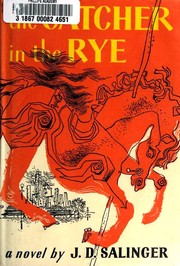
J.D. Salinger · 1945

A novel of a sixteen-year-old's days alone in New York after his school expels him.

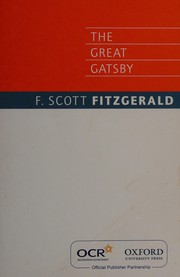
F. Scott Fitzgerald · 1920

A novel of a rich man of unknown origin on Long Island and the woman he wants back.

Where it sits in the reference 0

No entry holds this book yet. It reached the reference because someone recommended it.

Topics

FictionClassic novels and stories