Updates

  1. Person pages list letters, writing, profiles and links as sortable tables with filters, and show each person's companies as links; Fund letters show each letter's description in its own column.
  2. Experts show a checked job title and a short description of each person; 30 more people have photographs.
  3. Every company, fund, university and publication the experts work for has a page listing the people there.
  4. Fund letters show each letter's thesis and filter by it; 225 person pages list the essays, columns and newsletter issues the person wrote.
  5. Person pages list every essay and newsletter issue a person wrote, and their own books as a table in List view.
  6. Recommends shows the five largest kinds of book and the rest under More; browse pictures load sooner.
  7. Podcasts and talks link the original episode, filter by Audio and video or Press, and list each publisher once.
  8. Pages are wider, Recommends has List and Grid, and a filter clicked again turns off.
  9. Book cards sit in a ruled grid with Open Library and Goodreads links and each book's one-line note.
  10. Funds is now Investors; each investor's styles are buttons that filter the table.
  11. Podcasts and talks on a person's page filter by year and publisher and show as a list or a grid of pictures.
  12. Quotes show only people's own words: 472 summaries written by list sites are gone.
  13. Country pages open from Browse again, and every link on the shelf lands on a page.
  14. Subject and person pages show their sections as tabs, and each book appears once on a person's page.
  15. Book cards show the quote, who said it and the source; grids show five cards to a row.
  16. On a phone, a menu holds the sections, search, Updates, Feedback and dark mode.
  17. Feedback takes a screenshot of the page with no browser prompt, opens a screenshot full size when you click it, and clears itself once sent.
  18. Book cards are centred, search names the topic each book sits in, and any text cut short shows whole on hover.
  19. Search groups its results by kind: people, companies, geographies, subjects, topics, books, funds, fund letters and papers.
  20. The Books table lists who recommended each book by name, and the browser tab names the section you are in.
  21. Feedback can take a screenshot of the page, or one you paste or choose, and opens in the corner beside Updates.
  22. Each rail button reopens its section where you left it, and Browse, Table and People show on every book and subject page.
  23. Filters grey out choices that hold nothing instead of hiding them, and Books › People filters by authors or recommenders.
  24. Feedback takes a subject line and up to three screenshots.
  25. Biographies are grouped by the person they are about: 41 new pages, from Abraham Lincoln to Lee Kuan Yew.
  26. Sport splits into 23 sports, and Religion into one topic per faith.
  27. Book lists show as cards: the cover, one recommendation quote and every recommender by name.
  28. Seventeen subjects that had two or three pages under different names now have one page each.
  29. Every page lists its Experts as authors and recommenders, with a link to them on the Experts tab.
  30. Economics, Financial history, Financial panics and Accounting are subjects of their own, with one page per financial crisis.
  31. Book, person and subject pages open inside the app, so the tabs stay in view.
  32. 996 more book covers, and photographs or logos for 227 more people and companies.
  33. Books › Browse shows every subject as cards, and the rail holds Fund letters, Papers, Experts, Books and Funds.
  34. Every topic over 150 books splits into narrower topics, each with a page of its own.

Send feedback

What is it?
Screenshots, up to 3 (optional)
or paste one with Ctrl+V

We use your email only to reply to you.

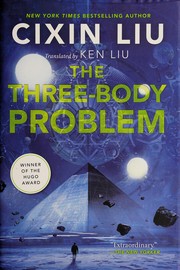
The Three-Body Problem

The Three-Body Problem

Cixin Liu
2008
417 pages · about 6h 57m to read Open Librarygoodreads

Summary

Liu's novel, published in Chinese in 2008 and in Ken Liu's English translation in 2014, opens during the Cultural Revolution with the killing of a physicist by Red Guards. His daughter Ye Wenjie, sent to a secret radar installation, discovers a method of amplifying radio signals off the sun and receives a warning from an alien civilisation not to reply. She replies, having concluded that humanity cannot correct itself.

The present-day plot follows nanomaterials researcher Wang Miao investigating a wave of physicist suicides and a virtual reality game that turns out to be a recruitment tool. The Trisolaran civilisation lives in a system with three suns whose motion is chaotic and unpredictable, producing eras of stability and catastrophic destruction, which is the three-body problem of the title. Their solution is to take Earth.

The science is central rather than decorative, covering the actual unsolvability of the three-body problem, the proton unfolded into higher dimensions to create the sophon that blocks Earth's particle physics research, and a treatment of physics research as the strategic bottleneck of a civilisation. The strategic content that technology readers cite comes largely from the sequels, particularly the dark forest hypothesis about why civilisations stay silent, which appears in the second book. This first volume establishes the setup.

The characters are thin and Liu writes in a mode that prioritises ideas over psychology, which many Western readers find flat. The Cultural Revolution material was moved from the opening in the original Chinese publication and restored by the translator. The physics exposition is long. Read it for the treatment of civilisational strategy and technological suppression.

Key takeaways 8

  1. A civilisation living under unpredictable environmental catastrophe develops entirely different priorities and ethics from one living under stability.
  2. Blocking a rival's fundamental research is more effective than any direct attack, because it caps their technology permanently.
  3. Betrayal of humanity in the novel comes from people who concluded that humanity cannot correct its own behaviour, which is presented as a reasoned position rather than as madness.
  4. Political persecution of scientists produces effects that persist for generations through the individuals it creates.
  5. A technologically superior civilisation still fears a faster-developing one, because the relevant variable is the rate of progress rather than the current level.
  6. Physics research functions as the strategic bottleneck of a civilisation, so an attack on it is an attack on everything downstream.
  7. Communication with an unknown civilisation carries an asymmetric risk, since revealing your position cannot be undone.
  8. Recruitment of collaborators works better through offering meaning and belonging than through offering material reward.

Who should read it

Readers who want hard science fiction on civilisational strategy and technological suppression, with characters treated as vehicles for the ideas.

Who recommended it 11 · 2 direct

Andrew Chenreported
Bill Gatesreported
Sahil Bloomreported

Similar books 6

Chosen by shared topics, the entries that hold them, and the people who recommended both.
Andy Weir · 2011

A novel of an astronaut left alone on Mars who must survive until rescue.

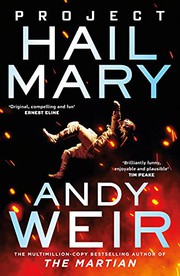
Andy Weir · 2021

A novel of an amnesiac astronaut sent to stop a microbe that is dimming the sun.

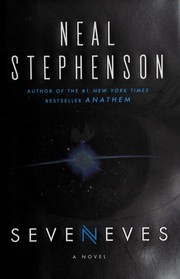
Neal Stephenson · 2015

Recommended by: Bill Gates, Delian Asparouhov

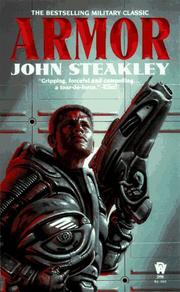
John Steakley

Recommended by: Nat Eliason

Daniel Suarez · 2019

Recommended by: Delian Asparouhov

Where it sits in the reference 0

No entry holds this book yet. It reached the reference because someone recommended it.

Topics

FictionScience fictionSpace opera and space exploration