Updates

  1. Person pages list letters, writing, profiles and links as sortable tables with filters, and show each person's companies as links; Fund letters show each letter's description in its own column.
  2. Experts show a checked job title and a short description of each person; 30 more people have photographs.
  3. Every company, fund, university and publication the experts work for has a page listing the people there.
  4. Fund letters show each letter's thesis and filter by it; 225 person pages list the essays, columns and newsletter issues the person wrote.
  5. Person pages list every essay and newsletter issue a person wrote, and their own books as a table in List view.
  6. Recommends shows the five largest kinds of book and the rest under More; browse pictures load sooner.
  7. Podcasts and talks link the original episode, filter by Audio and video or Press, and list each publisher once.
  8. Pages are wider, Recommends has List and Grid, and a filter clicked again turns off.
  9. Book cards sit in a ruled grid with Open Library and Goodreads links and each book's one-line note.
  10. Funds is now Investors; each investor's styles are buttons that filter the table.
  11. Podcasts and talks on a person's page filter by year and publisher and show as a list or a grid of pictures.
  12. Quotes show only people's own words: 472 summaries written by list sites are gone.
  13. Country pages open from Browse again, and every link on the shelf lands on a page.
  14. Subject and person pages show their sections as tabs, and each book appears once on a person's page.
  15. Book cards show the quote, who said it and the source; grids show five cards to a row.
  16. On a phone, a menu holds the sections, search, Updates, Feedback and dark mode.
  17. Feedback takes a screenshot of the page with no browser prompt, opens a screenshot full size when you click it, and clears itself once sent.
  18. Book cards are centred, search names the topic each book sits in, and any text cut short shows whole on hover.
  19. Search groups its results by kind: people, companies, geographies, subjects, topics, books, funds, fund letters and papers.
  20. The Books table lists who recommended each book by name, and the browser tab names the section you are in.
  21. Feedback can take a screenshot of the page, or one you paste or choose, and opens in the corner beside Updates.
  22. Each rail button reopens its section where you left it, and Browse, Table and People show on every book and subject page.
  23. Filters grey out choices that hold nothing instead of hiding them, and Books › People filters by authors or recommenders.
  24. Feedback takes a subject line and up to three screenshots.
  25. Biographies are grouped by the person they are about: 41 new pages, from Abraham Lincoln to Lee Kuan Yew.
  26. Sport splits into 23 sports, and Religion into one topic per faith.
  27. Book lists show as cards: the cover, one recommendation quote and every recommender by name.
  28. Seventeen subjects that had two or three pages under different names now have one page each.
  29. Every page lists its Experts as authors and recommenders, with a link to them on the Experts tab.
  30. Economics, Financial history, Financial panics and Accounting are subjects of their own, with one page per financial crisis.
  31. Book, person and subject pages open inside the app, so the tabs stay in view.
  32. 996 more book covers, and photographs or logos for 227 more people and companies.
  33. Books › Browse shows every subject as cards, and the rail holds Fund letters, Papers, Experts, Books and Funds.
  34. Every topic over 150 books splits into narrower topics, each with a page of its own.

Send feedback

What is it?
Screenshots, up to 3 (optional)
or paste one with Ctrl+V

We use your email only to reply to you.

The Martian

The Martian

Andy Weir
2011
407 pages · about 6h 47m to read Open Librarygoodreads

Summary

Weir's novel follows astronaut Mark Watney, left behind on Mars after his crew evacuates during a storm believing him dead, and his attempts to survive until a rescue that is years away. The book is constructed as a sequence of engineering problems: producing food, producing water, generating power, communicating with Earth, and travelling thousands of kilometres to a rescue site.

The solutions are worked out explicitly with the arithmetic shown. Watney calculates his caloric requirements against his food supply, converts hydrazine into water by burning hydrogen in a controlled reaction, builds a farm in the habitat using Martian soil and crew waste, recovers a defunct probe to establish communication, and modifies a rover for a long overland journey. Weir did the calculations himself and the majority hold up, with acknowledged departures including the opening storm, since Martian atmospheric pressure could not produce winds capable of tipping a vehicle.

The method the book illustrates is decomposition of a survival situation into individually solvable problems, each with resource accounting attached, and acceptance that solutions create new problems. The recurring pattern is that a fix introduces a failure elsewhere, which Weir uses to structure the plot.

The characterisation is thin and the humour is constant, which some readers find grating. The NASA and Chinese space agency sections are weaker than the Mars sections. There is no thematic depth beyond the survival narrative, which Weir did not attempt. It is read in engineering and startup circles as a demonstration of iterative problem-solving under hard resource constraints, which is exactly what it provides.

Key takeaways 8

  1. A survival situation can be decomposed into individually solvable problems, each with an explicit resource budget attached.
  2. Every solution creates new failure modes, so the work is continuous rather than a sequence of resolved problems.
  3. Resource accounting in calories, water, power and time determines what options exist, and the arithmetic must be done before any plan is attempted.
  4. Improvisation with materials designed for other purposes produces most of the solutions, since nothing suitable is available.
  5. Testing a modification at small scale before committing to it is what prevents a single error from being fatal.
  6. Communication with people who have more information and better tools changes what problems are solvable, which is why re-establishing contact was the highest priority.
  7. Panic and despair are treated as practical problems to be managed rather than as emotional states to be resolved.
  8. The novel shows the calculations rather than asserting the results, which is why it is read as a demonstration of method rather than as adventure.

Who should read it

Readers who want a demonstration of iterative engineering problem-solving under hard resource constraints, with the arithmetic shown.

Who recommended it 7 · 1 direct

Adam Horeported
Bill Gatesreported
Ev Williamsreported
John Doerrreported
Noah Kaganreported

Similar books 6

Chosen by shared topics, the entries that hold them, and the people who recommended both.
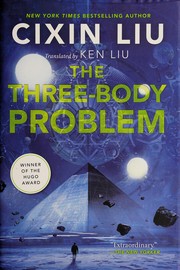
Cixin Liu · 2008

A novel in which a scientist answers an alien warning and invites first contact.

Andy Weir · 2021

A novel of an amnesiac astronaut sent to stop a microbe that is dimming the sun.

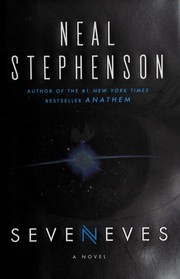
Neal Stephenson · 2015

Recommended by: Bill Gates, Delian Asparouhov

John Steakley

Recommended by: Nat Eliason

Daniel Suarez · 2019

Recommended by: Delian Asparouhov

Orson Scott Card · 1985

A novel of a gifted boy trained in an orbiting school for war against aliens.

Where it sits in the reference 0

No entry holds this book yet. It reached the reference because someone recommended it.

Topics

FictionScience fictionSpace opera and space exploration