
Ender's Game
Summary
Card's 1985 novel follows Ender Wiggin, selected as a child for military training in a Battle School orbiting Earth, in preparation for a war against an alien species that nearly destroyed humanity in two previous invasions. Ender is isolated deliberately by the adults running the school, who conclude that he can only develop the capabilities they need if he believes no one will help him.
The training consists of games in a zero-gravity battle room, and Ender's advantage comes from questioning the assumptions built into the exercises, including his realisation that in zero gravity there is no down except the direction of the enemy. The adults then escalate the difficulty and violate the rules of the games deliberately to prevent him from settling into any stable approach.
The ending, in which Ender is given a final simulation that is in fact the real battle and destroys the enemy species without knowing it was real, is the moral centre. Card constructs the entire book so that Ender bears no intentional responsibility for genocide, which some critics have argued is the book's real project.
The elements of interest to business readers are the treatment of leadership under isolation, the effect of continuously changed rules on adaptability, and the deliberate use of pressure as a development method. The manipulation of a child is presented ambiguously rather than condemned. Card's public political positions have led many readers to avoid his work. The parallel plot involving Ender's siblings and their political manipulation through anonymous online commentary was prescient about the internet in ways the rest of the book was not.
Key takeaways 8
- Ender's advantage comes from questioning assumptions embedded in the problem rather than from executing the exercise better than others.
- The adults deliberately isolate him because they conclude that a person who expects help will not develop full independent capability.
- Continuously changing the rules of an exercise prevents anyone from optimising for the exercise rather than for the underlying capability.
- Leaders develop by being given responsibility beyond their apparent capacity, and the novel treats the pressure as the mechanism rather than as a side effect.
- Understanding an opponent well enough to defeat them requires understanding them well enough to sympathise with them, which Ender states as the cost of his ability.
- Anonymous political commentary can build real influence independent of the identity or standing of its authors, which the novel described before the internet existed.
- Institutions will inflict serious harm on individuals when they believe the survival of the group is at stake, and will construct the situation so that no one is responsible.
- The novel arranges events so that its protagonist bears no intentional responsibility for what he does, which critics identify as its central move rather than an accident.
Who should read it
Readers interested in a fictional treatment of leadership development under deliberate pressure and isolation, aware of the moral questions the book raises without settling.
Who recommended it 7
Similar books 6
Chosen by shared topics, the entries that hold them, and the people who recommended both.


A novel of an amnesiac astronaut sent to stop a microbe that is dimming the sun.
Recommended by: Bill Gates, Austen Allred, Brian Armstrong and 4 others
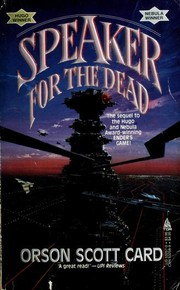

A novel of an astronaut left alone on Mars who must survive until rescue.
Recommended by: Nat Eliason, Adam Ho, Bill Gates and 4 others
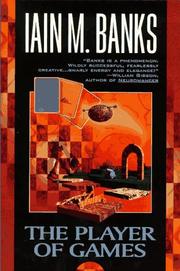
Recommended by: Stewart Brand, Elon Musk, Jeff Bezos and 1 other

A novel in which a scientist answers an alien warning and invites first contact.
Recommended by: Nat Eliason, Sophie Bakalar and 9 others
Where it sits in the reference 0
No entry holds this book yet. It reached the reference because someone recommended it.
Topics